


Table of Contents
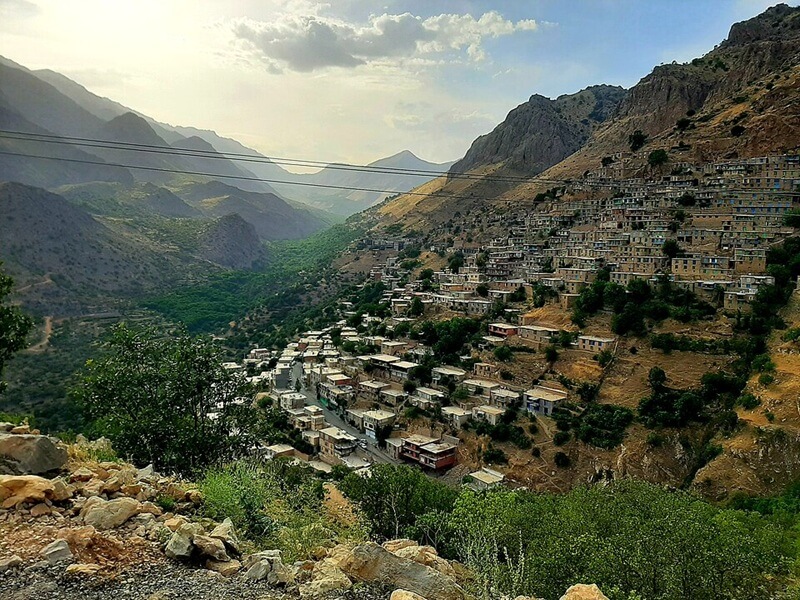
Hawraman Uramanat is a UNESCO World Heritage cultural landscape in Iran’s western Zagros Mountains, where stone villages climb the mountainside in tiers so steep that the roof of one house forms the courtyard of the next. Long before the road reaches Uraman Takht, the valley announces itself: oak forests give way to terraced orchards, and somewhere above the river, a cluster of grey stone rooftops begins to resemble a staircase built for giants. This is Hawraman, or Uramanat, depending on which side of the mountain you ask — a Kurdish homeland straddling Iran’s Kurdistan and Kermanshah provinces, inscribed by UNESCO in 2021 not as a monument frozen in time, but as a landscape still being lived in.
What sets Hawraman apart from Iran’s better-known heritage sites is that nothing here was built to be visited. The terraces exist because there is nowhere flat to farm. The stepped houses exist because there is nowhere flat to build. The seasonal migration between lowland and highland dwellings exists because the mountain simply will not support a fixed way of life. Every element that draws travelers here today, the architecture, the rhythm of the seasons, the hospitality, grew out of necessity first and became beautiful second.
What Is Hawraman Uramanat?
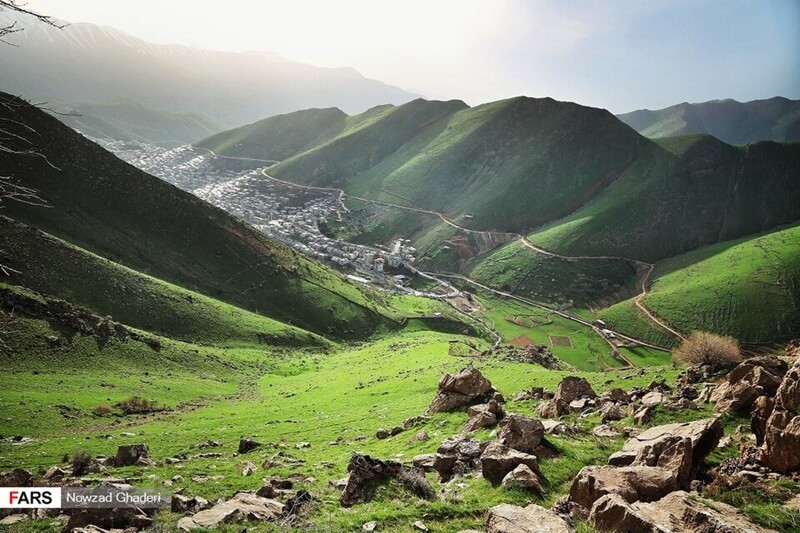
Hawraman—also spelled Uramanat or Avroman—is both a mountainous region and the homeland of the Hawrami, a Kurdish community whose traditions have shaped this landscape for centuries. Straddling the Zagros Mountains along the Iran-Iraq border, the region stretches across Kurdistan and Kermanshah provinces, where steep valleys, terraced villages, and a traditional way of life have evolved together.
The UNESCO World Heritage Site is more specific than the region itself. It consists of two separate valleys—the Central-Eastern Valley in Kurdistan Province and the Western Valley in Kermanshah Province—together encompassing 12 historic villages that reflect the Hawrami people’s distinctive architecture, agriculture, and cultural traditions.
The origin of the name Hawraman is still debated. One popular local tradition links it to Ahura, the divine name associated with Ahura Mazda, and a word meaning “home” or “land.” While this interpretation is widely repeated, there is no scholarly consensus on the name’s true origin.
📷Photo by Nowzad Ghaderi on Wikicommons
A Living Cultural Landscape
The most important thing to understand before visiting is that Hawraman Uramanat is not an archaeological site or an open-air museum. People continue to live in these villages, farm the mountain terraces, and preserve traditions that have shaped the region for thousands of years. Archaeological discoveries show that the area has been inhabited since ancient times, making it one of western Iran’s oldest continuously settled cultural landscapes.
Two traditions continue to define everyday life:
Seasonal Migration
Many Hawrami families still practice seasonal migration between mountain pastures and valley villages, a tradition known as transhumance. During the warmer months, they move their livestock to highland settlements called havars, returning to lower elevations for winter. This centuries-old way of life has shaped both the landscape and the local economy and remains one of the cultural traditions recognized by UNESCO.
A Distinct Language
The Hawrami people speak a traditional Kurdish dialect belonging to the Gorani language group, distinct from the Kurdish spoken across much of the surrounding region. Although fewer young people speak it today, hearing everyday conversations in village streets is a reminder that Hawraman’s culture is still lived rather than preserved for display.
The region’s long history is also reflected in the famous Avroman Parchments, a collection of documents dating back more than 2,000 years that record land transactions during the Seleucid and Parthian periods. Together with archaeological discoveries, they provide rare evidence of the deep historical roots of the communities that continue to live here today.
The Pir Shaliar Festival
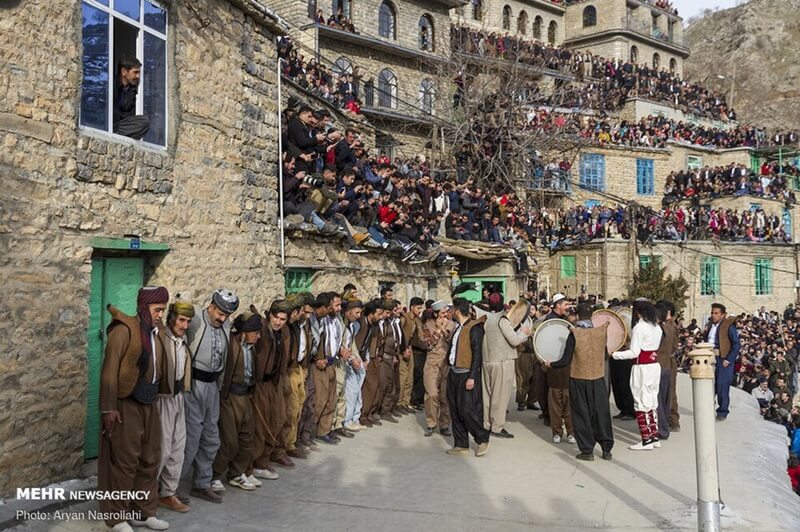
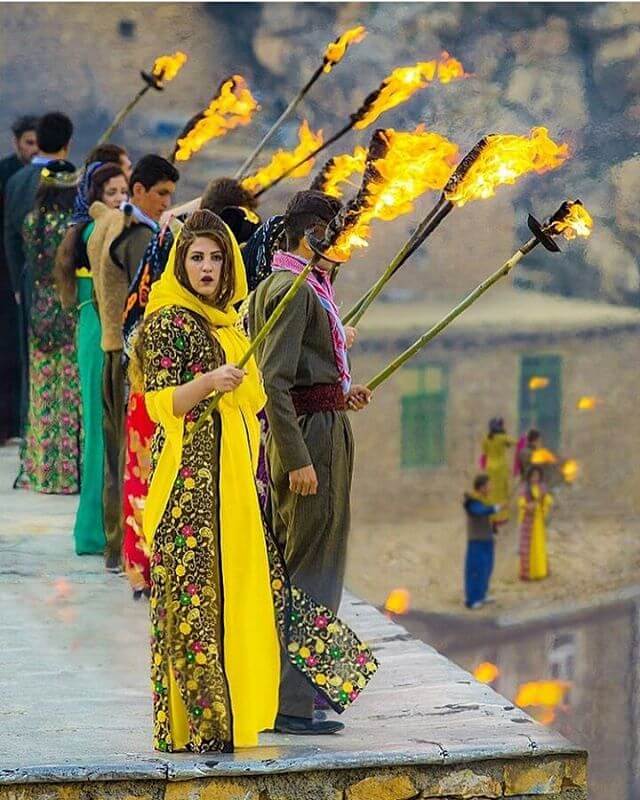
Each winter, the village of Uraman Takht hosts the Pir Shaliar Festival, one of the most important cultural celebrations in western Iran. The festival honors Pir Shaliar, a revered local figure whose life is remembered through several oral traditions. While the stories differ, the festival itself is a living tradition that has brought Hawrami communities together for generations.
Visitors can experience traditional Kurdish music and dance, colorful local clothing, communal meals, and ceremonies that celebrate the region’s cultural identity. Rather than being staged for tourists, the festival remains an authentic community gathering, offering a rare opportunity to witness Hawraman’s living heritage firsthand.
Terraced Architecture of Uraman Takht
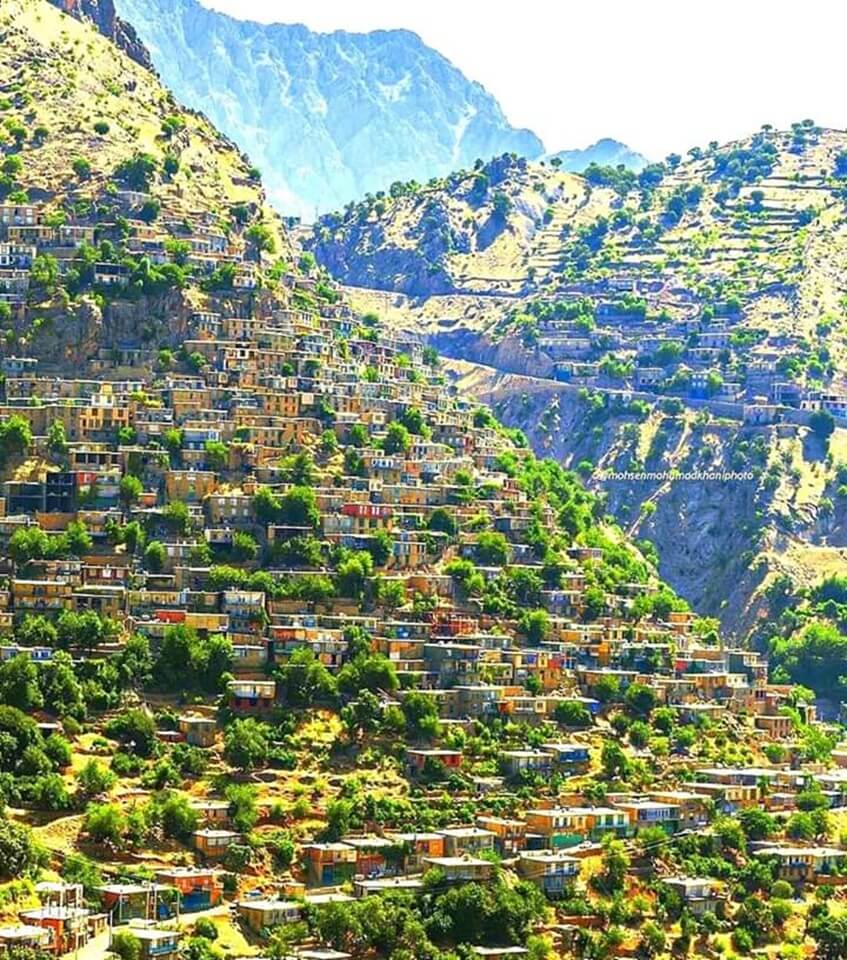
Uraman Takht is the village most travelers picture when they think of Hawraman Uramanat. Built into an exceptionally steep mountainside, its stone houses rise in terraces, creating one of Iran’s most distinctive village landscapes. Some of these homes date back several centuries and are still inhabited today, demonstrating how traditional architecture continues to adapt to the rugged terrain.
The village follows a remarkably practical design. With almost no flat land available, the roof of one house often serves as the courtyard or pathway for the house above, creating a continuous network of stepped homes that climbs the mountainside. Built mainly from locally quarried stone with timber used only where necessary, the architecture blends naturally into the surrounding landscape.
📷Photo by J Ansari on Wikicommons
Another important landmark is the Sangin Mosque, a historic stone mosque known for its carved walnut-wood columns and traditional craftsmanship. Together with the surrounding homes, it reflects the architectural heritage that has defined Hawraman for generations.
The village’s stone terraces and traditional water management system are just as impressive as the buildings themselves. Dry-stone retaining walls support orchards, gardens, and farmland on slopes that would otherwise be impossible to cultivate, while channels and cisterns distribute precious mountain water throughout the valley. These living agricultural systems remain one of the key reasons Hawraman was inscribed on the UNESCO World Heritage List.
The surrounding mountains are equally important. Oak and wild pistachio forests provide habitat for diverse wildlife, while some ancient trees are still regarded as places of local significance, where visitors may notice strips of cloth tied to branches as expressions of hope or gratitude.
What to Expect Honestly
Hawraman is a living community, not a restored museum. While much of its traditional architecture survives, some homes have been repaired or expanded using modern materials such as concrete, metal roofing, or aluminum window frames. UNESCO considers these changes limited, and conservation work continues to protect the historic character of the villages. Rather than diminishing the experience, these modern additions reflect the reality that Hawraman is a place where people continue to live, work, and raise their families—not simply a destination preserved for visitors.
UNESCO World Heritage Status
The Cultural Landscape of Hawraman/Uramanat was inscribed on the Iran UNESCO World Heritage List on 27 July 2021, during the extended 44th session of the World Heritage Committee. It became Iran’s 26th UNESCO cultural heritage inscription and the country’s third recognized cultural landscape, following Bam and its Cultural Landscape and the cave village of Meymand. The property is registered on Iran’s National Monuments List and managed by a dedicated body, the Cultural Landscape of Hawraman/Uramanat Base, operating under Iran’s Ministry of Culture, Heritage, Tourism and Handicrafts in coordination with local village councils.
UNESCO inscribed the site under two criteria, both worth understanding in plain terms rather than committee language.
Criterion (iii) recognizes a landscape that bears exceptional testimony to a living or vanished cultural tradition. For Hawraman, this means the semi-nomadic agropastoral way of life of the Hawrami people, expressed through terraced villages, transhumance routes, seasonal dwellings, and the knowledge systems behind them, is not a historical footnote but an unbroken tradition still shaping how people here organize their daily lives.
Criterion (v) recognizes outstanding examples of human settlement or land use that represent a culture’s interaction with its environment, especially where that environment has become vulnerable. In Hawraman’s case, this refers to the ingenuity behind farming and settling a mountain range with almost no fertile flat land: an agricultural and architectural system built entirely around adaptation rather than domination of the terrain.
If you’d like to explore the site in greater detail, UNESCO publishes the complete nomination dossier, maps, management plan, and evaluation documents for Hawraman Uramanat on its official website: UNESCO World Heritage Centre – Hawraman/Uramanat (No. 1647).
📷Photo by Aryan Nasrollahi on Wikicommons
Beyond Uraman Takht: Villages Worth Visiting
Uraman Takht draws most of the attention, but the inscribed landscape includes a dozen or more villages across both valleys, and several reward the extra effort to reach them.
Palangan Village, technically outside the core UNESCO boundary but culturally and architecturally part of the same terraced tradition, is split by a river into two mirrored halves, with stepped stone houses, small waterfalls, and garden terraces tucked into the slope. Its layout is more compact and easier to explore on foot than Uraman Takht’s twenty-tier climb, making it a natural complement rather than a substitute.
Hajij Village, in the Western Valley near Lahun, holds some of the region’s oldest archaeological evidence, with finds pointing to Paleolithic-era human presence. It sees far fewer visitors than Uraman Takht, which makes it a good choice for travelers who want the same architectural language without the crowds.
Zhaverud and Lahun, the broader valley areas that give the two UNESCO components their names, are where the terraced farmland is most visible at scale, mosaic-like fields of green in spring and warm ochre in autumn, worked the same way they have been for generations.
Natural Highlights: two natural landmarks shape the region as much as its villages. The Sirwan River, one of the main tributaries of the Tigris, winds through the valleys and has supported local agriculture for centuries. Nearby, Kani Bil (Bil Spring) is one of western Iran’s largest karst springs and an important source of fresh water for the surrounding communities.
Planning Your Visit to Hawraman Uramanat
Location. Hawraman lies in the Zagros Mountains along Iran’s western border with Iraq, spanning parts of Kurdistan and Kermanshah provinces. The best-known village, Uraman Takht, is about 65 km (40 miles) southeast of Marivan, surrounded by dramatic valleys, terraced farmland, and traditional Kurdish villages.
Getting there. The easiest gateway is Sanandaj, the capital of Kurdistan Province, with domestic flights from Tehran and road connections to other western Iranian cities. From Sanandaj, the drive to Uraman Takht takes around 3.5 to 4 hours through scenic mountain roads.
Because public transportation into Hawraman is limited, most visitors hire a private driver or join a guided tour. This also makes it easier to stop at viewpoints, villages, and local attractions along the route.
Combine it with. Travelers with extra time often pair Hawraman with Sanandaj itself, whose old bazaar and Kurdish cultural institutions make a natural base before or after the valley, or with Kermanshah, home to the Bisotun inscriptions and reliefs, another UNESCO-listed site roughly half a day’s drive to the south. Neither pairing is essential, but both extend a Hawraman trip into a fuller picture of Iranian Kurdistan.
📷Photo by Archasia on Wikicommons
Best time to visit. Spring (April to May) is widely considered the best time to visit Uramanat. The mountain terraces are lush and green, orchards are in bloom, and the weather is ideal for exploring on foot. Autumn is another excellent season, bringing cooler temperatures and golden foliage across the valleys. Winter transforms the villages into a snowy mountain landscape. While road conditions can be more challenging, this is also when the Pir Shaliar Festival takes place, making it an especially rewarding time for travelers interested in local culture.
Time required. Allow at least one full day to explore Uraman Takht at a relaxed pace. If you’d like to visit nearby villages or experience more of the UNESCO landscape, two to three days is a much better option.
Suggested itinerary. Start your visit in Uraman Takht, where you’ll have time to wander the narrow lanes, climb through the terraced neighborhoods, and enjoy panoramic views of the surrounding mountains. If you’re staying longer, continue to villages such as Hajij or explore the Zhaverud and Lahun valleys to experience a quieter side of Hawraman. Travelers with extra time can also include nearby Palangan, which shares the region’s distinctive terraced architecture despite lying outside the UNESCO World Heritage Site.
Honest logistics. Public transportation is limited, so most visitors travel by private car or with a local guide. Accommodation is simple, consisting mainly of family-run guesthouses rather than large hotels, and mobile phone coverage can be unreliable in some mountain areas. These aren’t drawbacks so much as part of the experience. Hawraman remains a living mountain region rather than a purpose-built tourist destination, and a little planning will allow you to enjoy its landscapes, villages, and traditions at a much more relaxed pace.
Final Thought: A Mountain Taught to Be a Home
Iran holds twenty-eight UNESCO World Heritage sites, and most travelers arrive already knowing the famous ones. Hawraman Uramanat belongs to a smaller, quieter category: places recognized not for a single monument but for an entire way of living that has survived intact into the present. That is heritage as habit rather than heritage as monument, and it is protected only by the willingness of its people to keep practicing it, and by travelers who visit with enough curiosity to make that continuation worthwhile.
That is also the case for going now rather than someday. The Gorani dialect spoken in the village lanes is thinning across generations, and traditional stonework is gradually meeting concrete wherever repairs are cheaper than tradition. Hawraman is in no danger of disappearing tomorrow, but the version of it that exists today will not look exactly the same in twenty years.
There is no substitute for standing at the base of Uraman Takht and looking up at twenty tiers of stone stacked against the mountain, or sitting in a Palangan courtyard as the river below does the same work it has done for centuries. Reading about Hawraman is a fine start; walking it is the only way to understand why UNESCO, and the travelers who have already made the trip, consider it one of Iran’s most quietly extraordinary places.
If Hawraman Caught Your Interest, There’s More of Iran to See.
FAQs about Cultural Landscape of Hawraman UNESCO Site
1. What is the Cultural Landscape of Hawraman/Uramanat?
It is a UNESCO World Heritage cultural landscape in Iran’s western Zagros Mountains, comprising terraced stone villages across Kurdistan and Kermanshah provinces. It reflects the semi-nomadic agropastoral way of life of the Hawrami Kurdish people, who have inhabited the region since approximately 3000 BCE.
2. When was Hawraman Uramanat added to UNESCO’s World Heritage List?
It was inscribed on 27 July 2021 during the extended 44th session of the UNESCO World Heritage Committee, becoming Iran’s 26th cultural World Heritage site.
3. Where is Hawraman located in Iran?
Hawraman spans Iran’s Kurdistan and Kermanshah provinces along the western border with Iraq, including areas near Sarvabad, Sanandaj, Marivan, and Paveh. Its best-known village, Uraman Takht, lies about 63 kilometers south of Marivan.
4. What makes Uraman Takht’s architecture unique?
Uraman Takht is built as a continuous dry-stone staircase up the mountainside, where the roof of each house forms the courtyard of the house above it. Some structures date back more than 900 years and were built without mortar, using local stone and walnut wood.
5. What is the Pir Shaliar festival?
Pir-e Shaliar is an annual winter festival held in Uraman Takht around the tomb of a revered local mystical figure, marked by traditional Kurdish dress, dance, and communal food. Its origin stories vary by oral tradition and are treated locally as legend rather than documented history.
6. What language do the Hawrami people speak?
The Hawrami speak a Gorani dialect within the northwestern Iranian language family, distinct from the Sorani Kurdish spoken in much of the wider Kurdish region. Linguists consider it endangered, as it is used less among younger generations.
7. Is Hawraman safe and accessible for tourists?
Hawraman is open to travelers, though it is remote, with limited public transport, modest guesthouse-style accommodation, and inconsistent mobile signal in the upper village tiers. Travelers generally find it easier to visit with a private vehicle or a guide familiar with the region.
8. What is the best time to visit Hawraman Uramanat?
Spring, especially April to May, and autumn are the most favorable seasons, offering clear mountain roads and strong light on the terraced landscape. Winter brings snow and the Pir Shaliar festival but can complicate road access.
9. How many villages are included in the UNESCO site?
The inscribed property includes twelve villages across its two components, the Central-Eastern Valley (Zhaverud and Takht) in Kurdistan Province and the Western Valley (Lahun) in Kermanshah Province.
10. What is Palangan village and how does it differ from Uraman Takht?
Palangan is a stepped stone village split by a river into two mirrored halves, known for its waterfalls and garden terraces. It sits outside the core UNESCO boundary but shares the same terraced architectural tradition, and its smaller scale makes it easier to explore than the twenty-tier climb of Uraman Takht.
11. How long does it take to visit Hawraman?
A full day is enough to see Uraman Takht in reasonable depth, while two days allow time to add Palangan or the quieter Lahun valley without rushing the visit.
12. Can you stay overnight in Hawraman’s villages?
Yes, though accommodation is limited to family-run guesthouses rather than hotels, concentrated mainly in and around Uraman Takht. Booking ahead is recommended, particularly in spring and around the Pir Shaliar festival.
0 Comment