


Table of Contents
Iran is a land of ancient civilizations, poetic architecture, and warm hospitality. Whether you’re exploring the ruins of Persepolis or sipping tea under Isfahan’s turquoise domes, the country is packed with timeless wonders.
But they should—because Iran has some of the most beautiful places in the world. From the grand Naqsh-e Jahan Square in Isfahan to the colorful Nasir al-Mulk Mosque in Shiraz, the country is full of unforgettable sights. All the Iranian historic cities and quiet villages tell stories from the past, while impressive palaces and modern buildings show how Iran has changed over time.
In this article, we will take you through the top 25 Iran tourist attractions that show the country’s beauty and cultural richness. Whether you want to see ancient ruins like Persepolis or the stunning design of Golestan Palace, this guide will help you discover the best of Iran. Get ready to explore a country full of treasures, history, and warm hospitality.
1. Persepolis: The Ancient Persian Empire
Persepolis, the ceremonial capital of the Achaemenid Empire, is one of the most fascinating tourist attractions in Iran. Founded by Darius I in 518 B.C., this UNESCO World Heritage site remains a must-see attraction for anyone visiting Iran. This ancient marvel is located about 60 kilometers northeast of the city of Shiraz.
Built on an expansive terrace, the complex is adorned with grand staircases, imposing gateways, and intricate bas-reliefs that narrate historical events and depict delegates from various nations bringing tributes to the Persian king.
Visitors are often captivated by the craftsmanship reflected in the stone carvings, making Persepolis an essential part of understanding the grandeur of ancient Iran. Essential to Iran’s historical landscape, Persepolis, also known as Takht-e Jamshid, is a prime example of the Persian Garden’s influence, embodying the ingenuity and artistic spirit of its time.
2. Naqsh-e Rostam: The Royal Rock Tombs
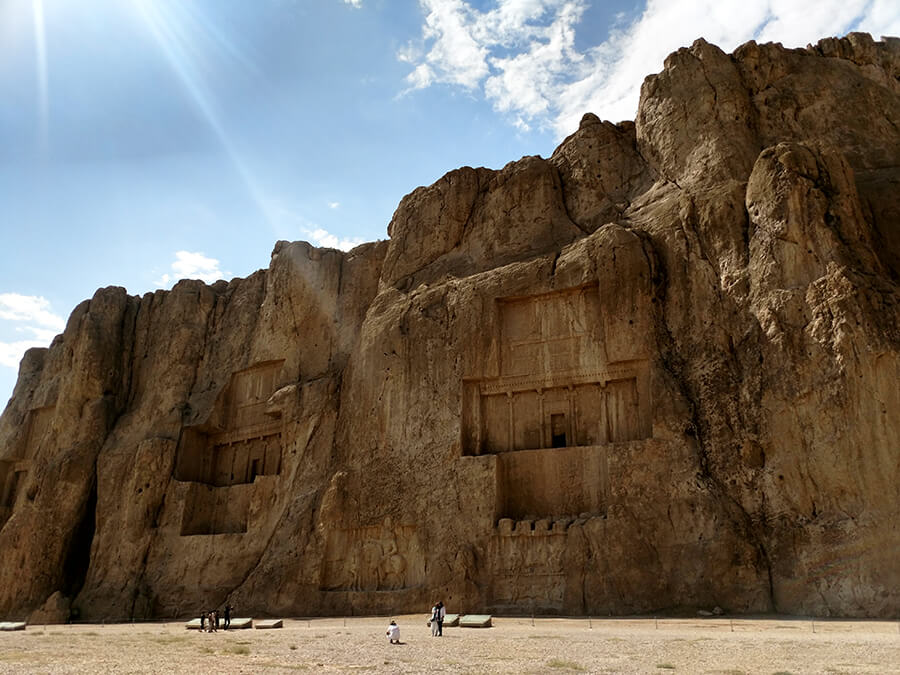
Naqsh-e Rostam, situated just a few kilometers from Persepolis, is one of Iran’s most awe-inspiring archaeological sites. Carved high into a cliffside, this ancient necropolis houses the rock-cut tombs of four Achaemenid kings, including Darius the Great and Xerxes.
The façades of the tombs are intricately carved with symbolic reliefs that depict royal ceremonies and epic victories. Below these tombs, Sassanid-era reliefs illustrate dramatic scenes of imperial conquests and religious rituals, blending two powerful chapters of Iran’s history into one monumental site.
Often referred to as the “Persian Valley of the Kings,” Naghsh-e Rustam is a vital destination for those looking to explore Iran’s royal legacy and ancient artistry.
3. Pasargadae: The Final Resting Place of Cyrus the Great
Pasargadae is one of the most significant tourist attractions in Iran, celebrated as the final resting place of Cyrus the Great, the founder of the Achaemenid Empire. Located in the Fars province, this historical site is a testament to the grandeur of ancient Persian architecture and is a must-visit site in Iran for history enthusiasts.
The centerpiece of Pasargadae is the Tomb of Cyrus, which is a simple yet imposing structure made of massive limestone blocks. Despite its simplicity, the tomb’s design has influenced many architectural styles throughout history. Surrounding the tomb are the ruins of palaces, royal gardens, and the remnants of the empire that once stretched from the Balkans to the Indus Valley.
4. Azadi Tower: Symbol of Modern Tehran
The Azadi Tower, standing majestically in Tehran, is a symbol of modernity and freedom. Its construction was completed in 1971 to commemorate the 2,500th anniversary of the Persian Empire. This iconic landmark is one of the must-see attractions in Iran, making it a focal point for tourists exploring the country’s capital.
Blending architectural styles, the tower’s design reflects both traditional Persian and modern elements. Crafted from white marble stones from the Isfahan region, it rises 45 meters high, offering a striking view of Tehran’s skyline. Visitors are enchanted by the tower’s unique structure, reminiscent of Iran’s traditional architectural forms. The site includes a museum showcasing artifacts that chronicle Iran’s rich history, making it a vital part of the must-visit sites in Iran for history enthusiasts.
5. Golestan Palace: A Blend of Historical Glamour
Golestan Palace, located in the heart of the capital city of Tehran, is a stunning amalgamation of Persian architectural brilliance and the historical grandeur of the Qajar era. This UNESCO World Heritage site is one of the must-see attractions in Iran, drawing visitors with its intricate tile work, lavish halls, and lush Persian gardens. The palace complex comprises several key structures worth exploring:
- Marble Throne: An opulent open-air throne room showcasing masterful carvings.
- Karim Khani Nook: A serene corner once used by Iranian kings.
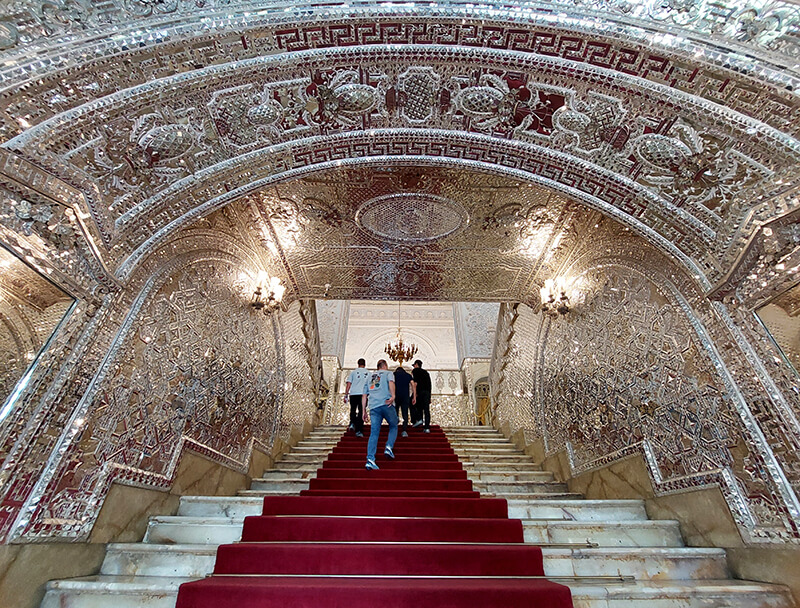
- Brilliant Hall: Known for its dazzling mirrored tiles and decorative walls.
- Negar Khaneh: An art gallery exhibiting a rich collection of Qajar paintings.
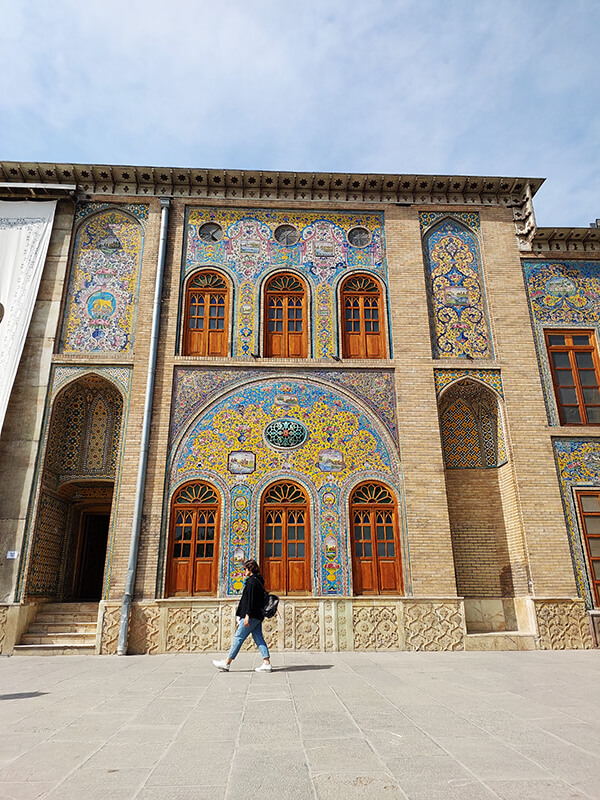
A significant aspect of Golestan Palace is its mesmerizing Persian garden, offering a peaceful environment amidst the city’s hustle. Visitors can also explore the lavishly decorated bazaar nearby to experience the vibrant culture that surrounds this historical site.
6. Sa’dabad Complex: Palaces of Power
The Sa’dabad Palace Complex, nestled in the scenic foothills of northern Tehran, boasts an enviable blend of natural beauty and historical grandeur. Spanning over 110 hectares, this sprawling estate is home to multiple palaces that serve as a window into Iran’s royal past. Originally constructed during the Qajar dynasty, it was later expanded by the Pahlavi monarchs.
Among its most notable sites is the White Palace, where the last Shah of Iran resided. This opulent structure is adorned with breathtaking Persian art and intricate furnishings. Equally captivating is the Green Palace, renowned for its exquisite marble façade and richly decorated interiors.
Visitors to the Sa’dabad Complex can explore a treasure trove of museums, such as the Museum of Contemporary History, which houses fascinating artifacts from Iran’s past. The lush gardens surrounding these palaces also provide a peaceful retreat for those looking to unwind amidst nature.
7. Tehran Grand Bazaar: The Beating Heart of Commerce
Tehran Grand Bazaar is one of the oldest and most vibrant marketplaces in the Middle East. Located in the historic core of Iran’s capital, this sprawling network of alleyways, courtyards, and domed halls stretches over 10 kilometers.
The bazaar is not only a commercial hub but also a social and cultural center where traditions come alive. Here, visitors can shop for Persian carpets, spices, jewelry, and Iranian handicrafts while engaging with friendly vendors. The architecture itself tells stories of centuries past, featuring vaulted ceilings, brickwork, and traditional Persian arches.
A visit to the Grand Bazaar is essential for experiencing Tehran’s authentic atmosphere and understanding the pulse of everyday Iranian life.
8. Naqsh-e Jahan Square: A Historical Hub in Isfahan
Naqsh-e Jahan Square, one of Iran’s most iconic and expansive public spaces, is a must-see attraction located in the heart of Isfahan. As one of the UNESCO World Heritage sites of Iran, this square measuring 560 meters in length and 160 meters in width, is a testament to the grandeur of Persian architecture and urban planning.
Surrounded by remarkable attractions, the square is a vibrant hub of historical significance. On one side, the magnificent Ali Qapu Palace stands tall, offering panoramic views of the bustling square below. Adjacent to the palace is the meticulously designed Shah Mosque, renowned for its stunning blue tiles and grand dome.
Opposite the Shah Mosque lies the intimate Sheikh Lotfollah Mosque, notable for its unique architectural style and intricate mosaics. The square also hosts the famous Isfahan Bazaar, a vibrant marketplace where visitors can immerse themselves in the local culture and artisan craftsmanship.
Whether you’re exploring the world-renowned mosques or haggling in the bazaar, Naqsh-e Jahan Square encapsulates the rich tapestry of Iranian history and culture.
9. National Museum of Iran: Preserving Persian Heritage
The National Museum of Iran, located in Tehran, is a treasure trove of Persian heritage and history. Known for its vast collection of artifacts dating back to the pre-Islamic and Islamic eras, the museum is a must-visit site for anyone traveling to Iran.
Spanning from ancient relics to exquisite Islamic art, the museum offers visitors a comprehensive glimpse into Iran’s rich cultural legacy. Among the highlights are the striking pottery, intricate calligraphy, and statues that speak volumes about the country’s artistic evolution.
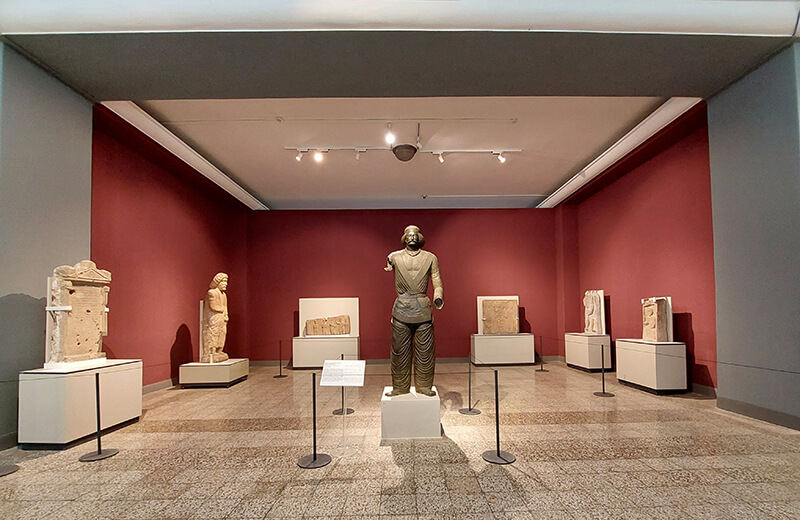
One of the museum’s key attractions is its impressive collection of stone tools and pottery from ancient Persia, providing a unique window into daily life thousands of years ago. The Islamic Period section showcases remarkable examples of script, coins, and textiles that illustrate Iran’s role as a center of cultural and intellectual activity.
For anyone interested in Iran attractions, the National Museum of Iran is an essential stop. It not only preserves the country’s illustrious past but also educates visitors about the dynamic tapestry of Persian culture.
10. Treasury of National Jewels: Iran’s Dazzling Wealth
The Treasury of National Jewels in Iran is a stunning exhibit that showcases the country’s opulent history. Located in Tehran, this marvelous collection includes an array of dazzling artifacts that once graced Persia’s powerful monarchs.
Among the must-see attractions in Iran, the treasury stands out for its historical significance and exquisite craftsmanship. Visitors can marvel at the majestic Peacock Throne, adorned with countless gems, reflecting the grandeur of bygone eras. Another highlight is the Daria-i-Noor, one of the largest diamonds in the world, renowned for its breathtaking beauty.
In addition to these iconic pieces, the collection features an array of crowns, tiaras, and swords embellished with precious stones. Each item tells a story of Iran’s cultural heritage and wealth, making it a must-visit site for anyone interested in the country’s rich past.
11. Milad Tower: Tehran’s Panoramic Viewpoint
Milad Tower, standing gracefully in Tehran, is not only an architectural marvel but also a must-see attraction in Iran. As the sixth-tallest tower in the world, Milad provides visitors with breathtaking panoramic views of the sprawling cityscape and the majestic Alborz Mountains.
Opened to the public in 2007, this iconic structure reaches a towering height of 435 meters. Milad Tower features several attractions within its premises, including a revolving restaurant, cafes, a museum, and an observation deck that draws tourists seeking a bird’s-eye view of Tehran. Visitors can also explore the commercial spaces and auditoriums that frequently host conferences and events.
12. Chehel Sotoun: The Pavilion of Forty Columns
Chehel Sotoun, known as the Pavilion of Forty Columns, is a splendid example of Persian architecture located in Isfahan, Iran. This UNESCO World Heritage site is a must-see attraction for anyone exploring Iran’s rich cultural tapestry. The pavilion was built during the Safavid era and was used for royal receptions and entertainment. The name “Forty Columns” is derived from the twenty slender wooden columns supporting the entrance porch, which appear to double when reflected in the pool in front, creating the illusion of forty columns.
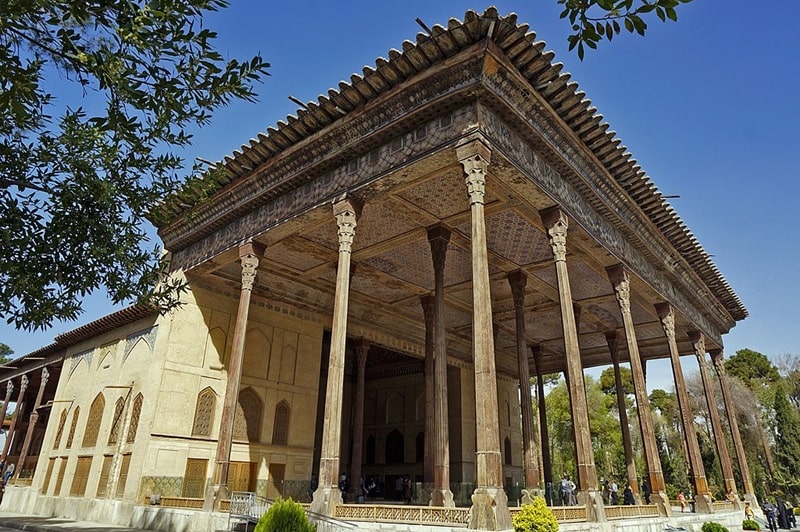
📷 Photo by Soheil Callage, via Wikimedia Commons
Visitors can admire the stunning frescoes and artwork inside the pavilion. These paintings vividly depict historical battles, courtly scenes, and the grandeur of the Safavid era. Chehel Sotoun is surrounded by lush Persian gardens, which add to its serene and picturesque setting. The Persian Garden is a UNESCO recognized spectacle, characterized by its symmetrical design, water channels, and variety of flora.
Whether you are captivated by Iran’s mosques, bountiful bazaars, or its historical sites, the Pavilion of Forty Columns is a testament to Iran’s architectural and artistic legacy. Thus, it ranks high on the list of must-visit sites in Iran.
13. Shemshak: A Ski Resort in the Alborz Mountains
Shemshak is a popular ski resort nestled in the Alborz Mountains, just a short drive from Tehran, Iran. Known for its challenging slopes catering mostly to advanced skiers and snowboarders, Shemshak offers an exhilarating experience for winter sports enthusiasts.
The resort’s high altitude ensures excellent snow conditions, typically from November through April. The trails provide breathtaking views of the surrounding mountains, making Shemshak not just a sports destination, but also a scenic escape from the city.
Visitors can also enjoy accommodations ranging from cozy chalets to luxurious hotels, providing warm hospitality typical of Iranian culture. Whether you’re carving down its icy slopes or sipping on a hot beverage while enjoying the stunning mountain vistas, Shemshak promises an unforgettable winter getaway.
With its proximity to Tehran, it is a must-visit site for those seeking adventure combined with the natural beauty of Iran.
14. Qeshm Island: Geological Marvels
Qeshm Island, situated in the Persian Gulf, is a treasure trove of natural wonders and geological marvels. As the largest island in Iran, it offers a unique blend of landscapes that captivate nature enthusiasts and geologists alike.
One of the most remarkable attractions on Qeshm Island is the Valley of the Stars. This astonishing formation of rock and sand dunes resembles an alien terrain, sculpted by centuries of erosion. Another natural wonder is the Hara Forest, a UNESCO-protected biosphere. Here, visitors can explore extensive mangroves, which provide a habitat for diverse marine life and migratory birds.
Qeshm’s Chahkooh Canyon is yet another awe-inspiring site. Its narrow gorges and towering cliffs, carved by erosive forces, create a surreal backdrop for hiking and photography.
15. Nasir al-Mulk Mosque: The Pink Mosque of Shiraz
The Nasir al-Mulk Mosque, often referred to as the Pink Mosque, is one of the most enchanting tourist attractions in Iran, located in the vibrant city of Shiraz. This Iran mosque, renowned for its stunning play of colors, captivates visitors with its kaleidoscopic stained glass windows that create a mesmerizing display of light and color, especially during morning hours.
Constructed in the late 19th century, the mosque is a fine representation of Persian architecture. It’s an emblem of art with its exquisite blend of traditional design and vivid color schemes. The intricate tile work that predominantly features pink hues gives the mosque its distinctive nickname.
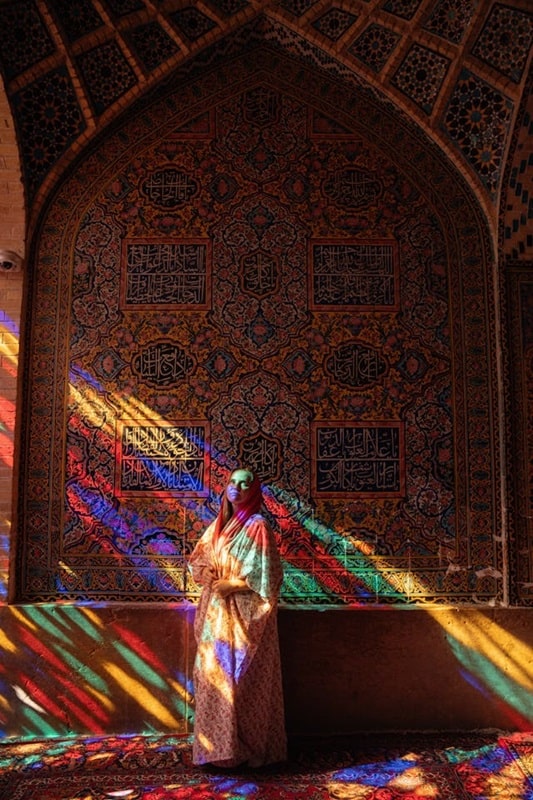
📷 Photo by Faruk Tokluoğlu, via Pexels.com
16. Eram Garden: The Quintessential Persian Garden
Eram Garden, or Bagh-e Eram, located in Shiraz, is one of the most famous examples of a Persian garden in Iran. This UNESCO-listed site beautifully exemplifies the Persian concept of paradise on earth through its symmetrical layout, flowing water, and lush greenery.
Built during the Seljuk period and refined during the Qajar era, the garden centers around a grand mansion with exquisite tilework and graceful columns. Visitors can wander among towering cypress trees, colorful roses, and tranquil pools that reflect the calm of Shiraz itself.
The garden is particularly popular in spring, when it blooms in full glory. Eram Garden is a peaceful retreat and an essential stop for those exploring Shiraz’s cultural and natural charms.
17. Tomb of Hafez: Homage to a Poet
The Tomb of Hafez, located in Shiraz, stands as a poetic tribute to one of Iran’s most cherished literary figures, Hafez. Renowned for his ghazals, Hafez’s influence on Persian literature is profound, attracting poetry enthusiasts and tourists alike. This site is considered a must-visit attraction in Iran, offering a glimpse into the rich cultural heritage of the region.
The tomb is enveloped by a beautiful Persian garden, which serves as a serene space for reflection and admiration of Hafez’s work. This garden epitomizes the symbolic architecture of Iran, meticulously designed to create an atmosphere of tranquility.
A visit to the Tomb of Hafez isn’t just an exploration of literary history; it is also a visual feast. The intricate designs of the mausoleum and the surrounding bazaar provide a genuine Iranian experience for all visitors. Its popularity among local and international travelers underscores its status as a significant tourist attraction in Iran.
18. Yazd: The City of Wind Catchers
Yazd, known as the “City of Wind Catchers,” is a captivating blend of ancient architecture and rich Persian history. This desert city, located in central Iran, is famous for its traditional wind catchers or “badgirs,” which have naturally ventilated its homes for centuries. These ingenious structures are a testament to the city’s architectural innovation, efficiently cooling buildings amidst the desert heat.
A must-see attraction in Yazd is its stunning mosques, such as the Jame Mosque, renowned for its intricate tile work and imposing minarets. The city’s historical neighborhood, a UNESCO World Heritage site, features narrow, labyrinthine streets that offer a delightful glimpse into traditional Persian urban planning.
Don’t miss the bustling bazaars, where you can find everything from exotic spices to exquisite handicrafts. Yazd is also home to beautiful Persian gardens, like Dowlat Abad Garden, which showcases the harmonious blend of natural and man-made beauty.
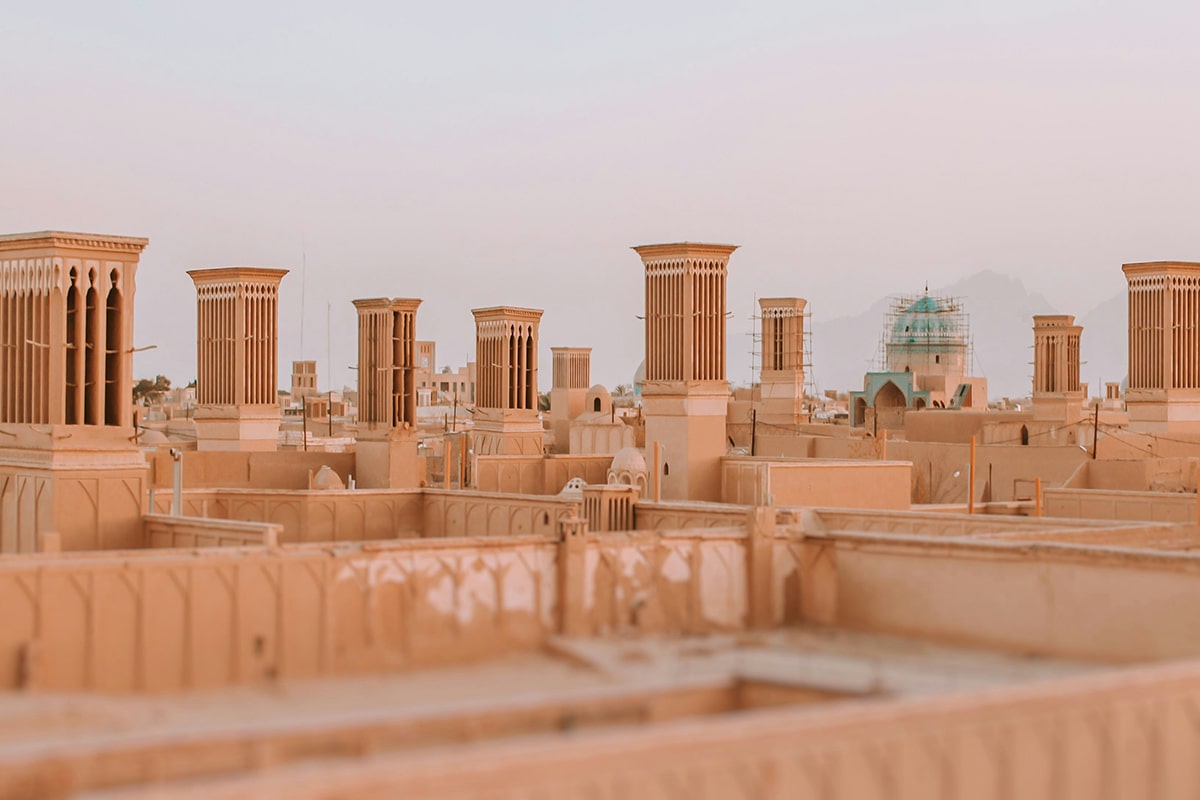
📷 Photo by Hasan Almasi on Unsplash
19. Bam Citadel: The Desert Fortress of Antiquity
The Bam Citadel, or Arg-e Bam, is the largest adobe structure in the world and one of Iran’s most iconic historical sites. Located in southeastern Iran, this ancient citadel traces its roots back over 2,000 years to the Parthian Empire.
Although significantly damaged in the 2003 earthquake, extensive restoration has brought new life to this UNESCO World Heritage Site. Visitors can walk through its reconstructed ramparts, watchtowers, and residences, gaining insight into the advanced urban planning of ancient Persia.
Set against the backdrop of the desert, Bam’s imposing silhouette offers a stunning glimpse into Iran’s architectural ingenuity and desert culture.
20. Dasht-e Lut: Iran’s Fiery Desert Wonder
The Dasht-e Lut, or Lut Desert, is one of the hottest and most surreal landscapes on Earth. This UNESCO-listed natural wonder, located in southeastern Iran, is famed for its towering yardangs (wind-carved ridges), massive sand dunes, and salt plains.
Scientists recorded the highest land surface temperature ever measured here—over 70°C (158°F). But beyond the heat, the Lut Desert is visually spectacular. Its vast, silent expanse and otherworldly formations offer a deeply humbling experience.
Adventurous travelers often explore the area with guided tours, camping under starlit skies and witnessing a side of Iran few tourists ever see. It’s a place where nature’s extremes create unforgettable memories.

📷 Photo by Ninara from Wikicommons
21. Mount Damavand: The Roof of Iran
Mount Damavand is the highest peak in Iran and the Middle East, rising 5,610 meters above sea level. Located northeast of Tehran in the Alborz mountain range, this dormant volcano holds a legendary place in Persian mythology and literature.
The mountain is a symbol of national pride and freedom, featured prominently in Ferdowsi’s epic Shahnameh. For trekkers and nature lovers, climbing Damavand offers a challenging yet rewarding journey. In summer, its slopes are covered with wildflowers; in winter, it becomes a magnet for snow lovers.
Whether you’re climbing to the summit or admiring it from afar, Mount Damavand is a powerful reminder of Iran’s natural beauty and cultural soul.
Final Thought: Where History, Beauty, and Culture Come Together
From the poetic gardens of Shiraz to the majestic ruins of Persepolis, Iran’s attractions are more than just beautiful sights—they’re windows into a civilization shaped by centuries of art, thought, and resilience. Every mosque, bazaar, and mountain village has a story to tell, inviting you not just to visit, but to connect.
If you’re planning your first journey or considering a deeper return, Iran promises an experience that goes beyond the ordinary—one that challenges perceptions and leaves lasting impressions.
At Compassimo, we believe travel should be personal, meaningful, and inspiring. Let us help you turn your ideas into a journey where passion meets motion—and Iran becomes more than a destination. It becomes a story you’ll always carry with you.
Not sure where to start? Let our experts assist you.
FAQs about Top Iran Tourist Attractions
1. Is it safe to visit Iran as a tourist?
Yes, Iran is generally considered safe for tourists. Most travelers report friendly locals, welcoming hospitality, and a peaceful atmosphere, especially in the major tourist cities. As with any international destination, it’s wise to stay informed and follow local guidelines. Traveling with a trusted tour operator can enhance both your safety and comfort.
2. Do I need a visa to travel to Iran?
Most nationalities do require a visa to enter Iran. However, the process is straightforward and often approved within a few working days. At Compassimo, we assist our travelers with the Iran visa application to make it hassle-free. Some countries are also eligible for visa-free entry or visa on arrival.
3. When is the best time to visit Iran’s tourist attractions?
The best times to visit are spring (March to May) and autumn (September to November), when the weather is pleasant across most regions. This is ideal for exploring outdoor attractions like Persepolis, Yazd’s old town, or Iran’s desert landscapes.
4. What should I wear when visiting cultural or religious sites in Iran?
Modest dress is expected throughout Iran, particularly at religious or historic sites. Women are required to wear a headscarf and loose clothing covering arms and legs. Men should avoid shorts and sleeveless tops.
5. Can I visit all these 21 attractions in one trip?
Not usually in one short trip, but many can be covered in a well-planned itinerary of 10 to 21 days. We offer both custom and pre-designed tours that combine top highlights based on your interests, timeline, and travel style.
6. Is it possible to travel independently in Iran, or should I join a guided tour?
Independent travel is possible, but a guided tour adds depth, context, and convenience—especially when navigating language barriers or remote sites. With a guided tour, you get the benefit of expert local guides who enrich your experience with stories, history, and hidden gems.
7. Are Iran’s UNESCO World Heritage Sites accessible to tourists?
Yes, many of Iran tourist attractions, such as Persepolis, Yazd, and the Golestan Palace, are well-preserved and open to visitors. These locations are often highlights of our curated tours and well worth the visit.
8. How can I choose which attractions to visit in Iran?
It depends on your interests—whether you’re drawn to ancient history, Islamic architecture, desert landscapes, or vibrant bazaars. This article highlights the best of each type.
9. What languages are spoken at Iran’s tourist sites?
Persian (Farsi) is the official language, but you’ll find English speakers in major hotels, airports, and some tourist attractions. Our bilingual guides ensure smooth communication throughout your journey.
10. Can I take photos at historical and religious sites in Iran?
In most cases, yes—photography is allowed at outdoor sites and many indoor locations. However, flash photography or photos inside mosques and shrines may be restricted. Always check signage or ask your guide for guidance.
0 Comment