


Table of Contents
The mounds rise gently from the Khuzestan plain, low and sun-bleached, easy to mistake for natural hills if you didn’t know what lies beneath them. By late afternoon, the heat softens just enough to walk across the Apadana mound without hurrying, while the Karkheh River catches the light beyond the ruins. There are no crowds here, no long ticket lines, and few souvenir stalls—just packed earth that has been walked on, built upon, and fought over for nearly 6,000 years.
Susa, Iran is one of the oldest continuously inhabited settlements in the world and a UNESCO World Heritage Site since 2015. Unlike Persepolis, which preserves a single royal complex, Susa is an entire ancient city, with archaeological layers spanning the Elamite, Achaemenid, Seleucid, Parthian, and Sasanian periods. Each civilization left part of the city behind, creating one of the richest archaeological landscapes in the Middle East.
Most travelers encounter ancient Iran through Persepolis—and rightly so. It is one of the country’s most spectacular archaeological sites and an easy addition to a Shiraz itinerary. Susa asks for a greater detour, sitting in southwestern Iran near the Iraqi border, but it rewards travelers with a much broader story. It was already an important city long before Persepolis was built, continued to thrive after the Achaemenid Empire disappeared, and occupies a unique place where Iranian, Mesopotamian, and biblical history intersect. According to the Hebrew Bible, the story of Esther unfolds here, while local tradition associates the city with the tomb of the prophet Daniel. Nearby stood the winter palace of Darius the Great, whose famous glazed-brick decorations are now among the highlights of the Louvre Museum in Paris.
From Village to Elamite Capital
How Old Is Susa?
Archaeological layers beneath the mounds of Susa date back to around 4395 BCE, while traces of earlier village life—including painted pottery and simple dwellings—reach roughly 5000 BCE. That makes Susa one of the oldest continuously inhabited settlements in the world.
Unlike many ancient cities that were abandoned and later rediscovered, Susa grew by rebuilding directly on top of itself for thousands of years. Each generation added another layer to the city, creating the remarkably deep archaeological record visitors see today.
Susa: The Capital of Elam
Long before Persia emerged as an empire, Susa was the political, administrative, and religious heart of Elam, one of the ancient Near East’s great civilizations. For more than two millennia, the Elamites rivaled neighboring Mesopotamian powers through diplomacy, trade, and warfare.
Rather than functioning as a single centralized kingdom throughout its history, Elam was a shifting network of city-states and highland territories, with Susa serving as its principal center. The Elamites developed their own writing system, religious traditions, and administrative institutions, while using cylinder seals and written records to manage trade and government. Much of the region’s early urban culture developed here centuries before the rise of the Persian Empire.
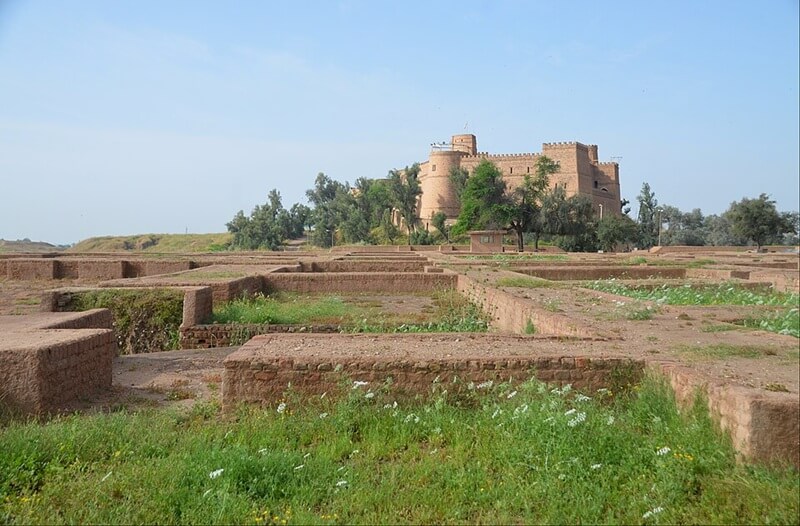
📷Photo by Carole Raddato on Wikicommons
The Fall of Elam
In 647 BCE, the Assyrian king Ashurbanipal launched a devastating campaign against Elam, with Susa as its main target. Assyrian inscriptions describe temples being destroyed, royal tombs desecrated, and the city deliberately devastated in an effort to break Elam’s power.
Although those royal inscriptions were written as political propaganda and likely exaggerate the scale of the destruction, archaeology confirms that Susa suffered a major collapse during this period. The city would recover, but under new rulers. When the Achaemenid Persians later chose Susa as one of their royal capitals, they were building upon the remains of a civilization that had already flourished—and fallen—centuries earlier.
Susa Under the Achaemenids
Darius the Great and the Apadana Palace
When Darius I consolidated the Achaemenid Empire, he made Susa one of its royal capitals alongside Persepolis, Pasargadae, and Ecbatana. Between roughly 521 and 515 BCE, he commissioned the Apadana Palace, a vast audience hall built over earlier Elamite remains.
Few ancient palaces are documented as thoroughly as the Apadana. In his foundation inscription, Darius listed not only the building materials but also where they came from: cedar from Lebanon, gold from Sardis and Bactria, ivory from Ethiopia and India, stonecutters from Ionia and Sardis, and craftsmen from Media and Egypt. The inscription reads as a deliberate statement of imperial power, showing how resources and skilled workers from across the empire came together to build one royal residence.
Susa as the Winter Capital
Susa’s place within the Achaemenid Empire was practical as well as symbolic. Its lower elevation and milder winters made it the preferred royal residence during the colder months, while the court moved to Ecbatana in summer and gathered at Persepolis for major ceremonial events.
This seasonal movement meant Susa was not simply a royal palace but one of the empire’s principal administrative centers, where officials, diplomats, merchants, and tribute from across the Achaemenid world regularly passed through. Many of the empire’s day-to-day affairs were managed here, making Susa one of the political heartbeats of ancient Persia.
Alexander and the End of the Achaemenid Era
In 330 BCE, Alexander captured Susa with little resistance. Ancient Greek sources describe him taking possession of an enormous royal treasury, reportedly containing around 40,000 talents of gold and silver, along with generations of accumulated tribute and royal treasures. Whether the exact figure is accurate or somewhat exaggerated, it illustrates Susa’s immense importance as one of the Achaemenid Empire’s financial centers.
Alexander’s conquest brought Achaemenid rule to an end, but not the city itself. Susa remained an important regional center under the Seleucids, Parthians, and Sasanians for centuries afterward, continuing its remarkably long history long after the Persian Empire had fallen.
Susa in the Bible: Shushan, Esther, and Daniel
Is Susa the Biblical City of Shushan?
Yes. The Shushan described in the Hebrew Bible is widely identified with the archaeological site of Susa in southwestern Iran. The Book of Esther is set in the royal palace here, where Queen Esther, Mordecai, and Haman’s story unfolds at the court of King Ahasuerus, generally identified by historians with Xerxes I.
Whether every event in the Book of Esther can be verified historically remains a matter of scholarly debate. What is not disputed is that Susa served as one of the principal royal capitals of the Achaemenid Empire, making it an entirely plausible setting for the narrative. For Jewish tradition, the city holds special significance as the backdrop to the events commemorated by the festival of Purim.
The Tomb of Daniel
Beside the ancient ruins, in the modern town of Shush, stands the Tomb of Daniel, one of Iran’s best-known religious shrines. Its distinctive cone-shaped dome has made it a local landmark for centuries, attracting both Muslim and Jewish pilgrims.
Tradition holds that the prophet Daniel came to Susa after his time in Babylon and was buried here. The historical evidence, however, is less conclusive. Several locations across Iran, Iraq, and Uzbekistan claim to be Daniel’s burial place, and the Book of Daniel itself does not identify where he was buried.
What can be said with greater confidence is that the shrine in Shush has been recognized as Daniel’s tomb since at least the 12th century, when the Jewish traveler Benjamin of Tudela described it during his journey through the region. Local legends—including stories of Daniel’s coffin being moved between opposite banks of the river or later enclosed in a crystal casket—remain part of the site’s living folklore rather than established history, adding another layer to one of Susa’s most enduring traditions.
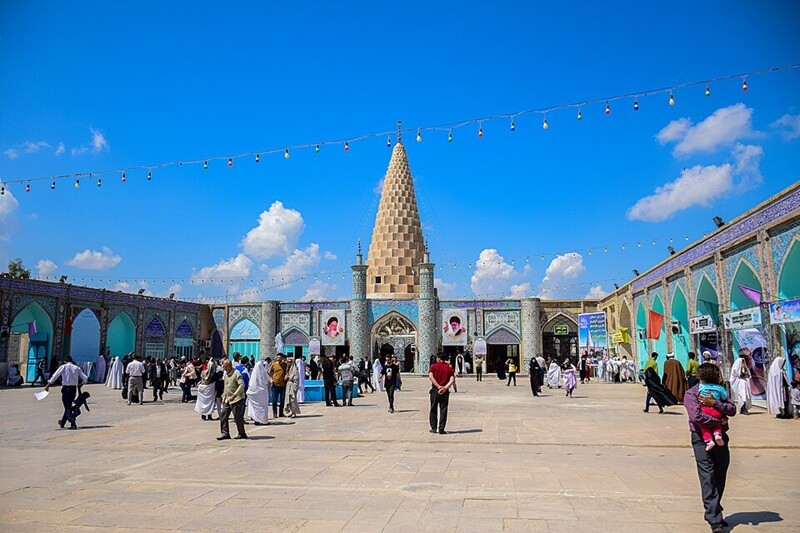
📷Photo by Sepehr Ardalan on Wikicommons
Decline, Rediscovery, and a Century of Excavations
The Slow Decline of Susa
Susa remained an important city through the Parthian and Sasanian periods, continuing the long sequence of civilizations that UNESCO recognizes at the site today. Rather than disappearing after the fall of the Achaemenids, it remained an administrative and commercial center for centuries.
Its decline was gradual. As political power and regional trade shifted toward other cities, particularly Ahvaz, Susa steadily lost its prominence. Occupation continued into the 13th century CE, before the city was finally abandoned, most likely in the upheaval that followed the Mongol invasions.
William Loftus and the First Excavations
Modern archaeology at Susa began in 1851, when British geologist and diplomat William Kennett Loftus, working on behalf of the British Museum, identified the remains of the Apadana Palace beneath the site’s largest mound.
Although his discoveries confirmed Susa’s archaeological importance, they failed to impress the museum’s backers. Henry Rawlinson, Britain’s consul in Baghdad, reportedly remarked that Loftus had “turned the mound of Susa topsy-turvy without finding much.” Funding was withdrawn, and serious excavation would not resume for more than thirty years.
The Dieulafoys and Susa’s Greatest Discoveries
Excavations returned in 1885 under the French archaeologists Marcel and Jane Dieulafoy. While Marcel directed the official work, Jane’s journals became some of the best firsthand accounts of archaeological fieldwork in nineteenth-century Persia.
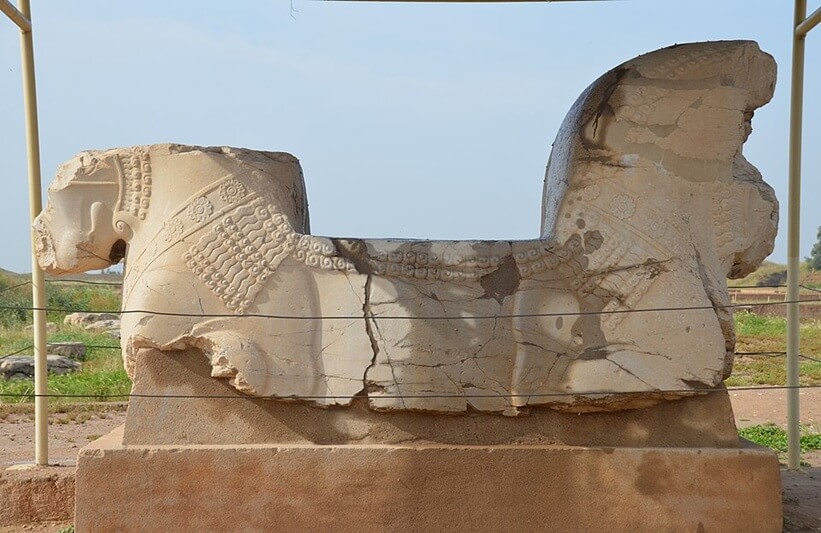
Working primarily around the Apadana Palace, the team uncovered many of Susa’s most celebrated discoveries, including the glazed-brick friezes of royal archers and winged lions, along with monumental bull-headed column capitals that once supported the palace roof.
Their second excavation season also reveals much about archaeology at the time. Racing against a shipping deadline in early 1886, the team expanded trenches rapidly in search of museum-quality finds. Jane later acknowledged this urgency in her own writings, offering an unusually candid glimpse into an era when recovering spectacular objects often took priority over carefully documenting the archaeological context. Today, that approach is widely criticized, but it reflects the realities of nineteenth-century excavation rather than modern archaeological practice.
Why Susa’s Greatest Treasures Are in the Louvre
A turning point came in 1900, when the Qajar government granted France exclusive archaeological excavation rights across much of Iran. Under this agreement, French archaeologists—including Jacques de Morgan, later Roland de Mecquenem, and Jean Perrot—continued excavating Susa for decades.
The agreement also explains why many of Susa’s most famous discoveries left Iran. The glazed-brick archers, winged-lion friezes, and monumental column capitals uncovered during the French expeditions were transported to Paris, where they remain among the highlights of the Louvre Museum’s Near Eastern collections.
For visitors, this is worth knowing before arriving. The archaeological site preserves the city itself, while the nearby museum displays many important finds that remained in Iran—but several of the masterpieces most closely associated with ancient Susa are now housed in the Louvre.
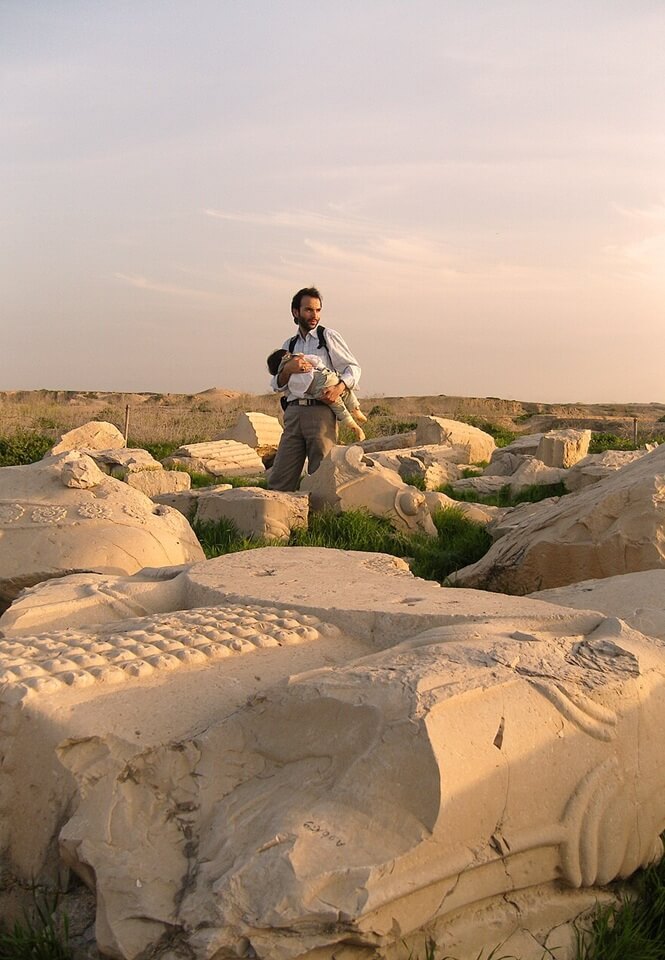
📷Photo by Sadeq Rashidi Fard on Wikicommons
What Makes Susa’s Architecture Unique
The Glazed-Brick Friezes
The Apadana Palace was once decorated with brilliant glazed-brick friezes depicting striding lions, royal archers, and mythical creatures. These weren’t simply decorative. Inspired in part by earlier Mesopotamian traditions, they projected the authority, order, and wealth of the Achaemenid Empire to visiting officials and foreign envoys.
Producing these vivid glazed bricks required highly specialized skills. Darius’s own foundation inscription records that craftsmen and materials were brought from across the empire, turning the palace itself into a demonstration of imperial resources and artistic collaboration.
Understanding the Archaeological Site
The ruins of Susa are organized around three principal archaeological mounds. The Acropolis preserves the city’s earliest religious and administrative remains. The Apadana contains the palace built by Darius the Great, while the Ville Royale formed the main residential and administrative quarter throughout much of the city’s history.
Standing above the ruins is another landmark that often surprises visitors: the French Castle (also known as Shapur’s Castle). Despite its fortress-like appearance, it is not an ancient monument. It was built by French archaeologists in the late 19th century, using bricks taken from the site, to serve as their excavation headquarters. Today, it stands as a reminder of Susa’s modern archaeological history as much as its ancient past.
What You’ll Actually See
Unlike Persepolis, whose monuments were built largely from dressed stone, much of Susa was constructed in mudbrick. Over thousands of years, weather, flooding, earthquakes, and later reuse of building materials erased much of the city’s standing architecture.
As a result, visitors encounter foundations, column bases, palace platforms, and reconstructed sections rather than towering ruins. That’s worth knowing before you arrive. Susa rewards travelers who appreciate archaeology and historical context more than perfectly preserved monuments, offering the rare chance to walk through one of the world’s oldest cities instead of a single surviving complex.
Why UNESCO Inscribed Susa
Susa was inscribed on the UNESCO World Heritage List in 2015, under reference number 1455, meeting four separate cultural criteria — an unusually strong case among Iran’s growing list of UNESCO-recognized sites.
- Criterion (i) – Masterpiece of human creative genius: recognizing the artistic achievement embodied in Susa’s Achaemenid palace decoration, including its glazed-brick work.
- Criterion (ii) – Significant interchange of human values: reflecting Susa’s role as a meeting point between Elamite, Mesopotamian, and later Persian and Parthian traditions over millennia.
- Criterion (iii) – Unique or exceptional testimony to a cultural tradition: acknowledging that Susa preserves evidence of civilizations, particularly Elam, that have otherwise almost entirely disappeared from the archaeological record.
- Criterion (iv) – Outstanding example of a building type or landscape: citing the Apadana Palace as an exceptional example of Achaemenid royal architecture.
You can view the full official listing, including the site’s boundaries and management details, on the UNESCO World Heritage Centre’s page for Susa.
Visiting Susa Today
Where Is Susa?
Susa lies in Khuzestan Province, southwestern Iran, beside the modern town of Shush, between the Karkheh and Dez rivers. The easiest gateway is Ahvaz, the provincial capital, followed by a drive of around two hours. Many travelers also base themselves in Dezful, which is closer to Susa and combines well with other historical sites in northern Khuzestan.
If you’re visiting from abroad, it’s worth checking Iran’s current visa requirements before booking, as entry rules vary by nationality.
Best Time to Visit
The best time to visit Susa is from late autumn through early spring, when daytime temperatures are comfortable for exploring the archaeological site. The Nowruz holidays (late March) are particularly popular with domestic travelers and pilgrims visiting the Tomb of Daniel.
Summer is best avoided if possible. Temperatures in Khuzestan frequently exceed 45°C, making extended walks around the exposed archaeological mounds uncomfortable.
Visiting the Tomb of Daniel
The Tomb of Daniel remains an active religious shrine as well as a historic attraction. Modest dress is expected for all visitors, and women are generally required to wear a chador inside the shrine, although one is usually available to borrow at the entrance if needed.
As with any place of worship, visitors should keep noise to a minimum and avoid photography where signs or staff request otherwise.
Suggested Route
A comfortable half-day visit starts at the Apadana Palace and the Acropolis, ideally in the cooler morning hours, before continuing to the Susa Museum, which displays many of the site’s most important finds that remained in Iran.
Finish in the modern town of Shush with a visit to the Tomb of Daniel, when the shrine is often at its liveliest later in the afternoon and evening. If you have a full day—or longer—Susa also makes an excellent base for exploring several nearby UNESCO and archaeological sites across northern Khuzestan.
📷Photo by Herbert Karim Masihi on Wikicommons
What to See Near Susa
Susa is best explored as part of a broader journey through Khuzestan Province, where several of Iran’s most important archaeological and engineering sites lie within easy driving distance.
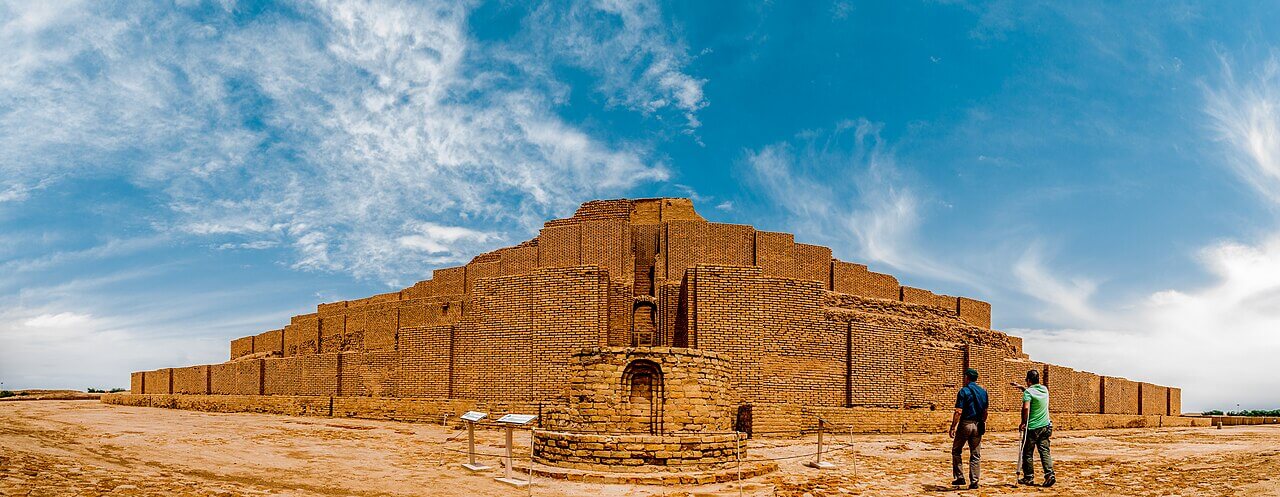
Chogha Zanbil, about 44 kilometers southeast of Susa, is the region’s standout companion site and a UNESCO World Heritage Site in its own right. Built around 1250 BCE, this remarkably well-preserved Elamite ziggurat offers a different perspective on the civilization that once made Susa its capital. Where Susa reveals thousands of years of urban history, Chogha Zanbil preserves one of the ancient world’s most impressive religious monuments.
Nearby, Haft Tappeh adds another chapter to the Elamite story. This archaeological site, containing the remains of an ancient city and royal cemetery, receives far fewer visitors than either Susa or Chogha Zanbil, making it a rewarding stop for travelers interested in archaeology beyond the main UNESCO landmarks.
Back in Shush, the Susa Museum is well worth including before or after visiting the ruins. Its collection of sculptures, pottery, inscriptions, and architectural fragments helps bring the archaeological site into focus—and reminds visitors that although many famous discoveries were taken to the Louvre, many important finds remain in Iran.
For travelers with an extra day, the ancient water-engineering complex at Shushtar, Shushtar Historical Hydraulic System, around 90 kilometers east of Susa, is another UNESCO World Heritage Site that showcases a very different side of ancient Iran. Its network of canals, bridges, dams, mills, and tunnels—developed over centuries from the Achaemenid through the Sasanian periods—still shapes the movement of water through the city today.
Most international visitors begin and end their journey in Ahvaz, Khuzestan’s provincial capital. With the region’s main airport, the widest choice of accommodation, and good road connections, it serves as the practical gateway for exploring Susa and the surrounding UNESCO sites.
Final Thought: Susa’s Three Empires
Susa doesn’t ask to be Iran’s most photogenic site, and it isn’t. What it offers instead is depth of a different kind — a single stretch of ground that held Elamite kings, Achaemenid emperors, and Parthian governors in succession, long after most of its contemporaries had vanished from memory entirely. Few places on earth let you stand in one spot and trace nearly six thousand years of continuous human settlement, through civilizations that rose, fell, and rebuilt directly on top of each other.
It’s also a site that asks something honest of the traveler: an acceptance that some of what made Susa famous now lives in Paris, not Khuzestan, and that the ruins here reward patience and context more than spectacle. For travelers who’ve already stood before Persepolis’s columns, Susa is the conversation that comes after — the city that came first, and outlasted, and quietly shaped everything that followed.
Iran’s UNESCO list holds sites more visited and more photographed than this one. Susa isn’t competing with them. It’s simply older, stranger, and, for the traveler willing to make the journey southwest, genuinely worth the detour.
If ancient history is what draws you to Iran, Susa belongs on that itinerary.
FAQs about the Ancient City of Susa, Iran
1. What is Susa known for?
Susa is known as one of the oldest continuously inhabited cities in the world and a former capital of the Elamite civilization and the Achaemenid Persian Empire. It’s also recognized as the biblical Shushan, the setting of the Book of Esther, and home to the Tomb of Daniel.
2. Is Susa the same as Shushan in the Bible?
Yes, archaeological Susa and biblical Shushan are understood to refer to the same city. The Book of Esther is set at the royal court here, and the Purim festival traces its origins to events described as taking place within Susa’s walls.
3. Where is Susa located in Iran?
Susa is located in Khuzestan Province in southwestern Iran, next to the modern town of Shush, between the Karkheh and Dez rivers. The nearest major airport is in Ahvaz, roughly two hours away by road.
4. Is the Tomb of Daniel in Susa authentic?
The Tomb of Daniel in Shush is the most widely accepted traditional burial site of the prophet Daniel, documented as early as the 12th century by the traveler Benjamin of Tudela. However, several other locations across the region make similar claims, and the exact burial location described in the Book of Daniel remains historically uncertain.
5. How old is the city of Susa?
Archaeological layers at Susa date back to roughly 4395 BCE, with earlier traces of village life around 5000 BCE, making it one of the oldest urban settlements ever documented.
6. Why did Susa become a UNESCO World Heritage Site?
Susa was inscribed by UNESCO in 2015 for meeting four cultural criteria, recognizing its Achaemenid palace architecture, its role as a meeting point of cultural traditions, its unique testimony to the largely vanished Elamite civilization, and its outstanding example of Achaemenid royal building design.
7. What happened to the treasures found at Susa?
Many of Susa’s most famous artifacts, including the glazed-brick friezes and bull-headed column capitals from the Apadana Palace, were excavated by French archaeologists in the 1880s and later shipped to France under a 1900 excavation agreement. Today, they are held in the Louvre Museum in Paris, while smaller finds remain at the Susa Museum near the original site.
8. Is Susa worth visiting?
Susa is worth visiting for travelers interested in ancient history and archaeology, though it offers a quieter, less visually dramatic experience than sites like Persepolis. Its value lies in its depth of history and its connections to Elamite, Achaemenid, and biblical narratives rather than monumental standing architecture.
9. What is the difference between Susa and Persepolis?
Susa was primarily a working administrative and winter capital used for governance, while Persepolis served a more ceremonial role for imperial gatherings and celebrations. Susa is also considerably older, with occupation layers predating Persepolis by thousands of years.
10. How far is Chogha Zanbil from Susa?
Chogha Zanbil, Iran’s UNESCO-listed Elamite ziggurat, is located approximately 44 kilometers from Susa, making it a practical same-day extension for travelers visiting the region.
11. What is the best time of year to visit Susa?
Winter and the Nowruz period in March offer the most comfortable conditions for visiting Susa, since Khuzestan’s summer temperatures regularly exceed 45°C and can make daytime sightseeing genuinely uncomfortable.
12. Can you visit Susa on a day trip from Ahvaz?
Yes, Susa is roughly a two-hour drive from Ahvaz, making it feasible as a long day trip, though travelers wanting to also see Chogha Zanbil, Haft Tappeh, or Shushtar comfortably may prefer basing themselves in the region for two to three days.
0 Comment