

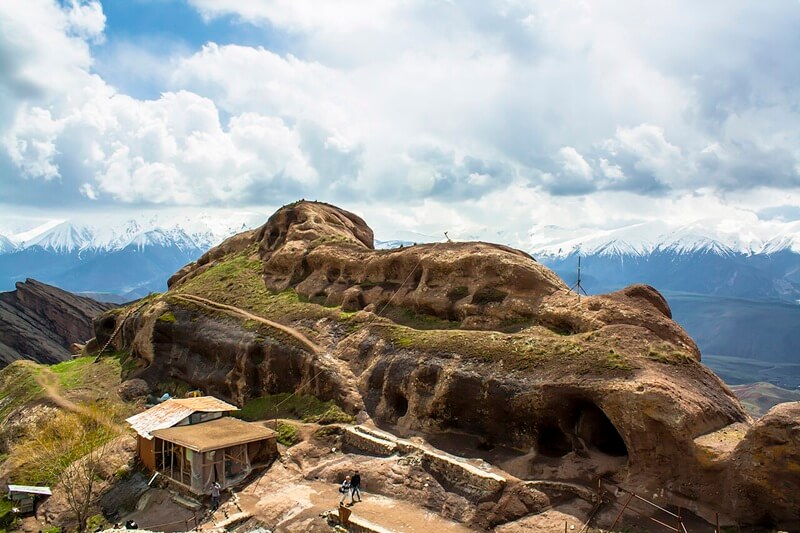

Alamut Castle, the legendary mountain fortress once known as the “Eagle’s Nest,” has officially been inscribed on the UNESCO World Heritage List. The decision, confirmed on Sunday, July 26, 2026, during the 48th session of the UNESCO World Heritage Committee in Busan, South Korea, brings Iran’s total to 30 World Heritage Sites and gives one of the country’s most significant medieval fortresses long-awaited international recognition.
The Alamut Castle UNESCO Listing, Explained
The inscription covers far more than Alamut Castle itself. The newly listed serial property, formally titled the Cultural Landscape of Alamut, includes seven fortified sites spread across the eastern and western Alamut valleys and the southern slopes of the Alborz Mountains in Qazvin Province: Alamut, Lambsar, Nowizar Shah, Shams-Kalaye, Qastin-Lar, Shirkuh, and Ilan.
UNESCO inscribed the property under cultural criterion (iii), recognizing places that bear exceptional testimony to a living or vanished cultural tradition or civilization. In this case, the committee concluded that the network of fortresses provides an outstanding record of how the Nizari Ismaili state organized, defended, and sustained itself for more than 150 years.
With Alamut’s inscription, Iran now has 30 UNESCO World Heritage Sites, joining landmarks such as Persepolis, Pasargadae, Yazd, and Bam Citadel as part of the country’s internationally recognized cultural heritage.
Why Alamut Castle Earned Its Place
From the late 11th century, Alamut served as the principal political, military, and intellectual center of the Nizari Ismaili state, an influential branch of Shia Islam whose influence extended across much of Iran and the wider Islamic world. Rather than functioning as a single isolated fortress, Alamut anchored a wider defensive and administrative network—the six additional castles included in the UNESCO inscription—that helped the state endure until the Mongol conquest in 1256.
That resilience, together with the intellectual and cultural life associated with the fortress, played a central role in the successful nomination. Iranian heritage officials have described the Cultural Landscape of Alamut as one of the country’s most important historical landscapes, with the UNESCO inscription expected to support future conservation, archaeological research, and long-term preservation efforts.
What This Means for Travelers
For now, the UNESCO inscription changes Alamut’s international status more than the visitor experience itself. The fortress remains a remote destination, roughly 200 kilometers (125 miles) northwest of Tehran, reached via a scenic but time-consuming drive through Qazvin Province. Unlike destinations such as Persepolis or Naqsh-e Jahan Square, it has yet to develop extensive visitor infrastructure.
What the inscription does signal is the beginning of a new chapter. UNESCO recognition often brings increased conservation funding, improved site management, and gradually enhanced visitor facilities over time. Travelers looking beyond Iran’s best-known attractions now have another compelling reason to keep Alamut on their radar as the valley continues to develop.
A Complete Alamut Castle Guide Is Coming Soon
We’re currently preparing a comprehensive guide to Alamut Castle, covering its history, architecture, surrounding fortresses, and practical travel information, including how to get there, the best time to visit, and what to expect on-site.
In the meantime, you can explore Iran’s other UNESCO-listed landmarks—from ancient Achaemenid capitals to historic desert cities—in our complete guide to Iran’s UNESCO World Heritage Sites.
We’ll also continue following conservation efforts and visitor developments at Alamut as the newly inscribed World Heritage property enters its next chapter.
Iran’s heritage list just got one site richer — explore the rest.
FAQs about Alamut Castle UNESCO Listing
1. Is Alamut Castle a UNESCO World Heritage Site now?
Yes. UNESCO officially inscribed Alamut Castle and six associated fortifications on the World Heritage List on July 26, 2026, during the 48th session of the World Heritage Committee in Busan, South Korea.
2. What fortresses are included in the Alamut UNESCO listing?
The Cultural Landscape of Alamut includes seven fortresses: Alamut, Lambsar, Nowizar Shah, Shams-Kalaye, Qastin-Lar, Shirkuh, and Ilan, all located across the Alamut valleys and the southern slopes of the Alborz Mountains in Qazvin Province.
3. Where is Alamut Castle located?
Alamut Castle stands atop a rocky ridge near the village of Gazor Khan in Qazvin Province, approximately 200 kilometers (125 miles) northwest of Tehran.
4. How many UNESCO World Heritage Sites does Iran have?
Following Alamut’s inscription on July 26, 2026, Iran now has 30 UNESCO World Heritage Sites.
5. Under which UNESCO criterion was Alamut inscribed?
The Cultural Landscape of Alamut was inscribed under cultural criterion (iii), recognizing sites that bear exceptional testimony to a cultural tradition or civilization. UNESCO recognized the property for its outstanding representation of the Nizari Ismaili state between the 11th and 13th centuries.
6. Can I visit Alamut Castle?
Yes. Alamut Castle is open to visitors, although reaching the site requires a scenic drive through Qazvin Province. Our upcoming visitor guide will cover transportation, hiking to the fortress, the best time to visit, and practical travel tips.
0 Comment