


Table of Contents
Between the Caspian Sea and the Alborz Mountains, northern Iran becomes almost impossibly green. Mist gathers beneath the canopy, rain darkens the trunks of ancient broadleaf trees, and villages appear briefly between forest and mountain before disappearing again into the folds of the landscape.
These are the Hyrcanian forests — a living belt of temperate woodland whose ecological history reaches back 25 to 50 million years. They survived climatic upheavals that erased similar forests across much of the Northern Hemisphere, making them less a single attraction than a vast natural archive. UNESCO inscribed the Iranian forest property in 2019, and a 2023 extension added two component parts in Azerbaijan. UNESCO describes the property as a serial site representing different stages and features of Hyrcanian forest ecosystems.
For a country often pictured through turquoise domes, desert roads, and sunlit archaeological ruins, the Hyrcanian forests offer another Iran — wet, shaded, mountainous, and shaped by rain.
The best ways to experience the Hyrcanian forests are through Golestan National Park, the cloud-covered Abr Forest, forested Gilan around Masouleh and Gisoom, Caspian villages, and guided walks arranged across a two- to five-day northern Iran itinerary.
At a Glance: Hyrcanian Forests Travel Guide
| Detail | Information |
|---|---|
| Location | Southern Caspian coast of Iran and parts of Azerbaijan |
| Forest belt | Approximately 850 kilometres along the Caspian coast |
| UNESCO status | World Heritage Site, inscribed 2019 and extended 2023 |
| UNESCO property | 17 component parts after the Azerbaijan extension |
| Wider forest region | About 3,200 documented vascular plant species |
| Best seasons | Spring and autumn |
| Main experience | Forest walks, wildlife, villages, birdwatching, and mountain roads |
The figures above refer to different geographical scales. The UNESCO property covers only selected component areas, while the broader Hyrcanian forest region extends across a much larger landscape. UNESCO records more than 3,200 vascular plant species in the wider Hyrcanian region. Its current World Heritage material records 180 bird species typical of broadleaf temperate forests and 58 mammal species — figures that should not be confused with broader regional lists sometimes repeated in travel writing.
What “Hyrcanian” Means
The name is older than modern Iran. Ancient Greek writers used Hyrkania for the region southeast of the Caspian Sea, deriving it from the Old Persian Varkāna or Verkâna. The name is commonly interpreted as “wolf-land,” although ancient place-name etymologies are not always completely certain.
Under the Achaemenid Empire, Hyrcania was recognized as a historical region and satrapy. The forest, therefore, carries two kinds of antiquity at once: the geological age of its trees and the recorded human history of a landscape known for roughly 2,500 years.
That distinction matters. The forest is not ancient because every tree standing today has lived for millions of years. Rather, the forest ecosystem and many of its lineages persisted through successive climatic changes, retreating into refuges and later expanding again.
Jungle, Rainforest, or Temperate Forest?
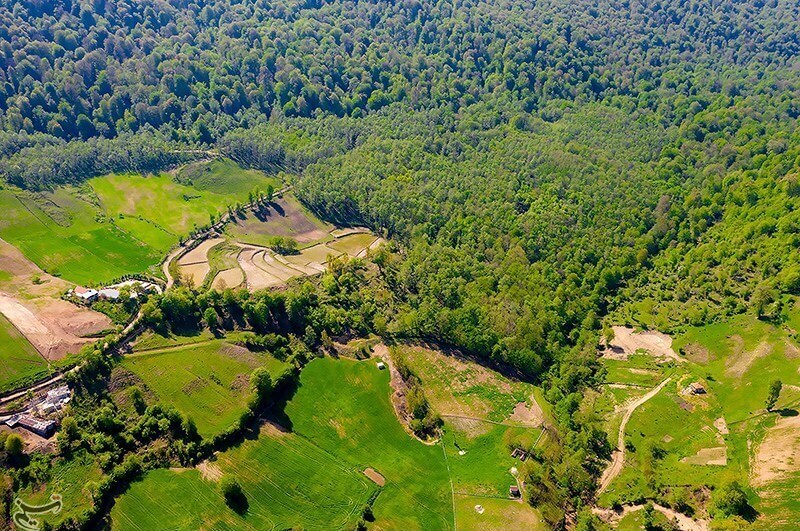
The Hyrcanian forests are not tropical rainforests. They are temperate broadleaf and mixed forests, with deciduous species, seasonal changes, and an ecological character closer to ancient forests of the Caucasus and Europe than to equatorial jungle.
The confusion is understandable. Parts of Gilan and Mazandaran are intensely humid, and the density of vegetation can feel tropical after the dry landscapes of central Iran. Search terms such as “Hyrcanian jungle” and “Hyrcanian rainforest” are therefore common, but “temperate Caspian forest” is the more accurate description.
Rainfall, elevation, and exposure vary considerably across the region. Lowland forests, montane woodland, high Alborz slopes, and the drier eastern edge near Golestan do not look identical. The forest is best understood as a long ecological gradient rather than a single uniform landscape.
📷Photo by Seyed Vali Shojaei Langari on Wikicommons
Where the Forests Stretch
The Hyrcanian forests form a broad arc along the southern and southwestern shores of the Caspian Sea. In Iran, the belt crosses Gilan, Mazandaran, and Golestan before continuing into Azerbaijan’s Talysh region.
The wider forest zone extends for roughly 850 kilometers along the Caspian coast. The UNESCO property, however, is not one uninterrupted park. It is a serial World Heritage site made up of separate component parts chosen to represent different forest types, elevations, and ecological processes.
The original 2019 inscription covered 15 Iranian components. In 2023, UNESCO added Dangyaband and İstisuchay Valley in Azerbaijan, bringing the property to 17 components shared between the two countries.
For travelers, this means that “visiting the Hyrcanian forests” has no single route or entrance gate. A walk near Golestan National Park, a village stay near Masouleh, and a misty road through the Abr Forest may all reveal different versions of the same ancient forest system.
Ancient Trees and Living Relicts
The significance of the Hyrcanian forests lies not simply in their beauty but in their history. Broadleaf forests of this general type were once far more widespread across the Northern Temperate region. During the Quaternary glaciations, many forest communities disappeared or retreated southward. The Caspian basin and Alborz slopes provided refuges where parts of the ancient vegetation survived.
As climates changed, these refugial forests expanded again. The resulting landscape is often described as a relict or “living museum” forest — not a frozen remnant, but an ecosystem that continued to evolve while preserving lineages lost elsewhere.
Important trees include Persian ironwood — Parrotia persica — which is native to the region, and Caucasian zelkova — Zelkova carpinifolia. Beech, hornbeam, oak, maple, alder, and box trees also occur across different elevations and forest communities.
UNESCO records more than 3,200 vascular plant species in the wider Hyrcanian region. The region occupies only around 7% of Iran’s territory yet contains approximately 44% of the country’s known vascular plant species, underlining its botanical importance.
Golestan National Park: The Eastern Forest
Golestan National Park is one of the most important visitor entry points into the eastern Hyrcanian landscape. It lies where forested Alborz terrain meets drier steppe and open country, creating an unusually varied ecological transition.
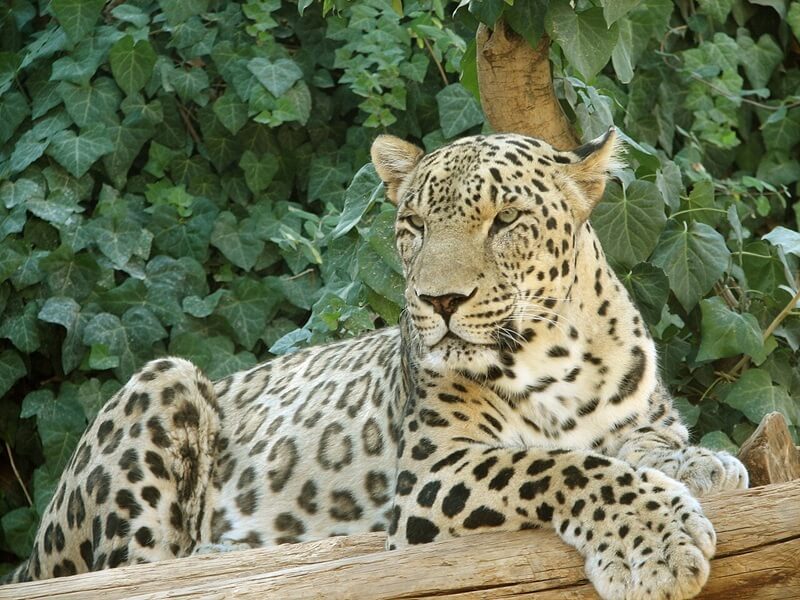
The park is known for forest, mountain, valley, and wildlife habitats. It is also associated with the Persian leopard, brown bear, wild boar, deer, and numerous bird species. UNESCO identifies the Persian leopard among the mammals recorded in the wider Hyrcanian region, while conservation organizations classify the subspecies as endangered.
A leopard sighting should never be treated as a realistic expectation. The animal is elusive, populations are fragmented, and responsible wildlife tourism means avoiding pressure on breeding areas and never pursuing an animal for photographs.
📷Photo by Rasool abbasi17 on Wikicommons
Abr Forest: A Cloud-Wrapped Landscape
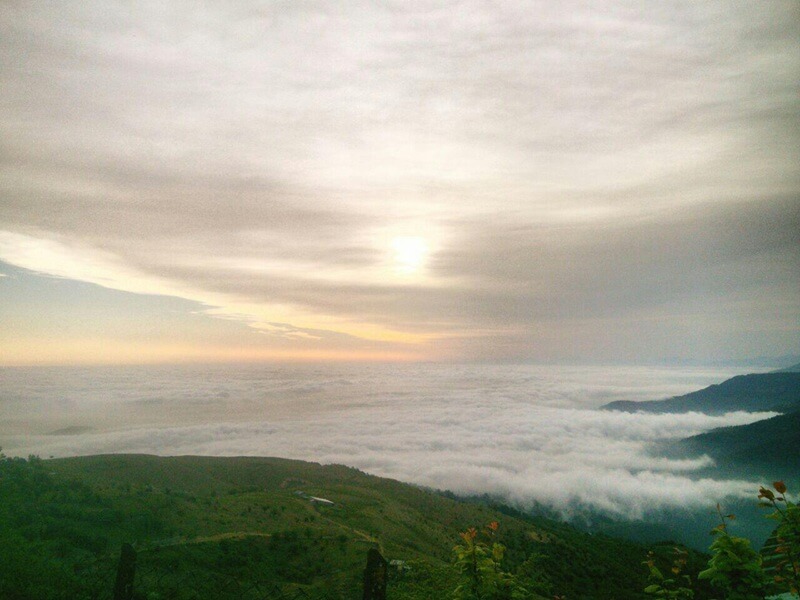
The Abr Forest lies near the boundary between Semnan and Golestan provinces and is famous for the way clouds collect over its wooded ridges. The visual effect is dramatic: forested slopes seem to dissolve into mist, while dry plains lie not far away on the other side of the mountain divide.
Abr is particularly appealing to photographers and travelers who want atmosphere rather than a formal visitor center. Infrastructure is more limited than in the best-known national parks, and conditions can change quickly. A local driver or guide is useful, especially after rain when unpaved roads become difficult.
Masouleh and Gilan: Forest, Village, and Tea
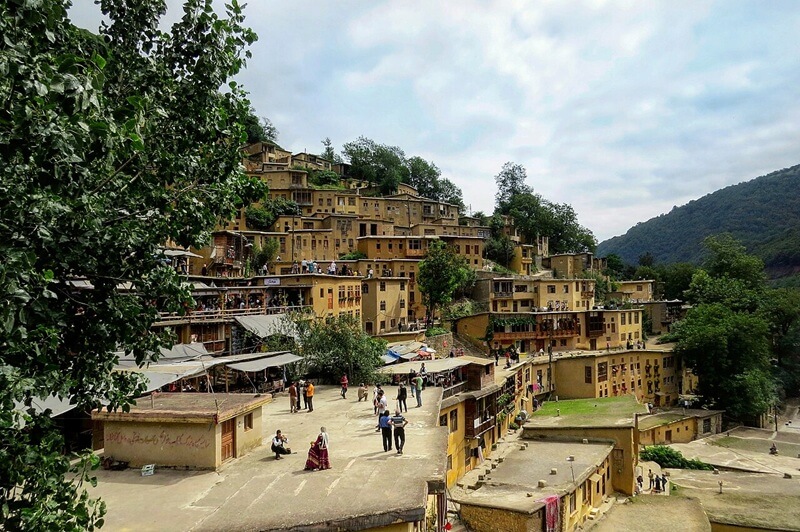
Around Masouleh, the forest becomes part of a cultural landscape of steep paths, terraced houses, orchards, and mountain roads. The village itself is not the entire forest experience, but it provides a strong base for combining architecture, walking, and views over the wooded folds of Gilan.
The surrounding province is also known for tea cultivation and humid Caspian landscapes. A visit here works best at a slower pace — a village morning, a forest walk, and a drive through the changing elevations rather than a hurried sequence of viewpoints.
Gisoom Forest and the Caspian Edge
Gisoom, in Gilan, offers one of the most accessible impressions of forest meeting coast. The road through the trees leads toward the Caspian shore, creating a landscape that feels very different from the inland Iranian plateau.
It is a popular recreational area, so visitors should not expect complete solitude. Its value lies in the contrast: dense woodland, lowland humidity, and the sea within the same short journey.
Persian Ironwood: A Relict Tree
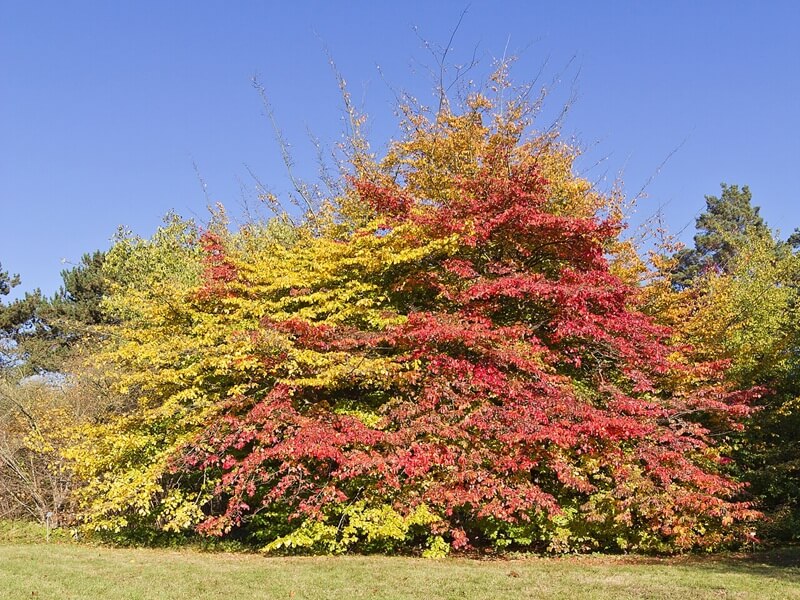
Persian ironwood is one of the characteristic trees associated with the Hyrcanian region. Its leaves change color in autumn, and its dense wood has contributed to the species’ reputation and name.
The tree is significant not because it is the only remarkable species here, but because it represents the persistence of ancient temperate forest lineages. In autumn, ironwood and other deciduous trees help give the Caspian slopes their copper, amber, and russet colors.
📷Photo by A.Savin on Wikicommons
Wildlife and Conservation
The Hyrcanian forests support a varied fauna across their full ecological range. UNESCO records 58 mammal species and 180 bird species typical of broadleaf temperate forests in the region. Species associated with the wider landscape include the Persian leopard, brown bear, wild goat, wild boar, deer, birds of prey, and migratory birds
The Persian leopard is the most emblematic large mammal. The IUCN Cat Specialist Group classifies it as Endangered and estimates a global subspecies population of approximately 750–1,044 individuals, with 450–626 mature individuals. Numbers and taxonomy can vary between assessments, so population figures should be treated as estimates rather than an exact census.
The conservation picture is mixed. Protected areas, legal measures, scientific monitoring, and national parks provide important safeguards, but roads, habitat fragmentation, grazing, poaching, water pressure, and poorly managed development remain concerns. The World Heritage designation does not mean that every part of the wider forest is untouched or equally protected.
For visitors, responsible behavior is simple:
- Stay on established routes where required.
- Do not feed wildlife or play animal calls.
- Avoid collecting plants, wood, or stones.
- Use local guides for remote trails.
- Keep noise low in wildlife areas.
- Carry rubbish out of the forest.
- Respect access restrictions and ranger instructions.
Hyrcanian Forests; UNESCO Criterion (ix)
The Hyrcanian forests were inscribed under natural criterion (ix), which recognizes outstanding examples of ongoing ecological and biological processes in the evolution and development of terrestrial, freshwater, coastal, and marine ecosystems.
In plain language, UNESCO is not protecting one spectacular waterfall, one exceptional tree, or one endangered animal. It is recognizing the forest as a functioning ecological record — a place where succession, adaptation, evolution, and species diversification can still be studied across a long-continuing forest system.
UNESCO’s evaluation emphasized the property’s importance in illustrating the genesis of Hyrcanian forests, including succession, evolution, and speciation. The site remains listed under criterion (ix), rather than criterion (x), the biodiversity and threatened-species criterion.
The designation also has limits. The World Heritage property is serial, and it represents selected component areas rather than the entire forest belt. UNESCO’s 2019 decision stated that the inscribed property covered around 7% of the remaining Hyrcanian forests in Iran.
📷Photo by Hanieh SMD on Wikicommons
Best Day Trips from the Forest
Masouleh: A Mountain Village
Masouleh pairs naturally with western forest routes through Gilan. Its stepped architecture follows the mountain slope, while paths beyond the village lead into a landscape of woodland, pasture, and mist.
The village can become busy during holidays. An early arrival gives travelers more time to experience its quieter lanes and mountain atmosphere.
Rudkhan Castle: A Forested Medieval Fortress
Rudkhan Castle stands on a wooded ridge in Gilan and is reached by a long uphill approach through forest. The climb is demanding in humid weather, but the setting is part of the attraction: the fortress appears gradually through trees rather than presenting itself from a broad plain.
It is best treated as a full half-day excursion, with sturdy footwear and water.
Caspian Coast and Gisoom
A day combining Gisoom Forest with the Caspian shore offers one of the region’s clearest landscape contrasts. The forest road, coastal air, and lowland villages make this a useful addition to a Gilan itinerary.
Alagol, Ulmagol, and Ajigol Wetlands
North of Gonbad-e Kavus, the Alagol, Ulmagol, and Ajigol wetlands provide a different side of Golestan province. These Ramsar-listed wetlands are important for migratory birds, though water levels and bird numbers vary by season and hydrological conditions.
They are best visited with a local guide who understands access roads, seasonal water conditions, and bird habitats.
Gonbad-e Kavus: A UNESCO Brick Tower
The Gonbad-e Qabus tower makes an especially strong pairing with eastern Hyrcanian routes. Built in 1006–1007 for the Ziyarid ruler Qabus ibn Voshmgir, it is a UNESCO-listed monument in the Golestan plain — a striking architectural counterpoint to the forested mountains nearby.
Our article on Gonbad-e Qabus and the lost city of Jorjan provides a deeper look at the tower, its brick engineering, and the region’s medieval history.
📷Photo by Tamar Assaf on Wikicommons
Hyrcanian Forests Practical Travel Tips
Best Time to Visit
Spring — especially April to June — brings fresh foliage, wildflowers, and generally comfortable conditions at many elevations. Autumn, from September to November, offers the richest colors and often the clearest photographic atmosphere. Summer can be hot and humid in the Caspian lowlands, while higher elevations may remain more comfortable. Winter brings rain at lower elevations and snow on mountain roads, with occasional disruption on passes.
Weather varies sharply between the coast, foothills, and high Alborz. Check local forecasts before setting out.
Getting There
From Tehran, travelers generally cross the Alborz through routes such as Chalus or Haraz, depending on the destination. Gilan, Mazandaran, Golestan, and the Abr Forest are not interchangeable day trips from the capital; each requires its own routing.
Private transport is the most flexible option. It allows stops at villages, viewpoints, forest edges, and archaeological sites that are difficult to reach by public transport.
Time required
A single component can be visited comfortably in half a day; a fuller sense of the region — combining forest, coastline, and at least one historic village — is best approached over 3 to 5 days.
Guides and Wildlife
A local guide is strongly recommended for remote forest walks, wildlife observation, and less-marked routes. Guides can help distinguish public paths from restricted areas, interpret the landscape, and prevent visitors from entering sensitive habitats.
Do not plan the trip around seeing a leopard. The forest itself — its trees, weather, birdlife, and changing elevations — is the experience.
Etiquette and Environmental Care
Ask before photographing people, especially in villages and rural communities.
In the forest, avoid loud music, fires outside designated areas, littering, and off-road driving. The most respectful visit is one that leaves the landscape looking as though you had never passed through it.
Final Thoughts: The Forest Beyond Domes and Deserts
Much of Iran’s familiar travel image is human-made — tiled courtyards, vaulted bazaars, gardens, bridges, and citadels shaped by centuries of ambition. The Hyrcanian forests offer a different kind of monument.
Their architecture is the layered structure of a canopy. Their inscriptions are held in tree rings and soil. Their history is measured not in dynasties but in climatic shifts, refuges, extinctions, and returns.
To visit them is not to collect another UNESCO label. It is to spend time in the green margin of a country that is too often imagined only through its deserts and cities. The forest asks for slower travel: fewer stops, longer roads, and enough silence to hear rain moving through leaves.
Want to move beyond Iran’s classic circuit?
FAQs about Hyrcanian Forests
1. What are the Hyrcanian forests?
The Hyrcanian forests are a belt of temperate broadleaf and mixed woodland along the southern Caspian coast of Iran and Azerbaijan. Their ecological history reaches back 25 to 50 million years, and selected areas are protected as a UNESCO World Heritage property.
2. How old are the Hyrcanian forests?
The forest system is generally dated to 25–50 million years in ecological and geological terms. This does not mean that individual trees are millions of years old. It refers to the persistence of ancient forest lineages and ecosystems through major climatic changes.
3. Are the Hyrcanian forests a rainforest?
No. They are temperate broadleaf and mixed forests. Their humidity and dense vegetation can feel rainforest-like, especially in Gilan and Mazandaran, but their seasonal ecology and species composition are temperate.
4. Where are the Hyrcanian forests located?
In Iran, they extend across Gilan, Mazandaran, and Golestan provinces along the Caspian coast and Alborz Mountains. The UNESCO property also includes two component parts in Azerbaijan.
5. Why are the Hyrcanian forests a UNESCO World Heritage Site?
They are listed under natural criterion (ix) because they represent ongoing ecological and evolutionary processes in a forest system with an exceptionally long history. UNESCO specifically highlights succession, evolution, and speciation.
6. What animals live in the Hyrcanian forests?
UNESCO records 58 mammal species and 180 bird species typical of broadleaf temperate forests in the wider region. The Persian leopard, brown bear, wild goat, wild boar, deer, and numerous birds are among the notable species associated with the landscape.
7. Is the Persian leopard endangered?
Yes. The Persian leopard is classified as Endangered by the IUCN Cat Specialist Group. It occurs across parts of Western and Central Asia, including Iran, but its populations are fragmented and sightings in the wild are uncommon.
8. What is the best time to visit Hyrcanian Forests?
Spring offers fresh greenery and mild conditions, while autumn brings the strongest foliage colors. Summer is humid in the lowlands, and winter can bring rain, snow, and road disruption at higher elevations.
9. Can tourists visit Golestan National Park?
Yes, although access, roads, trails, and conditions vary. Golestan is one of the most practical starting points for exploring the eastern Hyrcanian landscape, but travelers should follow ranger instructions and use local guidance for remote areas.
10. How do I reach the forests from Tehran?
Most routes cross the Alborz through roads such as Chalus or Haraz, depending on the chosen destination. The journey can take several hours, and mountain traffic, weather, roadworks, and seasonal closures may affect the timing.
11. Are the Hyrcanian forests in both Iran and Azerbaijan?
Yes. The original 2019 UNESCO inscription covered 15 Iranian components. A 2023 extension added two Azerbaijani components, bringing the World Heritage property to 17 components.
12. What makes the Hyrcanian forests different from other Iranian landscapes?
They are a natural World Heritage site shaped by rainfall, humidity, elevation, and ecological continuity. Their green mountain forests provide a striking contrast to Iran’s central deserts, historic cities, and arid plateaus.
0 Comment