

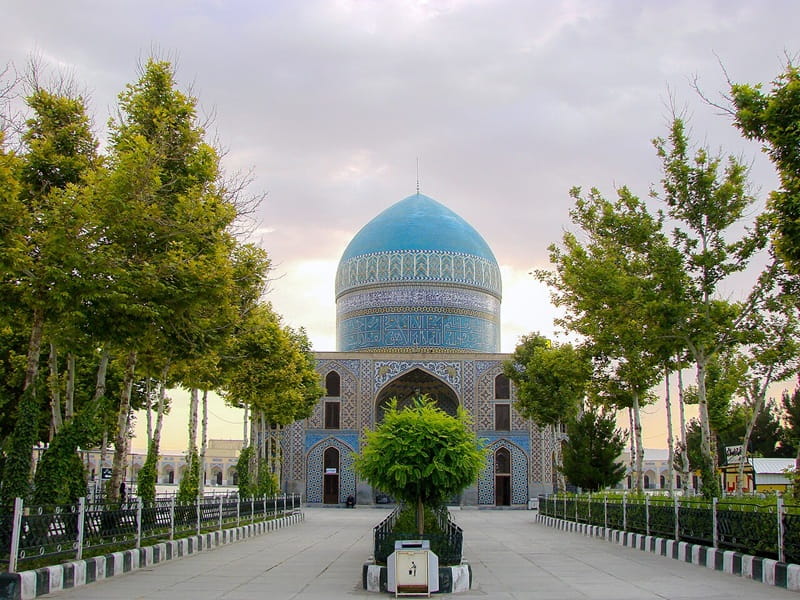
Table of Contents
Mashhad announces itself through scent before it fully reveals itself: rosewater at tea stalls, saffron in shop windows, warm bread near the shrine, and grilled kebab drifting through the evening streets. Iran’s second-largest city is built around the Imam Reza Shrine — the spiritual heart of Twelver Shiism — but it is not only a pilgrimage destination. It is also the capital of Razavi Khorasan, a busy university city, a commercial center, and the natural gateway to the literary and historical landscapes of eastern Iran.
For travelers arriving with more curiosity than devotion, Mashhad offers a distinctive combination of sacred architecture, dense bazaars, quiet parks, museums, mountain villages, and nearby cities associated with great Persian poets, Ferdowsi, Omar Khayyam and Attar. The shrine remains the city’s gravitational center, but the best visit allows time to notice what moves around it.
This guide covers the best things to do in Mashhad, from the Imam Reza Shrine and Goharshad Mosque to saffron bazaars, museums, parks, cafés and day trips through Khorasan.
Why Mashhad Is Worth Visiting
Mashhad is Iran’s second-largest city by population and the capital of Razavi Khorasan Province. The city had more than 3.8 million inhabitants, making it a major urban center as well as Iran’s most important pilgrimage destination.
Its identity is shaped by a powerful contradiction. The Imam Reza Shrine dominates the city physically, economically and spiritually, yet millions of residents live ordinary urban lives beyond its courtyards. Students attend university, families picnic in parks, cafés fill with young people, and shoppers move through enormous commercial districts far from the shrine.
That contrast is what makes Mashhad more rewarding than a quick stop between flights. The city offers a different view of Iran from Tehran, Isfahan or Shiraz — one shaped by Shiite pilgrimage, eastern Persian history, Silk Road connections and the literary culture of Khorasan.
Imam Reza Shrine: Golden Heart of Mashhad
No list of things to do in Mashhad can begin anywhere else. The Imam Reza Shrine, or Haram-e Razavi, is the city’s spiritual and architectural center.
Imam Ali al-Rida — the eighth Imam of Twelver Shiism — died near Sanabad in 818 CE. The settlement that grew around his burial place eventually became Mashhad, a name associated with a place of martyrdom. Over the centuries, rulers, pilgrims and religious endowments expanded the original tomb into a vast complex of courtyards, iwans, mosques, libraries, museums, seminaries and service buildings.
The shrine is not a monument designed primarily for tourists. It is a living religious space, and that distinction shapes the experience. Worshippers arrive from across Iran and from other countries, often in family groups. Volunteers guide visitors through the courtyards, carpets cover the spaces used for prayer, and the golden dome rises above the movement of people like a fixed point in a constantly shifting city.
Visit in the evening if you want to see the shrine illuminated, but arrive early if you want more time to understand the architecture. The busiest religious occasions can transform the surrounding streets into a slow-moving tide of pilgrims.

📷Photo by Alireza Molayi on Wikicommons
Goharshad Mosque: A Timurid Masterpiece
Within the shrine complex, Goharshad Mosque is the clearest expression of Timurid Mashhad. It was commissioned in the early fifteenth century by Gawhar Shad, the wife of Timurid ruler Shah Rukh, and served as the Friday mosque for pilgrims visiting Imam Reza’s tomb.
The mosque’s blue, turquoise and white tilework is arranged around monumental iwans and bands of calligraphy. Its beauty comes from proportion as much as decoration. The courtyard draws the eye toward the great iwan, while the tilework turns inscriptions and geometric forms into a surface that seems to move in the changing light.
Travelers who have seen Safavid architecture in Isfahan may notice a different quality here. Goharshad Mosque belongs to an earlier Timurid architectural world, one associated with the courts of Herat and Khorasan. It is more restrained in some details, but no less ambitious in scale.
Shrine Etiquette: How to Visit Respectfully
Non-Muslim visitors may be admitted to designated parts of the shrine complex, but access to the innermost sanctuary is restricted. The exact arrangement can change according to security conditions, religious dates and local policy. Foreign visitors should ask about current procedures at the international pilgrims’ office or arrange an authorized guide.
Women are expected to wear a head covering and a chador inside the shrine. Chadors are generally available at the entrances. Men should wear long trousers and modest shirts.
Security checks are normal. Bags and cameras may be inspected, and photography is restricted in certain areas. Ask before photographing people, religious ceremonies or interior spaces. The most important rule is simple: treat the shrine as a place of worship first and an architectural attraction second.
📷Photo by Mostafameraji on Wikicommons
Nader Shah Mausoleum: A Warrior King Remembered
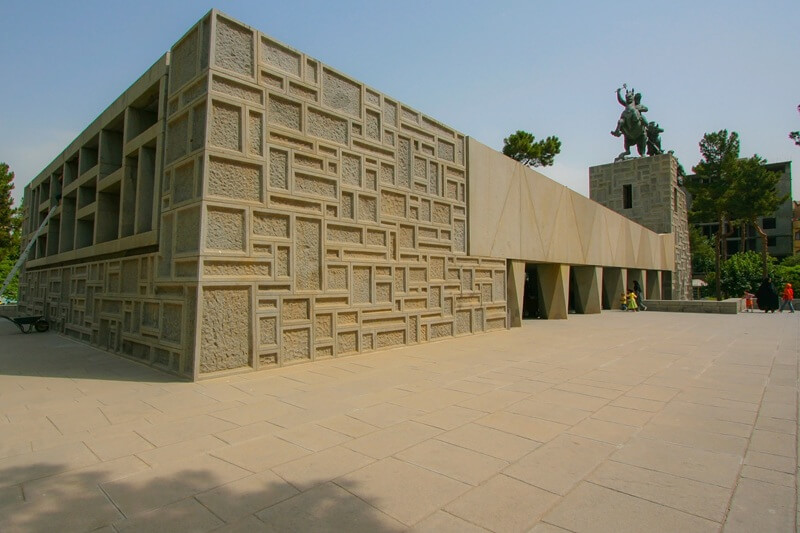
A short walk from the shrine, the Naderi Garden Museum commemorates Nader Shah Afshar, one of the most powerful and controversial rulers of eighteenth-century Iran.
Nader Shah’s campaigns temporarily restored Iran as a major military power after the fall of the Safavid dynasty. The present mausoleum, however, is a modern monument rather than an untouched eighteenth-century tomb. Its architecture is severe and geometric, while the large bronze equestrian statue presents Nader Shah as a commander in motion.
The attached museum contains weapons and historical objects associated with Nader Shah’s period and Iranian military history. The site is most interesting when approached with some distance. Nader Shah was an extraordinary military figure, but also a ruler associated with violence and political instability. The museum offers an opportunity to consider how national memory turns a complicated ruler into a public symbol.
Astan Quds Museum: Art, Faith and Endowment
The Astan Quds Razavi museums provide a different way into Mashhad’s history. The institution that administers the shrine has accumulated manuscripts, Qurans, carpets, ceramics, coins, arms, clocks and other objects through centuries of religious endowment and pilgrimage.
The collections show how much more the shrine represents than a single building. Religious devotion supported libraries, workshops, charitable institutions, artistic production and the preservation of historical objects. The museum therefore works as a cultural counterpart to the shrine itself.
Current galleries and opening arrangements can change, so check locally before building your day around a particular collection. The Astan Quds Razavi complex is identified by Iran’s official tourism platform as one of the country’s major endowment-based museum institutions.
Mahdi Qoli Beyk Bathhouse: Safavid Social History
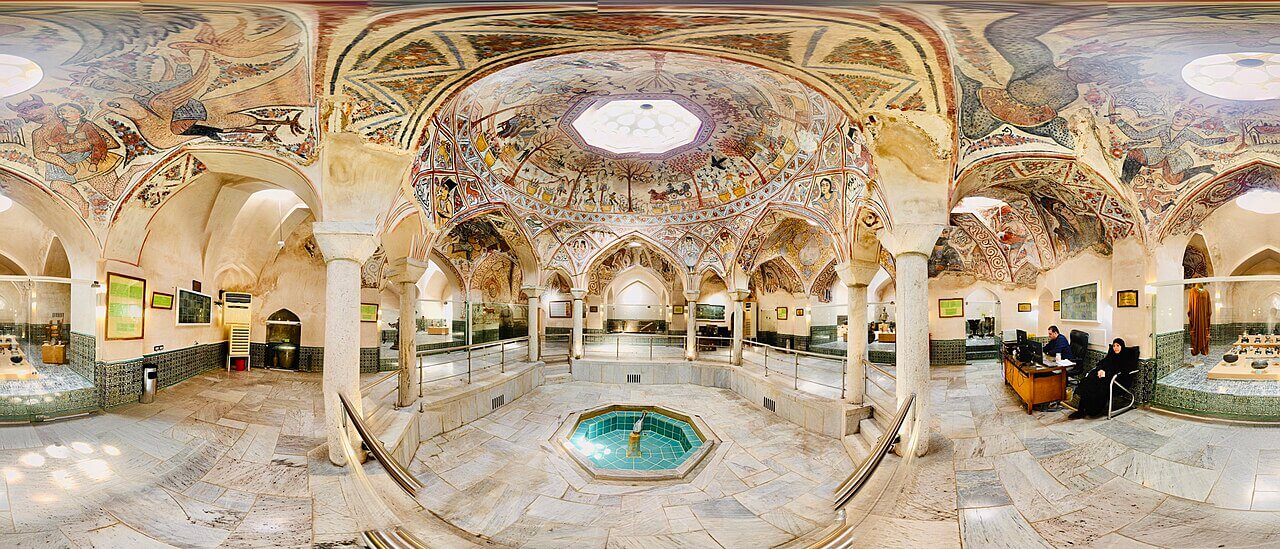
Near the shrine, the Mahdi Qoli Beyk Bathhouse offers a glimpse of everyday urban life during the Safavid period. The bathhouse was built in 1681 and remained in use until the late twentieth century. It now functions as an ethnographic museum.
The building includes the traditional sequence of changing room, warm chamber and hot room. Its painted surfaces, vaulted ceilings and skylights are less grand than the shrine’s architecture but more intimate. This was a place where people met, washed, exchanged news and participated in a social routine that once shaped every Iranian city.
The bathhouse is also a useful correction to the way historic Iran is often presented. Royal palaces and religious monuments tell only part of the story. Buildings such as this reveal the infrastructure of ordinary life.
📷Photo by Mjkhoshnood on Wikicommons
Darougheh House: A Glimpse of Qajar Mashhad
Darougheh House is a restored historic residence associated with the late Qajar period. Its courtyards, brickwork, decorative details and domestic layout offer a quieter experience than Mashhad’s major religious sites.
The house is not as monumental as a royal palace, and that is precisely its value. It gives a sense of how an affluent urban household was organized around courtyards, privacy, seasonal movement and family life. Opening arrangements can change, so confirm the current schedule before visiting.
Bazaar Reza: A Marketplace of Saffron
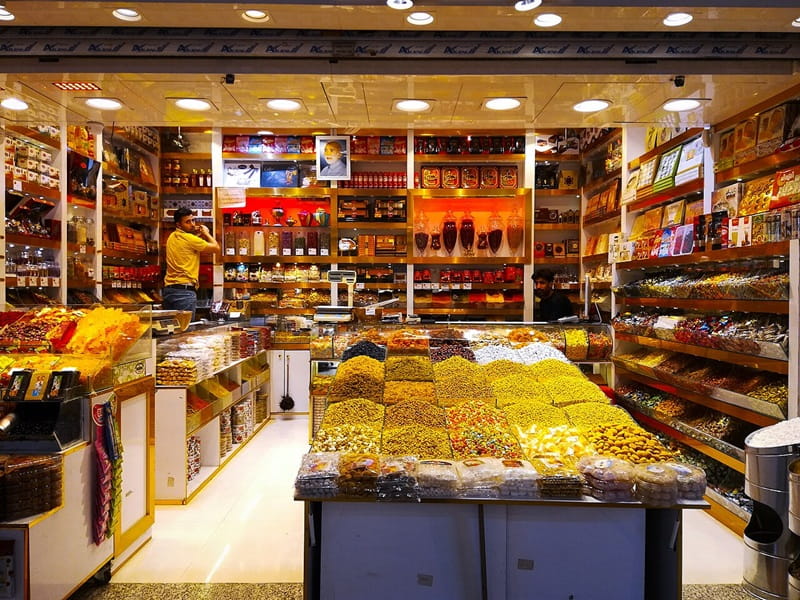
Bazaar Reza is the city’s main pilgrimage-market experience. Its covered passages run close to the shrine and are filled with saffron, prayer beads, religious souvenirs, dried fruit, sweets, fabrics, jewelery and carpets.
The bazaar is busy, brightly lit and designed for a constant flow of visitors. Some shops sell standardized souvenirs, while others specialize in high-quality saffron, regional textiles or carpets. Walk through several sections before buying, especially if you are considering an expensive item.
The upper levels are often calmer than the busiest ground-floor passages, although the character of the bazaar varies from shop to shop. Bargaining may be possible for some goods, but not every price is negotiable.
📷Photo by Fatemepe on Wikicommons
Saffron Shopping: Buying Golden Spice
Mashhad’s association with saffron is grounded in the wider agricultural economy of Razavi Khorasan. The province is Iran’s main saffron-growing and commercial region, with important production areas around Torbat-e Heydarieh and Zaveh. Mashhad functions as a major trading and distribution center.
Good saffron threads should be deeply red and relatively uniform. Labels such as sargol and negin are commonly used, but the label alone does not guarantee quality. Buy from an established shop, compare prices and ask about the grade, weight and packaging.
Saffron is light, expensive and easy to carry, which makes it one of the best souvenirs from Mashhad. Barberries, dried fruit, nuts, regional sweets and tea are also practical purchases.
For more context on Iranian carpets, textiles, ceramics and other crafts, read Compassimo’s guide to Iranian handicrafts.
Mashhadi Cuisine: The Flavours of Khorasan
Mashhad’s food culture reflects the ingredients and traditions of northeastern Iran. Saffron, barberries, rice, fresh bread, dairy products, lamb and dried fruit appear across local cooking, whether in home-style meals, traditional restaurants or market snacks.
Try saffron tea, saffron ice cream and regional sweets, but do not restrict yourself to foods marketed specifically to pilgrims. The best meals may be found away from the immediate shrine district, where restaurants serve residents rather than visitors passing through.
Iranian food is often presented internationally through kebab and rice, but there is much more to look for:
- Shishlik — grilled lamb served especially in the mountain restaurants around Shandiz.
- Ash — thick herb, noodle and legume soups.
- Saffron rice served with kebab or stews.
- Fresh sangak and barbari bread.
- Barberries, dried fruit and nuts.
- Saffron sweets and ice cream.
Our guide to the best Persian dishes offers a broader introduction to Iran’s cuisine.
Torqabeh and Shandiz: Mountain Air and Dining
Torqabeh and Shandiz are as much food destinations as countryside escapes. Their mountain restaurants attract Mashhad residents looking for cooler air, gardens, streams and long meals outside the city.
Shandiz lies roughly 38 kilometers southwest of Mashhad and is associated with gardens, springs, restaurants and mountain scenery. Torqabeh is another popular nearby resort town, known for its green valleys and traditional dining.
These towns can become crowded on weekends and public holidays. Visit during the week if you want a quieter meal.
Kuh-e Sangi Park: Where Mashhad Unwinds
Kuh-e Sangi is one of the best places to see Mashhad away from the shrine district. The park is built around rocky hills and includes paths, water features, trees, restaurants and viewpoints.
Come in the late afternoon, when families gather for walks and picnics. Older men sit together, children move between the paths and young people meet beneath the trees. The park is not simply a green attraction; it is part of the city’s social life.
The Great Khorasan Museum is also located in the wider Kuh-e Sangi area, making it possible to combine a museum visit with an evening in the park.
Modern Mashhad: Cafés, Malls and Student Life
A few kilometres from the shrine, Mashhad shifts into a modern provincial capital. University students fill cafés, shopping centers draw younger crowds, and contemporary restaurants operate alongside traditional eateries.
The western districts are particularly useful for seeing this side of the city. The atmosphere is more commercial and residential, with broad roads, malls, parks and newer architecture. It is not a separate Mashhad so much as the other half of the same city.
Travelers often make the mistake of treating pilgrimage and modern life as opposites. In Mashhad, they exist next to each other. A visitor can spend the morning in a Timurid mosque, the afternoon in a museum and the evening in a café or shopping district without ever leaving the city’s main urban fabric.
📷Photo by Mostafameraji on Wikicommons
Tus: Walking in Ferdowsi’s Shadow
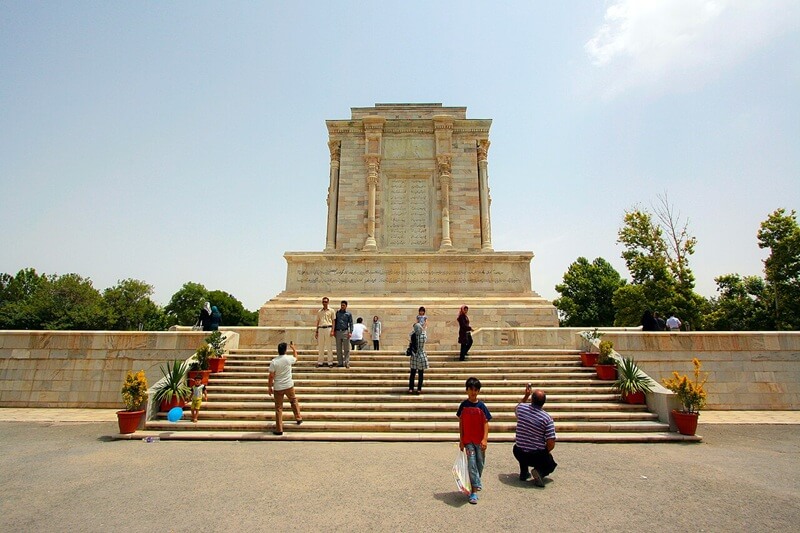
Tus lies roughly 25 to 30 kilometers northwest of Mashhad, depending on the route. It is the most essential day trip for travelers interested in Persian literature.
The city is associated above all with Ferdowsi, author of the Shahnameh. His mausoleum stands in a formal garden, and the surrounding complex includes a museum dedicated to the poet and the epic tradition. The modern structure is less important than what it represents: a national literary memory built around a text that preserved Persian legends, vocabulary and historical imagination across centuries.
Allow time for the nearby remains of historic Tus and Haruniyeh. Tus is not simply an excursion to a tomb. It is a place where the cultural history of Persian language becomes tangible.
Nishapur: Khayyam, Attar and Turquoise
Nishapur lies about 130 kilometers west of Mashhad and makes a long but rewarding day trip by private car. The city was one of the important centers of medieval Khorasan and remains associated with poetry, science, Sufi thought and turquoise.
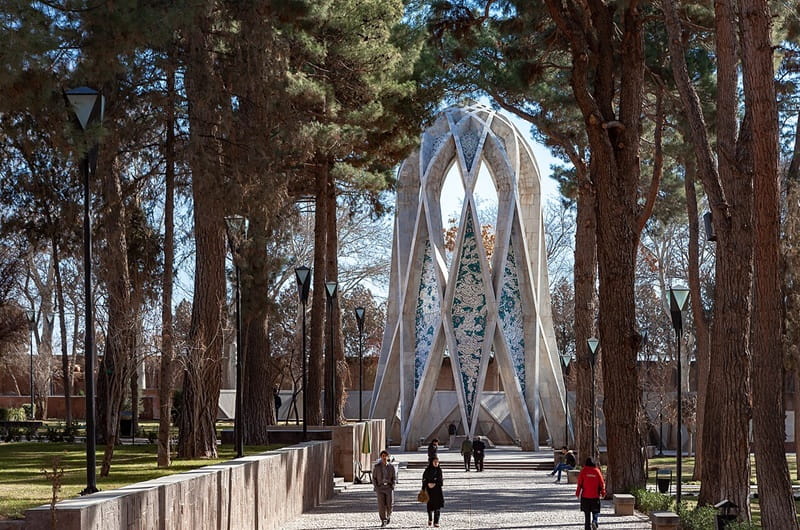
The tomb of Omar Khayyam is marked by a striking modern structure of intersecting geometric forms. Its design reflects Khayyam’s reputation as a mathematician and astronomer as well as a poet. Nearby, the tomb of Attar commemorates the twelfth-century mystic poet whose work has influenced Persian literature and Sufi thought.
The official tourism platform describes Nishapur as a city of turquoise, poetry and knowledge and lists the tombs of Khayyam and Attar among its central attractions.
Nishapur is best experienced slowly. If you combine it with Tus, expect a long day and arrange transport in advance.
📷Photo by Ninara on Wikicommons
Kalat-e Naderi: A Fortress in the Mountains
Kalat-e Naderi lies northeast of Mashhad in a rugged mountain setting. Its natural geography explains its association with defence and with Nader Shah Afshar, who used the region as a refuge and stronghold.
This is not a quick city excursion. Roads and weather can make the journey long, so it is better suited to travelers with an extra day or a wider Khorasan itinerary. The reward is a more remote landscape than the one around Mashhad, with mountain passes and fortifications that feel far removed from the city’s shrine district.
Torbat-e Jam: Sufi Heritage and Local Music
Torbat-e Jam is farther from Mashhad and is best considered as part of a longer journey through eastern Khorasan. The town is associated with Sheikh Ahmad-e Jami, Sufi traditions and the musical culture of the region.
It is a worthwhile addition for travelers interested in Persian mysticism, local architecture and Khorasan’s living cultural traditions, but it should not replace Tus or Nishapur on a first visit.
Essential Mashhad Travel Tips
Best Time to Visit
Spring and early autumn are usually the most comfortable seasons for exploring Mashhad and its surrounding countryside. Spring brings mild weather and green mountain valleys, while September and October are often pleasant for walking and day trips.
Summer can be hot in the city, although the mountain towns offer cooler air. Winter is cold and may bring snow or cloudy weather.
Religious dates matter as much as the seasons. Muharram and other major commemorations bring much larger crowds to the shrine. Visit during these periods if you want to witness the city at its most devotional, but expect slower transport, higher demand for accommodation and more difficult access around the Haram.
For broader seasonal planning, see our guide to deciding when to go to Iran.
Getting Around Mashhad
Mashhad Metro Line 1 connects the airport with major parts of the city and is one of the most affordable ways to travel. Transport studies document the airport connection as part of the city’s light-rail system.
Hailing apps are useful for journeys that are too long to walk and generally cheaper than negotiating with taxis outside transport hubs. A local SIM card makes the service easier to use.
The shrine, Bazaar Reza, Mahdi Qoli Beyk Bathhouse and Nader Shah’s mausoleum can be combined on foot, although crowds and heat may make short taxi rides worthwhile. For Tus, Nishapur, Kalat-e Naderi and Torbat-e Jam, a private car and driver are usually the most practical option.
Dress and Etiquette
Mashhad is a religious city, so behave quietly and respectfully around prayer spaces. Ask before taking photographs, avoid photographing worshippers without permission and follow instructions from shrine staff. Inside the Imam Reza Shrine, dress requirements are stricter. Women generally wear a chador, which is provided at the entrance.
Where to Stay
Staying near the shrine makes early visits and evening walks convenient, but the area is busy and strongly oriented toward pilgrims. The central districts offer easier access to bazaars and historic sites. Western Mashhad is more modern and can be preferable for travelers who value parks, restaurants and contemporary shopping areas.
Choose according to the shape of your itinerary rather than assuming that the shrine district is automatically the best base.
Safety and Connectivity
Mashhad is generally manageable for travelers, but crowd density can become the main practical challenge around the shrine during religious occasions. Keep valuables secure, take care when exchanging money and confirm taxi prices where hailing apps are unavailable. For broader advice, read our honest guide to safety in Iran.
For travelers planning a wider route through Iran, Mashhad adds a northeastern perspective that differs sharply from Tehran, Isfahan and Shiraz. Our overview of Iran’s other major cities can help place the city within a broader itinerary.
Final Thoughts: Where Pilgrimage Meets Poetry
Mashhad is a city organized around devotion, but it is not consumed by it. The golden dome is the image most visitors carry away, yet the city extends into bazaars, university districts, parks, mountain roads and ordinary residential streets.
The shrine deserves time and respect. So do the places beyond it. Tus explains the cultural force of Ferdowsi and the Shahnameh. Nishapur connects poetry with mathematics, mysticism and trade. Torqabeh and Shandiz show where Mashhadis go to eat, walk and breathe cooler mountain air.
Give Mashhad one to two full days, and add another for Tus or Nishapur if your itinerary allows. The city rewards travelers who look beyond the obvious without overlooking the reason it became important in the first place.
From the shrine’s courtyards to the orchards outside town,
FAQs about Top Things to Do in Mashhad
1. Is Mashhad worth visiting for non-pilgrims?
Yes. Beyond the Imam Reza Shrine, Mashhad offers museums, historic bathhouses, bazaars, parks, saffron shopping and day trips to Tus, Nishapur, Torqabeh and Shandiz.
2. Can non-Muslims visit the Imam Reza Shrine?
Non-Muslims may be admitted to designated areas of the shrine complex, but access to the innermost sanctuary is restricted. Rules can change, so confirm current arrangements through the international pilgrims’ office or an authorized guide.
3. What is Mashhad famous for?
Mashhad is famous for the Imam Reza Shrine, pilgrimage, saffron commerce and its location near the historic literary cities of Tus and Nishapur.
4. What is the best time to visit Mashhad?
Spring and early autumn usually offer the best weather for sightseeing and day trips. Avoid major religious commemorations if you prefer smaller crowds.
5. What are the best day trips from Mashhad?
Tus is the easiest cultural day trip and the home of Ferdowsi’s tomb. Nishapur is associated with Omar Khayyam and Attar, while Torqabeh and Shandiz offer mountain scenery and traditional restaurants.
6. How do I get around Mashhad?
Use the metro for major routes, Iranian hailing apps – Snapp/Tap30 – for convenient city journeys and taxis where necessary. A private driver is the most efficient option for longer excursions.
7. Is Mashhad safe for tourists?
Mashhad is generally safe for travelers, with its main challenges being crowd density around the shrine during religious occasions rather than any particular safety risk. For a broader picture of safety across the country, see our honest guide to safety in Iran.
8. What food is Mashhad known for?
Mashhad is closely associated with saffron, used widely in Khorasani cooking, alongside regional dishes and the city’s reputation for high-quality bread and dairy. Our guide to the best Persian dishes covers regional specialties worth seeking out.
0 Comment