



Table of Contents
Iran covers more ground than most first-time visitors expect — the distance between Tehran and Shiraz alone is close to a thousand kilometers. Transportation in Iran is more developed than that scale suggests: a network of domestic flights, overnight trains, and comfortable long-distance buses connects nearly every city worth visiting, and getting around within cities is straightforward once you know the basics. Buses are the most widely used way to travel between cities, trains offer the most comfortable and scenic option, and domestic flights are the fastest choice for covering long distances in a short trip. The question isn’t really whether Iran’s transportation works — it does — but which combination fits your route, budget, and pace.
This guide walks through how travelers actually move through the country, from the moment you land to the taxi that takes you to dinner in Isfahan. If you haven’t yet mapped out where you’re going, it pairs well with our complete guide to planning a trip to Iran — this piece picks up exactly where that one leaves off.
Direct answer: Buses are the most widely used way to travel between cities in Iran, trains offer the most comfortable and scenic option (especially overnight), and domestic flights are the fastest choice for covering long distances. Within cities, metro, bus, BRT, and ride-hailing apps like Snapp and Tap30 provide affordable, well-organized transport.
Transportation Between Cities: Three Main Modes
Iran’s intercity network runs on three main modes, each suited to a different kind of traveler.
Domestic Flights: Speed Over Distance
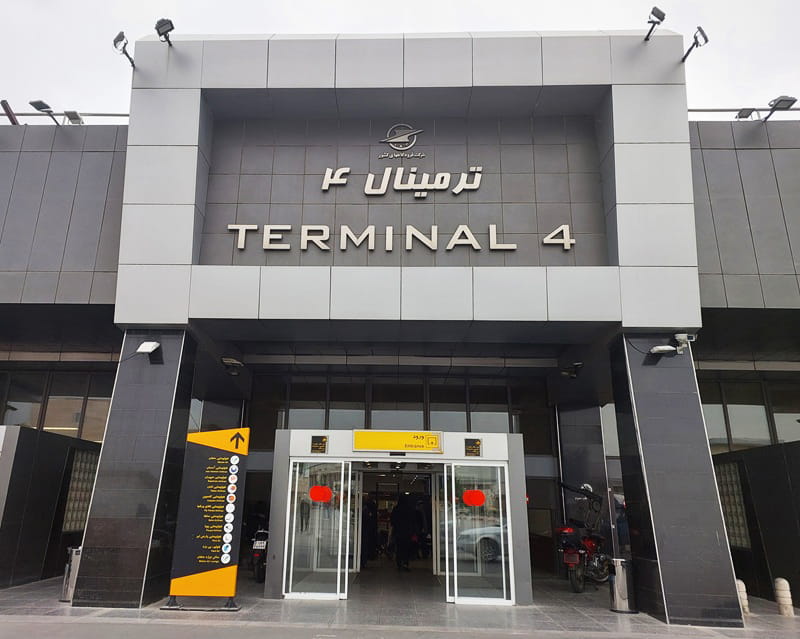
For covering long distances in limited time, flying is the clear choice. Iran Air and Mahan Air operate the bulk of domestic routes, connecting Tehran to Shiraz, Isfahan, Mashhad, Tabriz, Kerman, and most other major cities, usually several times a day on popular routes. Flights are inexpensive by international standards, though exact fares shift with the season and route — expect €35–€90 one-way between major cities.
The catch for foreign travelers isn’t the flight itself — it’s the booking. Iranian airlines’ online systems are built around local bank cards, and international credit or debit cards don’t work on them. In practice, this means booking through a travel agency (Compassimo can arrange this as part of a trip), buying in person at an airline office or agency counter once you’re in Iran, or working with an agent who has access to the local payment system. Booking two to three days ahead is usually enough outside of peak season; during Nowruz, plan much further out — ideally a month in advance.
Typical checked baggage allowance is 20–25 kg; excess fees apply for overweight luggage.
Trains: Comfort & Scenery
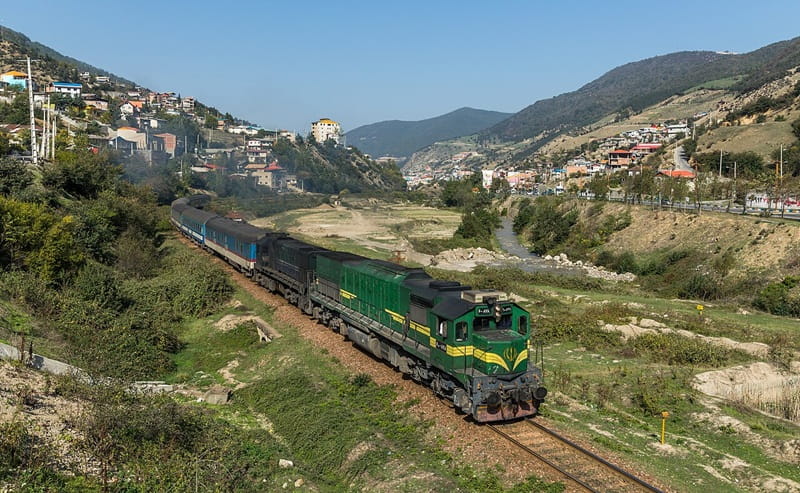
Train travel in Iran rewards patience with comfort. The network connects Tehran to Mashhad, Yazd, Isfahan, Shiraz, and Tabriz, with sleeper cabins on longer routes that let you cover ground overnight instead of losing a travel day. Trains run in a few comfort tiers, from basic seating to four- or six-berth private compartments with bedding and meal service — the Tehran–Mashhad route in particular has some of the country’s most comfortable options.
Some trains, including the Tehran–Isfahan service, offer women-only and family cabins. These sell out quickly and cannot be booked directly on raja.ir from abroad, so reserving through an agency ahead of time is the reliable route.
Booking works differently than in most countries: Iranian Railways typically releases tickets in a rolling window up to 30 days in advance, so travelers usually book somewhere between a few days and a month before departure, depending on the route. Your passport details need to match your ticket exactly, since conductors check both together. If you’re set on an overnight train on a specific date, book as soon as your dates are firm — seats on popular routes do sell out, especially the once-daily Tehran–Isfahan train.
Luggage storage is flexible but finite — one large suitcase plus a daypack per passenger is the practical norm in sleeper compartments.
VIP Buses: The Traveler’s Default
Buses are how most people in Iran — locals and travelers alike — get between cities, and it’s easy to see why. VIP buses run on nearly every major route with wide, reclining seats, air conditioning, and onboard refreshments, at a fraction of what flying costs. Standard buses are even cheaper and just as safe, with a slightly more basic ride.
Reputable operators include Seir-o-Safar, Hamsafar, and Royal Safar. You’ll generally buy tickets via a local tour operator, or in person at the terminal — most travelers don’t need to book far ahead outside holiday periods, since departures run frequently throughout the day. For journeys over six hours, a night bus is worth considering: you arrive in the morning having slept through the distance instead of spending a full day watching the road.
VIP bus tickets range from $5–$20 depending on distance; Tehran–Isfahan runs about $9, Tehran–Shiraz around $20. Luggage goes in the undercarriage hold; one large bag plus a small carry-on is standard.
Choosing Your Mode: Time, Budget & Experience
The right choice usually comes down to how much time you have and how you want to spend it.
- Short on time, covering long distances: fly. It’s the only way to fit Tehran, Shiraz, and Mashhad into a two-week trip without losing days to travel.
- Want the journey to be part of the experience: take the train, especially overnight between Tehran and Shiraz or Tehran and Mashhad.
- Traveling on a tighter budget or want maximum flexibility: buses go everywhere, run constantly, and cost the least.
How you mix them often comes down to which cities are non-negotiable on your list; if you haven’t settled on that yet, the major cities most travelers build their route around is a good place to start.
Transportation in Iran: Budget & Costs
Transportation in Iran remains inexpensive by international standards, though prices rose noticeably getting along with the country’s inflation). Rough benchmarks:
- Domestic flights: €35–€90 one-way between major cities (Tehran–Shiraz, Tehran–Mashhad)
- Overnight sleeper train (4- or 6-berth): €15–€30
- Day train, economy seat: €8–€15
- VIP intercity bus: €5–€20 depending on distance; Tehran–Isfahan ~€9, Tehran–Shiraz ~€20
- City metro or bus ride: €0.10–€0.30; Tehran and Mashhad metros have run free on a temporary basis (currently in 2026), with fares expected to resume at €0.25–€0.60
For a two-week highlights itinerary, budgeting $100–$200 for intercity transport is a reasonable baseline.
Luggage & Baggage: What to Expect
- Domestic flights: Typically 20–25 kg checked baggage included; excess fees apply. Carry-on limits vary by airline.
- Trains: No strict weight limits, but storage space in compartments is finite — one large suitcase plus a daypack per passenger is the practical norm.
- VIP buses: Luggage goes in the undercarriage hold; one large bag plus a small carry-on is standard.
If you’re traveling with oversized gear (bicycles, camping equipment), pre-arrange private transfers or confirm allowances directly with the operator.
📷Photo by Kabelleger / David Gubler on Wikicommons
Arriving in Iran: Airport Transfers
Your first transportation decision in Iran usually happens before you’ve left the airport.
Imam Khomeini International Airport (IKA): Getting Into Tehran
IKA sits roughly 30 kilometers southwest of central Tehran, and the drive into the city typically takes 45 minutes to over an hour depending on traffic. There are official airport taxi counters inside the arrivals hall, but for a first arrival — especially after a long international flight — pre-arranging a private transfer through your hotel or travel agency is the simpler option. It means someone is waiting with your name on a sign, the price is settled before you land, and you skip any back-and-forth with drivers in an unfamiliar airport. For budget-conscious travelers, a metro station is also accessible from the airport, offering a low-cost alternative into central Tehran — though it involves at least one line change and may be less convenient with heavy luggage.
Connecting to a Domestic Flight on Arrival
If your itinerary has you flying onward the same day, note that Tehran’s domestic flights mostly operate out of Mehrabad Airport, a separate airport from IKA on the other side of the city. The transfer between them can take an hour or more in traffic, so same-day international-to-domestic connections need a generous buffer — three hours minimum, more if you’re arriving during rush hour. Many travelers choose to spend a first night in Tehran instead of attempting a same-day connection — and given how much there is to see, a full day exploring Tehran is rarely wasted time.
Regional Airports for International Arrivals
Tehran isn’t the only entry point. Shiraz, Isfahan, and Mashhad all have international airports with a limited number of direct routes from regional hubs, which can be worth checking if your trip is centered outside the capital — it saves the domestic connection altogether.
Getting Around Iran: Within Cities
Once you’ve arrived, city transportation in Iran is affordable and, in the major destinations, genuinely well organized.
Metro, Bus & BRT: Urban Networks
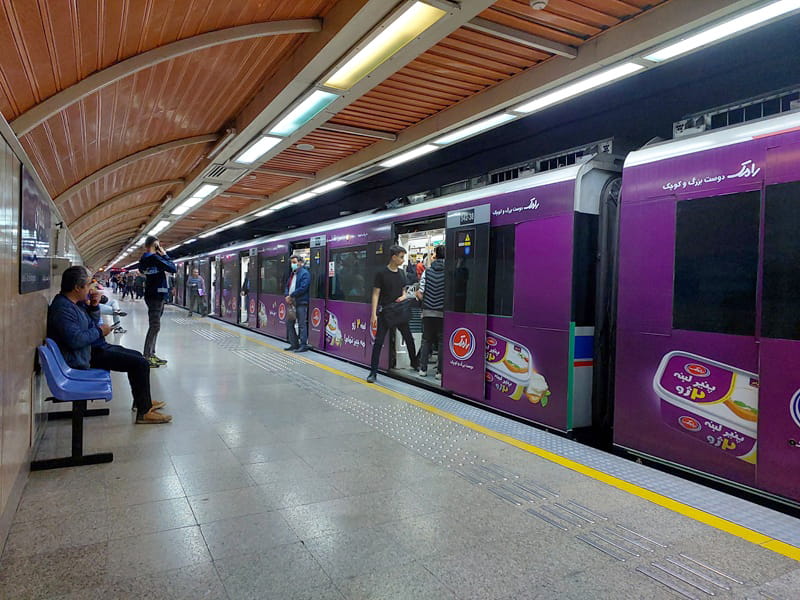
Tehran, Isfahan, Shiraz, Mashhad, and Tabriz all have metro systems, with Tehran’s network by far the largest — seven lines carrying millions of passengers a day, and one of the few reliable ways to avoid the city’s notorious traffic.
City buses complement the metro, running extensive routes through neighborhoods the underground doesn’t reach. Fares are similarly low, and the same rechargeable travel card typically works across metro, bus, and BRT in most cities.
Bus Rapid Transit (BRT) lines operate in Tehran, Isfahan, Shiraz, and Mashhad, offering dedicated lanes that bypass regular traffic. In Tehran alone, BRT carries over two million passengers daily across multiple corridors.
One detail that surprises first-time visitors: metro cars and city buses are gender-segregated, with dedicated cars or sections for women. This isn’t a rule aimed at tourists — it reflects broader social norms around gender separation in public space in Iran, and travelers of any gender simply follow the posted signage.
Taxis & Ride-Hailing Apps
Taxis are the most-used mode for tourists moving around Iranian cities, and there’s more than one type. Official taxis (yellow or green) are government-regulated and the safer default; shared taxis, called “savari,” run fixed routes and split the fare among passengers; private “dar bast” taxis take you directly, door to door, at a higher price you agree on before getting in.
Ride-hailing apps Snapp and Tap30 — Iran’s equivalents of Uber — are widely used and genuinely convenient, with upfront pricing and no haggling. The common assumption is that you need a local bank card to use them, but that’s not quite right: fares can be paid in cash directly to the driver at the end of the ride. What you do need is a local SIM card to run the app and get matched with a driver in the first place — if you don’t have one yet, your hotel or host can usually order a ride on your behalf.
Walking & Cycling: Historic Cores
Tehran, Yazd, Isfahan, and Shiraz reward exploring on foot — their historic cores are compact, largely pedestrian-friendly, and full of detail that’s easy to miss from a car window. Cycling is also gaining ground, particularly in Tehran and Isfahan, where dedicated bike lanes have expanded in recent years.
Payment & Booking: Cash Rules
This is worth stating plainly, because it shapes nearly every transport decision in Iran: international credit and debit cards do not work anywhere in the country, due to banking sanctions. No exceptions, no workarounds at the point of sale.
For transportation specifically, this means:
- Domestic flights and trains are best booked through a travel agency with local payment access, or purchased in cash once you’ve arrived. Third-party sites allow foreigners to book train tickets online with credit cards, but direct booking on raja.ir is not possible from abroad.
- Buses are almost always paid for in cash at the terminal, so this rarely causes friction.
- Taxis and ride-hailing apps are cash-based for foreign travelers, as covered above.
Carrying enough Iranian rials for your transportation needs — and topping up as you go — solves nearly all of this. It’s less a limitation than a different rhythm to plan around, and one that fits into the broader picture of whether Iran is safe and manageable to travel as an independent traveler.
Self-Driving: Independence & Limits
Self-driving is possible for travelers who want full independence, particularly for exploring the countryside beyond the main cities. You’ll need an International Driving Permit alongside your home license, and a handful of international and local rental companies operate in Tehran.
That said, most visitors — including experienced independent travelers — opt to hire a car with a driver rather than drive themselves, especially outside the capital. Road quality varies significantly outside the main highways, and navigating without fluent Persian adds a layer of difficulty a driver removes entirely.
Special Situations: Nowruz & Accessibility
Traveling During Nowruz
Nowruz, the Persian New Year in late March, is the busiest travel period in the country by a wide margin. Trains and popular bus routes can sell out weeks in advance, and flights fill up fast too. If your trip overlaps with this period, book every leg of your transportation earlier than you otherwise would — a month ahead is a reasonable target for trains and flights. It’s one of several seasonal factors worth weighing when you’re working out the best time of year to visit Iran.
Accessibility Notes
Worth stating honestly: most intercity buses and trains in Iran are not built with wheelchair accessibility in mind, and boarding often involves steps with no ramp alternative. Some newer trains have limited accommodations for travelers with disabilities, but options remain narrow. If accessibility is a concern, working directly with a travel agency to arrange private transportation for the full trip is the most reliable approach.
Nearby Considerations: Classic Routes & UNESCO
Transportation choices tend to follow Iran’s classic travel circuit — Tehran, Kashan, Isfahan, Yazd, and Shiraz — roughly in that order, since it moves logically from north to south along good road and rail connections. Trains and buses cover this route particularly well, which is part of why so many itineraries are built around it, and it’s also the corridor that strings together most of the country’s landmark UNESCO sites; our guide to Iran’s UNESCO heritage maps out how they connect.
From Shiraz, a short onward trip reaches Persepolis, one of the most rewarding day trips in the country. In Isfahan, Naqsh-e Jahan Square anchors the historic center, while Yazd’s old town offers a UNESCO-listed labyrinth of windcatchers and mudbrick lanes. Further east, Mashhad’s Imam Reza Shrine draws millions of pilgrims annually, and Shiraz’s gardens and poetry heritage make it a cultural highlight.
If your plans stretch further, to Tabriz in the northwest or Mashhad in the northeast, a domestic flight usually makes more sense than adding another long overland leg.
Final Thoughts: The Journey Is Part of Iran
However you move through Iran — an overnight train rattling toward Yazd, a VIP bus crossing the desert at dusk, a short flight over the Zagros Mountains — the getting-there tends to become part of the memory, not just the means to it. Transportation here isn’t an obstacle to plan around; it’s woven into the texture of the trip itself.
The practical details are manageable once you know them: cash covers what cards can’t, buses and trains connect nearly everywhere, and a little advance booking during Nowruz saves a lot of stress. What’s left is simply choosing the pace that suits your trip.
For travelers piecing together a full route, understanding how the country connects makes every other decision easier — which cities to prioritize, how many days each deserves, where to slow down. Iran rewards that kind of planning with more time in the places that matter and fewer hours lost in transit.
If you’d rather not manage the logistics yourself, this is exactly where a well-planned tour earns its keep — transportation handled, routes sequenced sensibly, and more of your trip spent arriving somewhere rather than working out how to get there.
Once you know how you’ll move through Iran, the next question is where that route takes you.
Need help arranging flights, trains, or private transfers in Iran?
FAQs for Transportation in Iran
1. Can foreigners book Iran train tickets online?
Foreign travelers generally cannot book Iranian train tickets directly online with an international card on raja.ir, since local payment systems don’t accept them. The practical route is booking through a travel agency or using third-party sites.
2. Are ride-hailing apps available for tourists in Iran?
Yes, Snapp and Tap30 are both usable by tourists. A local SIM card is needed to run the app and request a ride, but payment is made in cash directly to the driver, so a local bank card isn’t required.
3. How much does a VIP bus ticket cost in Iran?
VIP bus tickets in Iran are inexpensive by international standards, generally costing €5–€20 depending on the route and distance. Tehran–Isfahan runs about €9, Tehran–Shiraz around €20. Prices vary by operator and how far in advance seats are booked.
4. Is it safe to rent a car and self-drive in Iran?
Self-driving is possible with an International Driving Permit, but road quality varies outside major highways and signage can be limited in English. Many travelers prefer hiring a car with a driver, especially for routes outside Tehran.
5. How far in advance should I book domestic flights in Iran?
Three to Four days ahead is usually sufficient outside peak season, since Iran Air and Mahan Air run frequent routes between major cities. During Nowruz, book significantly earlier, ideally a month in advance.
6. Are Tehran’s metro and buses gender-segregated?
Yes, metro cars and city buses in Iran have designated sections or cars for women, reflecting broader social norms around gender separation in public space. Travelers simply follow the posted signage when boarding.
7. Do I need an international license to drive in Iran?
Yes, an International Driving Permit alongside your home country license is required to legally drive in Iran. It’s arranged before your trip through your home country’s licensing authority.
8. Is Uber available in Iran?
Uber does not operate in Iran. Snapp and Tap30 serve the same purpose and are the ride-hailing apps used throughout the country.
9. How long does the Tehran–Shiraz overnight train take?
The overnight train between Tehran and Shiraz typically takes around 12 to 14 hours, departing in the afternoon or evening and arriving the next morning. It’s a popular way to cover the distance without losing a full travel day.
10. How do I get from Imam Khomeini Airport to Tehran?
Imam Khomeini International Airport sits about 30 kilometers from central Tehran, with the drive taking 45 minutes to over an hour depending on traffic. Pre-arranging a private transfer is the simplest option for a first arrival. For budget-friendly travelers, metro is also available.
0 Comment