


Table of Contents
There’s a particular quality of light that only appears in Iran once the summer heat breaks — a warm, low-angle glow that turns mud-brick walls amber and catches the dust of old bazaars in a way that feels almost cinematic. Autumn consistently ranks among one of the best times to visit Iran — and for good reason. The crowds thin, the air cools, the desert becomes walkable again, and the country’s festivals, harvests, and cultural traditions quietly come into their own. Whether you’re planning your first trip or returning with more time on your hands, this guide covers everything you need to know about experiencing Iran between September and late December.
Iran Autumn Weather: What to Expect
Iran is a large, climatically diverse country — what autumn feels like in Gilan is nothing like what it feels like in Yazd. Here’s a region-by-region breakdown so you can plan realistically.
Northwest (Tabriz, Ardabil, Urmia)
The northwest moves into autumn earliest and most dramatically. Tabriz — Iran’s fourth-largest city and the cultural capital of Iranian Azerbaijan — sees September highs around 25°C that drop sharply to around 20°C in October and just 10–12°C by November. The Alahdaq Mountains (Rainbow mountains) and the valleys around Lake Urmia shift into spectacular autumn color by mid-October. November brings genuine cold and occasional early snow at higher elevations, so pack accordingly if you’re visiting late. The window here is essentially September through mid-October.
Northeast (Mashhad and Nishapur)
The northeast — centered on Mashhad, Iran’s second-largest city and one of the most-visited pilgrimage cities on earth — enjoys one of the most pleasant autumn climates in the country. October sits comfortably at 20°C highs and 9–10°C nights: warm enough for long days of walking, cool enough to sleep well. This region is also the heart of Iran’s saffron country, and late October into November is when the purple crocus fields bloom around Torbat-e Heydarieh and Gonabad.
North (Gilan, Mazandaran — Caspian Coast)
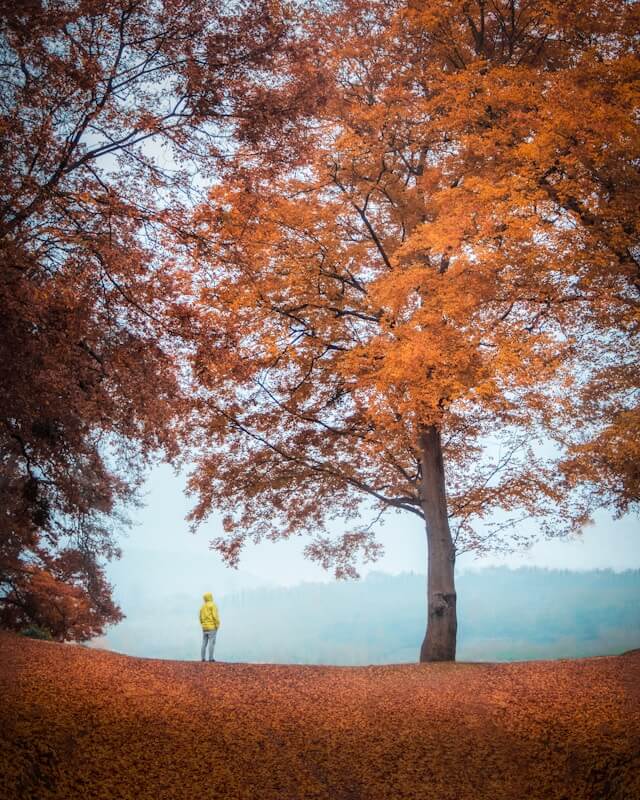
The Caspian littoral is a different Iran entirely — lush, forested, and humid. Autumn here means the beginning of the rainy season, particularly in Gilan (Rasht), where October and November bring regular rainfall. That’s not a reason to avoid it; it’s a reason to expect it. The Hyrcanian forests along the hillsides above the coast — a UNESCO World Heritage site in Iran — turn extraordinary shades of orange and gold between late September and early November. The ancient hillside village of Masouleh, with its famous terraced houses where rooftops serve as pathways for neighbors above, is arguably at its most beautiful in autumn mist.
Central Plateau (Tehran, Isfahan, Kashan, Yazd, Shiraz)
This is the core of most Iran itineraries, and it’s where autumn performs best. After summer temperatures that regularly push 38–40°C, October brings a welcome reset: Isfahan and Shiraz settle at 22–26°C highs, Yazd at similar levels with cooler nights, and Kashan somewhere in between. Tehran, perched against the Alborz foothills, benefits from the clearing of summer smog and sits at a comfortable 15–18°C through November. The desert cities — Yazd and Kerman — are particularly rewarding in autumn because the heat that makes summer visits punishing simply disappears.
South & Persian Gulf Islands (Qeshm, Hormuz, Kish)
The south runs about six weeks behind the rest of the country. September is still genuinely hot — often 35°C+ in Bandar Abbas and on the islands. October sees temperatures beginning to drop toward the high 20s, and by November the Persian Gulf islands enter their most comfortable period: warm, clear, and with almost no rain. If you’re combining mainland Iran with island time, keep the south toward the end of your trip.
Quick Reference: Autumn Temperatures by City
| City | September High | October High | November High |
|---|---|---|---|
| Tabriz | 25°C / 77°F | 20°C / 68°F | 12°C / 54°F |
| Mashhad | 28°C / 82°F | 20°C / 68°F | 12°C / 54°F |
| Tehran | 29°C / 84°F | 20°C / 68°F | 13°C / 55°F |
| Isfahan | 31°C / 88°F | 24°C / 75°F | 16°C / 61°F |
| Yazd | 33°C / 91°F | 25°C / 77°F | 17°C / 63°F |
| Shiraz | 31°C / 88°F | 24°C / 75°F | 17°C / 63°F |
| Bandar Abbas | 36°C / 97°F | 32°C / 90°F | 26°C / 79°F |
Temperature data: Weather Atlas / Climates to Travel
Autumn by Month: September, October, November
September — The Transition
September straddles two seasons. By the Iranian calendar, this is still the tail end of summer (school holidays run through late September), which means domestic travel on popular routes remains active, particularly on weekends. Prices and availability on flights and trains reflect this. For international visitors, though, September is already quite manageable — central Iran temperatures are dropping from their August peaks, and the north is stunning. The Hyrcanian forests start turning, and the Caspian coast resorts are busy but loosening up. If you’re heading to the northwest — Tabriz, Kandovan, the Arasbaran forests — September is actually the ideal month before October turns cold.
October — The Sweet Spot
October is, simply, the best single month to visit Iran. Temperatures across the central plateau land in that perfect 20–26°C range. Desert cities are fully accessible. The light is golden and low. Crowds are thinner than spring. Mehregan falls in early October. The pomegranate harvest begins. And there’s something harder to quantify — a slower rhythm to the country that autumn brings, a sense that you’re sharing it with Iranians going about their lives rather than moving through a tourist season. Book accommodations in popular cities three to four weeks ahead; it’s not a scramble, but good accommodations in Yazd and Isfahan fill up.
November — The Quiet Month
November is underrated. The central cities are cooler (15–17°C) but still entirely comfortable for sightseeing. Tehran hits its best stretch — crisp air, clear Alborz views, a city that feels more like itself without summer haze. The Persian Gulf islands come alive. In Khorasan, the saffron fields are blooming purple across the plains outside Mashhad. The northwest and north are cooling fast, so wrap up those itineraries by early November. Toward the end of the month, Yalda preparations begin to fill shop windows with pomegranates, watermelons, and nuts — a warm preview of December’s biggest night.

📷Photo by abolfazl babaei on Unsplash
Where to Go in Iran in Autumn
Isfahan
Isfahan in autumn is the Isfahan of imagination — the domes of Imam Mosque catch the low afternoon light in a way that summer heat haze simply doesn’t allow. The crowds at Naqsh-e Jahan Square are real but manageable, and the city’s Armenian quarter (Jolfa), its bridges, and its bazaar all benefit from cool evening temperatures that make long wandering pleasant rather than exhausting. The Si-o-se-pol and Khaju bridges at dusk, with the Zayandeh River flowing (it’s seasonal — check conditions), are among the best photographs Iran offers.
Yazd
Yazd is arguably the single biggest beneficiary of the autumn season. This ancient Zoroastrian city, built almost entirely of mud-brick, sits in the desert and spends summer being largely avoided. In October, it becomes what it was always meant to be: a city for walking. Wind towers, narrow lanes, domed rooftops, the Towers of Silence — all of it more beautiful under autumn’s raking light than it would ever be at overhead summer angles. The cool nights are perfect for sitting in the courtyard of one of the city’s converted caravanserai guesthouses with a glass of tea.
Shiraz
Shiraz rewards autumn visitors with its full range: Persepolis without the midsummer tour bus rush, the pink tiles of Nasir al-Mulk mosque at their cleanest in low autumn light, and the gardens of Eram at their most pleasant as temperatures cooperate. The bazaar and the poets’ tombs of Hafez and Sa’di carry a particular atmosphere in this season — quiet enough to sit with, not empty.
Kashan
Kashan is a city that improves with fewer people. Autumn is that season. The historic houses — Tabatabaei, Boroujerdi, Abbasi — are genuinely grand architecture, and visiting them in October without tour groups pressing behind you makes a real difference. The Fin Garden (Bāgh-e Fin), Iran’s oldest surviving Persian garden and a UNESCO World Heritage site, is peaceful in autumn shade. Kashan also makes a smart base for day trips to Abyaneh — a red-clay mountain village where traditional clothing is still everyday dress, not performance.
Tabriz & Northwest Iran
Tabriz is one of Iran’s most undervisited major cities by international tourists, which is precisely its appeal. The historic bazaar — a UNESCO World Heritage site and one of the oldest covered markets in the world — is best explored on a crisp October morning. The nearby Kandovan village, with its troglodyte cone-shaped homes carved into volcanic rock, is extraordinary against autumn foliage. Drive west and the shores of Lake Urmia offer a surreal saline landscape. Come in September or early October; by late November the northwest is getting cold.
Mashhad & Northeast Iran
Most international visitors skip Mashhad because it’s primarily a pilgrimage city — home to the Imam Reza shrine, one of the largest mosque complexes in the world. That’s a mistake. The shrine itself is architecturally overwhelming and deeply interesting regardless of faith. Pair it with a day trip to Nishapur (birthplace of Omar Khayyam and the poet Attar) and another to the saffron fields of Torbat-e Heydarieh in October–November, and you have one of the most distinctive regional itineraries in Iran.
Gilan & Northern Forests
Rasht, Gilan’s capital, has quietly become one of UNESCO’s a creative cities of gastronomy — a culinary tradition that draws on rice paddies, seafood, and forest herbs in ways completely unlike the rest of the country. Autumn is when you come for the forests: the Hyrcanian woodlands running along the Alborz slopes are biodiversity-rich and ancient. The village of Masouleh, built vertically into a forested mountainside, is the most visited — with reason. Go early in the morning before day-trippers arrive. Bring rain gear for October onward.
Kerman & the Southeast
Kerman is the gateway to two of Iran’s most dramatic landscapes: the Dasht-e Lut (one of the hottest places on earth by surface temperature) and the Kaluts — a field of natural clay towers rising from the desert floor. Both are largely inaccessible in summer and glorious in autumn. Add the Shahdad desert, the ancient citadel of Bam, and the bazaar of Kerman itself — a complex that rivals Isfahan’s for scale — and you have a full itinerary for a region most travelers skip entirely.

Autumn Festivals & Cultural Events
Mehregan (Early October)
Mehregan is one of the oldest surviving Persian festivals — arguably the autumn counterpart of Nowruz, and once celebrated with equal grandeur. It falls on the 16th day of the Persian month of Mehr (around October 2nd in the Gregorian calendar) and honors Mithra, the ancient deity of friendship, light, and covenant. At its core it’s a harvest thanksgiving: families set a table with autumn fruits — pomegranates, apples, grapes — wear new clothes, and gather to mark the season’s generosity. Mehregan was officially recognized by UNESCO as part of humanity’s intangible cultural heritage in 2024. It’s most visibly celebrated in Yazd and Kerman, where Zoroastrian communities maintain the oldest traditions: purple tablecloths, burning rue (espand), kohl applied as protection, and communal prayer facing a mirror. For visitors, it’s not a public spectacle so much as a warm domestic celebration — with the right host or guesthouse, you can witness it firsthand.
Jashn-e Anar — The Pomegranate Festival
The pomegranate is to autumn in Iran what the cherry blossom is to spring in Japan — a seasonal marker, a cultural symbol, and a genuine reason to travel. Jashn-e Anar takes place as harvests ripen across different regions from late October through November. The festivals in Anbooh (Gilan) and Farooq (Marvdasht, near Shiraz) are the most visited, with stalls of deep-red fruit, local food, music, and the visual pleasure of pomegranate orchards in full season. The fruit carries enormous symbolic weight in Persian culture — fertility, abundance, the promise of renewal — and its presence across Iranian poetry, architecture, and cuisine stretches back millennia.
Saffron Harvest (Late October to Mid-November)
For a few weeks each autumn, the plains around Torbat-e Heydarieh, Gonabad, and Qaen in Khorasan turn purple. Iran produces around 90% of the world’s saffron, and this region is its heart. The harvest requires farmers to walk the fields before sunrise — sometimes as early as 4am — because flowers must be collected before they fully open. Travelers who time a visit to Mashhad to coincide with the harvest can arrange day trips to the fields, watch the separation of the crimson stigmas, and buy directly from producers at a fraction of export prices. It’s one of the most unusual agritourism experiences
Yalda Night — Shab-e Yalda (December 21)
Yalda falls precisely at autumn’s end — it is the night that closes the season. Iranians celebrate the last night of autumn as the victory of light over darkness, marking the winter solstice on December 20th or 21st. It’s one of the most intimate and beloved celebrations in Iranian culture: families gather at the home of grandparents or elders, eat pomegranates and watermelons, read poems from Hafez’s Divan, tell stories, and stay awake until dawn. The ritual of Fal-e Hafez — opening the poetry collection at random and reading one’s fortune — is central to the night. Shab-e Yalda was added to UNESCO’s Intangible Cultural Heritage list in 2022. If your travels extend into late December, an invitation to share Yalda with an Iranian family is one of the most genuinely memorable things possible in this country.
Things to Do in Iran in Autumn
Cultural Travel & Historical Sites
Cultural travel is among the most popular reasons international visitors come to Iran — and autumn is when it lands best. Without the heat that makes summer sightseeing at Persepolis and Pasargadae a physical endurance exercise, autumn allows the kind of slow, unhurried engagement with history these places deserve. Walk Persepolis in the late afternoon and you have the stairways of Darius largely to yourself. Spend a morning in Isfahan’s bazaar without the compressed energy of peak season. Sit inside Nasir al-Mulk mosque in Shiraz when the colored light falls through its windows onto an uncrowded floor. The architecture of Iran — and there is genuinely world-class architecture across four millennia here — gives itself differently when you have the space to receive it.

📷Photo by Alireza Afkar on Unsplash
Desert Camping & Stargazing
The alignment between desert accessibility and clear autumn skies makes October and November the prime window for desert camping. Mesr, Maranjab, Lut and the Kaluts (Kerman) are all rewarding. Maranjab, near Kashan, is the most accessible with a historic caravanserai at its center. Mesr — further east into the Dasht-e Kavir — is more remote and more extraordinary. Nights cool to 5–10°C, which is ideal in a sleeping bag, and the absence of light pollution means skies that most travelers have never experienced.
Hiking
The Alborz range above Tehran is at its visual peak in autumn — trails on Tochal or around the Alamut Valley in Qazvin vicinity carry golden deciduous color that the summer’s dry green doesn’t offer. Alamut Valley itself, with its Eagle’s Nest fortress associated with the Assassins, is a beautiful two-day itinerary from Tehran in October. In the northwest, the forests around Ardabil and the slopes above Lake Urmia are serious autumn hiking territory before November closes mountain roads.
Traditional Hammam Culture
There’s something about cooler autumn air that makes a traditional Iranian hammam feel exactly right. Most of Iran’s famous historic bathhouses — the Hammam-e Vakil in Shiraz, the Sultan Amir Ahmad in Kashan — have been converted into museums, offering a glimpse into the architecture and ritual of Persian bathing culture without the steam. For the real experience, working traditional hammams can still be found in cities across Iran. Qazi Hammam in Isfahan is one of the most visited, but neighborhood bathhouses in Yazd, Shiraz, and Tehran remain part of hammam traditions in the country — and autumn, when the contrast between cool streets and warm interiors is at its sharpest, is the right season to seek one out.
Bazaar Season
Iran’s covered bazaars — Isfahan, Tabriz, Kerman, Tehran’s Grand Bazaar — are year-round institutions, but autumn makes them more enjoyable because you can spend hours inside without wilting. The bazaar is not a souvenir market. It’s a working urban organism: spice merchants, carpet dealers, goldsmiths, fabric sellers, teahouses, and mosques folded into a single vaulted labyrinth. Budget the time accordingly.
Photography
Lower sun angles, cleaner air, harvest color, and architecture that rewards shadow and texture — autumn is the photographer’s season. Specific opportunities worth planning around: sunrise in the Kaluts, golden hour on Yazd’s wind towers (4:30–6pm), Masouleh village at dawn before mist burns off, the saffron fields of Khorasan at first light, and Isfahan’s bridges at dusk.
What to Pack for Iran in Autumn
Layering is the core principle. The temperature swing between a warm October afternoon in Isfahan (25°C) and a November evening in Tabriz (5°C) is significant, and within a single day, desert regions can shift 15°C from afternoon to midnight.
Clothing essentials:
- Light layers for warm afternoons — long sleeves are practical given Iran’s dress code
- A mid-layer fleece or light jacket for evenings
- A proper warm coat if visiting northwest Iran (Tabriz, Ardabil) in October–November, or anywhere in November
- Rain gear for northern Iran (Gilan, Mazandaran) from October onward
- Comfortable walking shoes — you will walk more than you expect
- Women: a headscarf is required in public spaces. Loose-fitting trousers and a long tunic or manteau cover the basics. Many travelers find a lightweight tunic over slim trousers both practical and comfortable for the season.
Practical items:
- Power bank — long travel days between cities
- Cash in USD or EUR for exchange (international cards do not work in Iran)
- A VPN installed before arrival if you rely on certain apps
Practical Planning Notes
Domestic Travel in Autumn
September coincides with the tail end of Iranian summer holidays, so domestic travel — particularly on the Tehran–Shiraz, Tehran–Isfahan and Northern Iranian routes — is still active. From October onward, school is fully in session and domestic leisure travel drops significantly. This works in favor of international visitors: trains and buses have good availability, weekend surges at popular sites are minimal, and pricing is stable. Iran’s train network (RAI — Raja Rail) is comfortable and scenic; the overnight Tehran–Mashhad sleeper and the Tehran–Yazd route are worth taking for the landscape alone.
Visa
Iran’s e-visa process has improved considerably, with most nationalities able to apply online before travel. Visa on arrival is available at major airports including IKA (Imam Khomeini International, Tehran) for many nationalities. Check the our Iran visa comprehensive guide for requirements and processing times, and cross-reference your own government’s travel advisory close to your travel date.
Final Thought: Plan Your Iran Trip
Autumn in Iran asks for a different kind of traveler — not one chasing iconic shots from a packed itinerary, but one willing to arrive when the country is most itself. The saffron fields aren’t on any Top 10 list. Mehregan won’t trend on social media. Yalda Night happens in living rooms, not public squares. But these are the things that stay with you: the golden light on Yazd’s wind towers at 5pm in October, the smell of a bazaar on a cool morning, the warmth of a family gathering on the longest night of the year. Autumn doesn’t perform for visitors — it simply is, and that’s precisely what makes it worth traveling for.
Browse Our Iran Tours to Experience Autumn in Iran
FAQs about Autumn in Iran
1. Is autumn a good time to visit Iran?
Yes — it’s one of the two best seasons alongside spring. Temperatures across central Iran land between 15°C and 26°C through October and November, the summer crowds and heat have passed, and the country’s most distinctive autumn festivals and harvests are unique to this window.
2. What is the weather like in Iran in October?
October is the sweet spot of autumn. Isfahan, Shiraz, and Yazd sit around 22–26°C in the afternoons with clear skies. Tehran and Mashhad are slightly cooler at 18–20°C. The northwest (Tabriz) is already around 15–20°C and dropping. Expect minimal rain across the central plateau.
3. What is the weather like in Iran in November?
Cooler throughout, but still comfortable in the central and southern regions. Isfahan and Yazd hold 15–17°C highs. Tehran gets into the low teens. The northwest turns genuinely cold (Tabriz 10–12°C) and the north gets rainy. The Persian Gulf islands are excellent — warm and dry.
4. What festivals happen in Iran in autumn?
The main ones are Mehregan (early October — ancient harvest festival, UNESCO recognized), Jashn-e Anar/the Pomegranate Festival (late October–November), and the Saffron Harvest in Khorasan (late October–mid-November). Shab-e Yalda on December 21st marks the final night of the Persian autumn.
5. Is Iran crowded in autumn?
Less crowded than spring. The Nowruz rush drives prices up and fills accommodation across popular routes. Autumn sees meaningful international visitors in October but far fewer domestic crowds, particularly once school season is in full swing from October onward.
6. Which cities are best to visit in Iran in autumn
Isfahan and Yazd are the standout autumn destinations for the combination of architecture, light, and temperature. Mashhad pairs well with the saffron harvest in the northeast. Tabriz and the northwest in September–October. The Caspian north for autumn foliage. The Persian Gulf islands from November onward.
7. What should I wear in Iran in autumn?
Light layers you can add to as evenings cool. Women are required to wear a headscarf and modest clothing (arms and legs covered) in public spaces. A lightweight tunic or long shirt over trousers with a scarf folded in your bag works for most of the season. Add a jacket for evenings and a warm coat if visiting the northwest in late October–November.
8. Can I visit the desert in autumn?
Autumn is the best time for Iran’s deserts. The extreme summer heat drops to entirely manageable levels in October — pleasantly warm by day, cool at night. Mesr, Maranjab, and the Kaluts are all accessible and excellent.
9. Is autumn or spring better to visit Iran?
They’re close. Spring brings blooming gardens and festive energy, but also higher prices and more crowds. Autumn offers better value, quieter sites, unique harvest festivals, and Yalda at the season’s end. For first-time visitors who want a relaxed, unhurried experience, autumn has the edge.
10. What is Yalda Night and should I try to experience it?
Shab-e Yalda is the ancient Persian celebration of the winter solstice — the last night of autumn — when families gather to eat pomegranates and watermelons, read poetry from Hafez, and stay awake until dawn. If your travels reach into late December and you receive an invitation to share Yalda with an Iranian family, accept without hesitation.
0 Comment