


Table of Contents
Step through the red-brick archway on Si-e Tir Street and the first thing you notice is the light. Tall, narrow windows and square skylights wash the main hall in a soft, even glow, illuminating stone reliefs that once stood in the palaces of Persepolis.
The National Museum of Iran is Tehran’s essential introduction to the country’s archaeological past. Its two museums follow a long chronology — from Lower Paleolithic evidence and early village communities to Sasanian monuments, Qur’anic manuscripts, Safavid painting, and Qajar art. The official museum describes its collections as representing more than a million years of human settlement and cultural achievement in Iran.
For travelers assembling Iran’s historical sequence before heading south to Persepolis, Susa, or Chogha Zanbil, this is where the story begins to make sense. The museum does not merely display ancient objects; it places them in a continuous narrative that a single, carefully planned visit can hold. It also pairs naturally with a wider exploration of the best things to do in Tehran.
In brief: The National Museum of Iran consists of the Museum of Ancient Iran and the Museum of Islamic Archaeology and Art of Iran, with highlights including Paleolithic tools, prehistoric ceramics, Elamite objects, Achaemenid reliefs, the “Salt Man,” Islamic manuscripts, Seljuq ceramics, Timurid art, and Safavid paintings.
A Brief History of Iran’s National Museum
From Dar al-Fonoun to National Institution
The idea of a national museum emerged before the red-brick building in Tehran downtown. During the late Qajar period, historical objects were gathered at Dar al-Fonoun, Tehran’s pioneering polytechnic institution. This early collection was not yet a modern public museum, but it reflected a growing concern: archaeological discoveries were increasing while Iran lacked a purpose-built institution capable of preserving and interpreting them.
That need became more urgent in the early twentieth century. Excavations at sites such as Persepolis, Susa, and other ancient settlements were producing objects of exceptional importance. The question was not only where to keep them, but how to present Iran’s past as a connected national history.
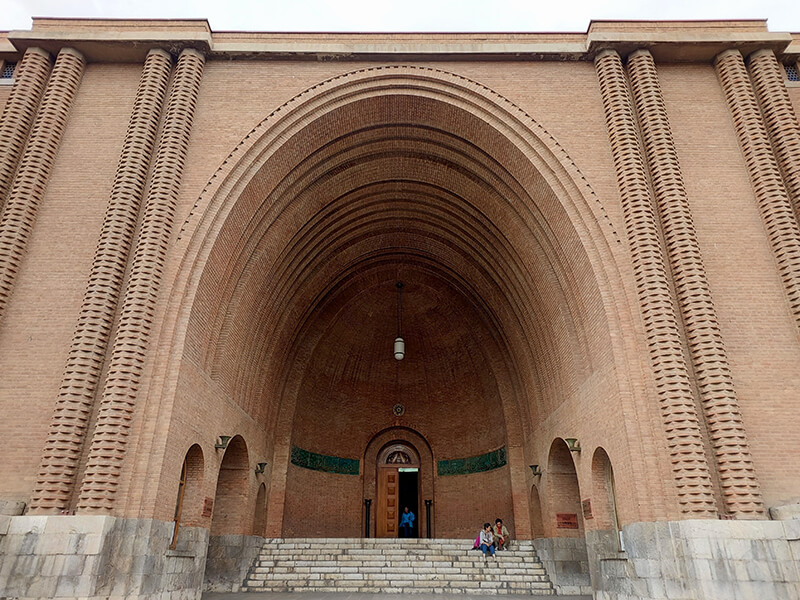
The Museum of Ancient Iran was commissioned during the reign of Reza Shah Pahlavi. The French architect and archaeologist André Godard was responsible for the design, while Iranian builders Abbas-Ali Me’mar and Morad Tabrizi carried out the construction. The official museum history dates the building’s construction to 1933–1936, with its inauguration taking place in 1937.
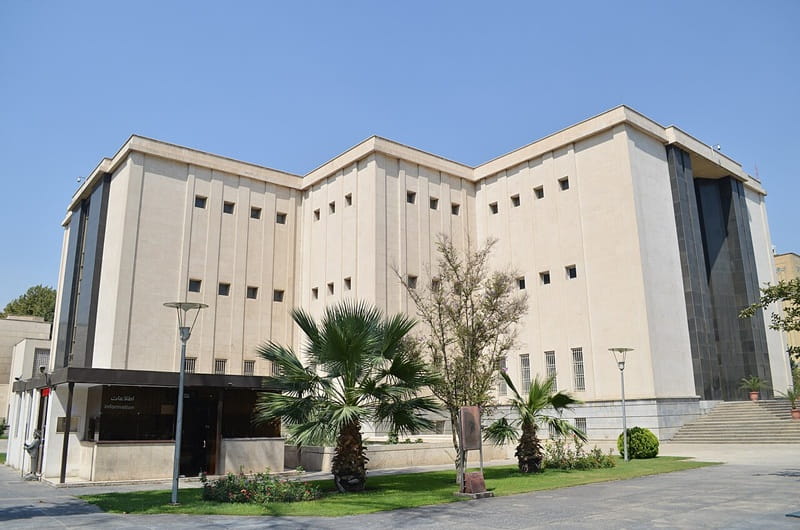
The Museum of Ancient Iran-Photo by Tahereh
André Godard’s Sasanian-Inspired Design
The original museum building was deliberately rooted in Iranian architectural history. Its monumental entrance and deep brick arch were inspired by the Taq-e Kasra — the celebrated Sasanian vaulted arch at Ctesiphon — rather than by a conventional European museum façade.
The result is both institutional and theatrical. The exterior’s reddish brickwork recalls the long Iranian tradition of brick construction, while the vaulted entrance prepares visitors for a chronological passage into the country’s distant past. The building itself functions as the first exhibit: a modern national institution expressed through references to pre-Islamic architecture.
The interior was designed around controlled natural light. The lower galleries are bright enough to reveal carved stone and delicate surfaces without the harsh glare that can damage sensitive objects. In the upper areas, the absence of ordinary windows creates a darker, quieter atmosphere — appropriate for a collection that includes manuscripts, metalwork, ceramics, and works on paper.
Two Buildings, One Historical Narrative
The National Museum of Iran is not a single chronological gallery. It is a complex of two distinct institutions, each with a different architectural character and curatorial emphasis.
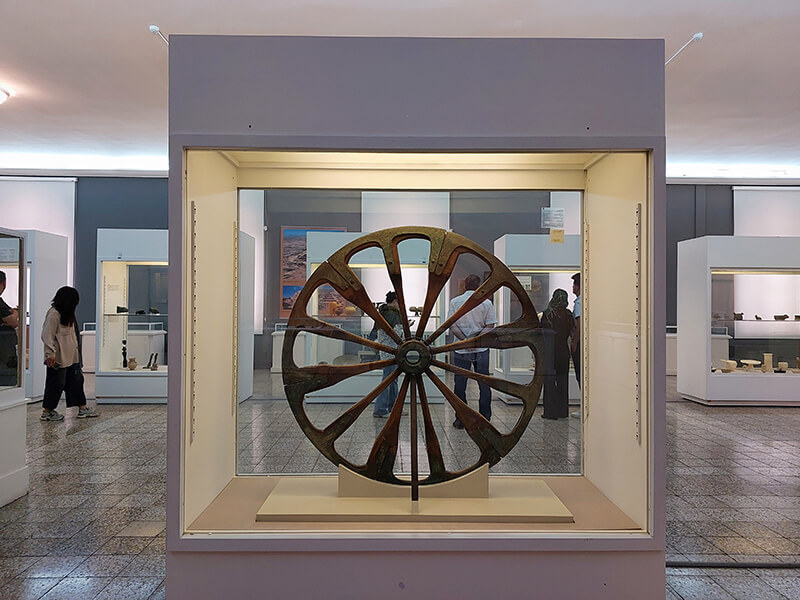
The Museum of Ancient Iran occupies the original red-brick building. Its permanent exhibition follows a chronological sequence from the Lower Paleolithic period through the end of the Sasanian era in 651 CE. The museum’s official description divides the displays broadly between prehistoric galleries and historic galleries covering the Bronze Age, Elamite, Median, Achaemenid, Seleucid, Parthian, and Sasanian periods.
The Museum of Islamic Archaeology and Art of Iran occupies a later building with an octagonal plan inspired by the Sasanian palace at Bishapur. Although construction began in the mid-twentieth century, the building was later adapted, renovated, and reopened as a museum of Islamic archaeology and art. The permanent displays cover the early Islamic, Seljuq, Ilkhanid, Timurid, Safavid, Afsharid, Zand, and Qajar periods.
Seen together, the two buildings offer something unusually valuable: a continuous account of Iranian history rather than a division between “ancient Persia” and “Islamic art.”
Museum of Ancient Iran: The Archaeological Heart
Paleolithic Tools: Iran Before Cities
The visit begins long before empires, royal inscriptions, or monumental architecture. The earliest galleries present evidence of human presence on the Iranian plateau, including stone tools and objects associated with Paleolithic communities.
These displays are not visually spectacular in the manner of an Achaemenid capital or a carved royal staircase. Their importance lies elsewhere. A shaped stone, a fragment of bone, or a small personal ornament represents a different kind of historical evidence — the gradual development of technology, social behavior, and symbolic life over immense stretches of time.
The museum identifies its chronology as extending through the Lower, Middle, and Upper Paleolithic, the Epipaleolithic, the Neolithic, and the Chalcolithic periods. Allow time for these early rooms rather than rushing toward the better-known imperial galleries. They establish the human depth behind Iran’s later civilizations.
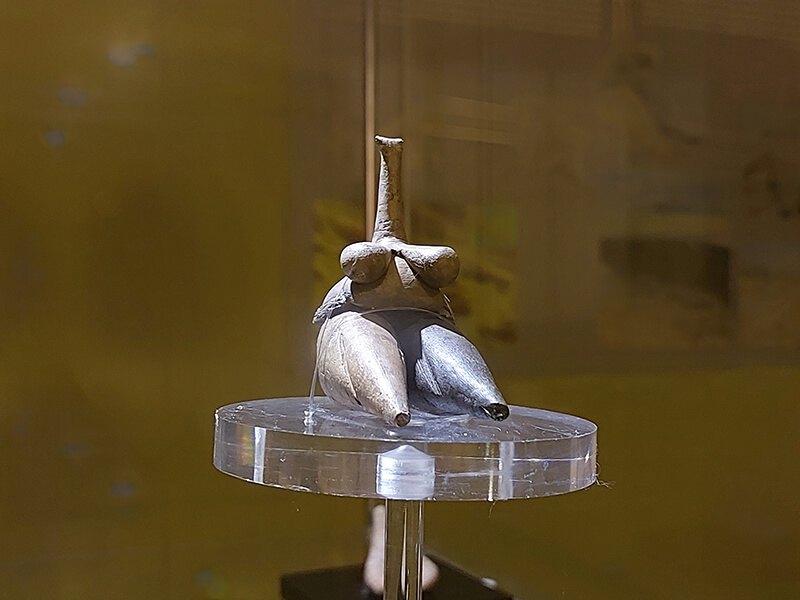
Neolithic Figurines: The First Village Worlds
The Neolithic and Chalcolithic galleries introduce a more settled landscape. Clay figurines, pottery, tools, and objects associated with early communities reveal the emergence of village life, agriculture, craft specialization, and increasingly complex social structures.
Iran’s archaeological record is especially important for understanding the transition from mobile communities to settled societies across the Iranian plateau and adjacent lowlands. The displays do not tell a single linear story of “progress,” but they show how different communities developed distinctive forms of pottery, architecture, ritual practice, and exchange.
Look closely at the small objects. In a museum devoted to monumental history, it is easy to overlook the modest pieces — a vessel, spindle whorl, figurine, or decorated fragment — that make ordinary life visible.
Elamite Susa: Writing and Administration
The galleries devoted to Elam and Susa mark a turning point in the museum’s story. Here, visitors encounter objects connected with one of the ancient civilizations of southwestern Iran, whose political and cultural centers included Susa and Anshan.
Susa’s importance was not limited to monumental architecture. It was also a place where administration, writing, craft, and long-distance exchange intersected. The museum’s collection includes Elamite objects excavated from sites in Iran, offering a useful counterweight to narratives that treat ancient Iranian history as beginning only with the Achaemenid Empire.
This is also where the relationship between objects and archaeological context becomes especially important. A carved vessel, inscribed fragment, or architectural element carries more meaning when read against the city, palace, temple, or administrative system from which it came.
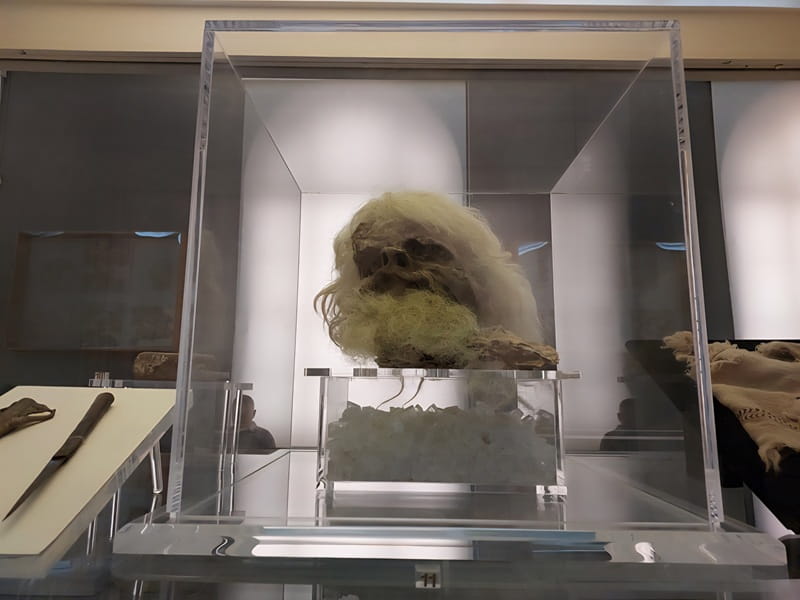
The “Salt Man”: A Human Face from the Mine
One of the museum’s most memorable objects is the naturally preserved body known as the “Salt Man.” It was found at the Chehrabad salt mine near Zanjan, where the mineral-rich environment helped preserve parts of the body, hair, clothing, and associated equipment.
The remains are not simply a curiosity. They provide evidence about the dangers of mining, clothing, diet, physical appearance, and working life in the ancient past. Several individuals were found at the mine, dating to different periods, which suggests that accidents occurred there over a long span of time.
The display also changes the emotional scale of the museum. After rooms of tools, vessels, inscriptions, and architectural fragments, the preserved human remains create a direct encounter with an individual who lived and died in the landscape of ancient Iran.
Persepolis Reliefs: Stone from an Imperial Capital
The Achaemenid galleries contain architectural sculpture and relief fragments associated with the empire founded by Cyrus the Great and developed under rulers such as Darius I and Xerxes.
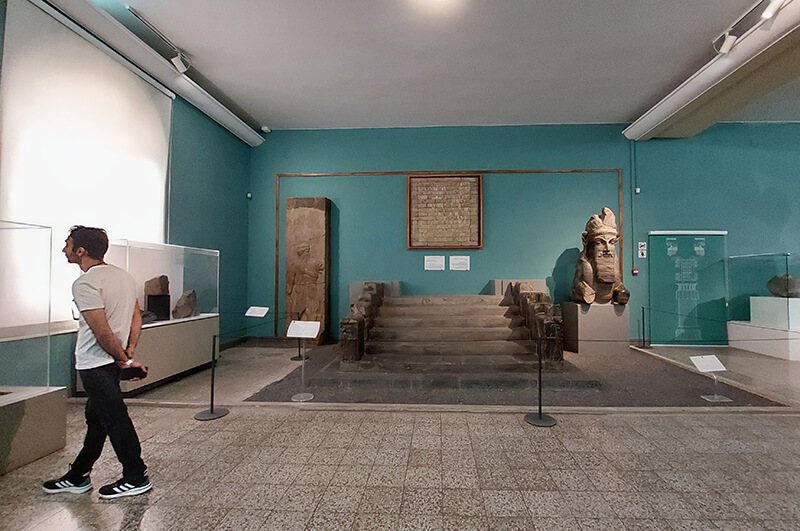
Among the most recognizable objects are reliefs and architectural elements from Persepolis, the ceremonial capital in Fars. The carved figures — delegations, guards, court officials, and attendants — are less concerned with battlefield drama than with the visual order of empire. Their repeated poses, garments, gifts, and gestures create an image of a carefully structured multinational realm.
The museum cannot reproduce the scale of Persepolis itself, but it provides essential preparation for visiting the site. A relief viewed at eye level in Tehran becomes easier to understand when encountered later in its original architectural setting.
Achaemenid Capitals and Royal Architecture
Fragments of columns, capitals, staircases, and carved stonework convey the scale of Achaemenid construction. At Persepolis, these elements belonged to palaces designed to express imperial power through architecture, procession, and controlled movement.
In the museum, they are separated from their original walls and courtyards. That separation can be frustrating, but it also allows visitors to examine details that are difficult to see outdoors — the folds of garments, the rhythm of a procession, the handling of stone, or the way a capital combines animal forms with structural purpose.
Look for evidence of both unity and variety. Achaemenid imperial art drew on traditions from across the empire, including Mesopotamian, Elamite, Egyptian, Anatolian, and Iranian visual cultures. The result was not a single “Persian style” in isolation, but an imperial language assembled from multiple traditions.
Parthian Bronzes: The Shami Man
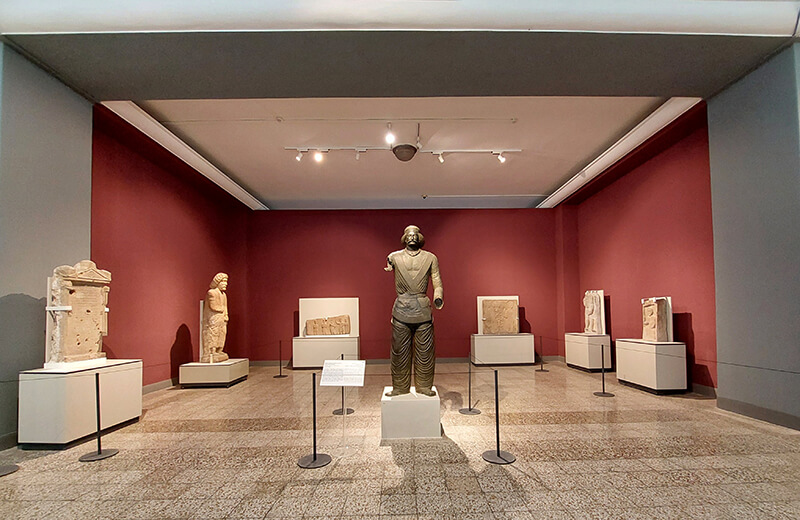
The Parthian period is sometimes overshadowed by the Achaemenids and Sasanians, but the museum helps restore it to the larger chronology. One of the most striking objects associated with this period is the life-size bronze known as the Shami Man.
The statue was found in Khuzestan and is generally dated to the Parthian period. Its imposing scale and individualized features contrast with the formalized royal reliefs of Persepolis. The work invites questions about portraiture, identity, elite display, and the movement of artistic ideas across the Iranian world.
It also demonstrates why the museum should not be approached as a simple list of famous dynasties. The spaces between the best-known empires contain their own artistic languages and political histories.
Sasanian Art: The Last Pre-Islamic Empire
The Sasanian galleries close the pre-Islamic sequence. Sasanian rulers governed a powerful empire from the third to the seventh century CE, competing with Rome and Byzantium while shaping political, religious, and artistic traditions that continued into the Islamic period.
Expect stone reliefs, metalwork, seals, ceramics, coins, and architectural elements. Sasanian art often emphasizes royal authority, hunting, ceremony, divine legitimacy, and the relationship between ruler and cosmos.
The transition from Sasanian to Islamic Iran was not a clean cultural break. Administrative practices, artistic techniques, courtly forms, and Persian literary traditions continued to influence the societies that followed. The second museum makes this continuity easier to see.
Museum of Islamic Art: Manuscripts, Ceramics, and Courts
Early Islamic Art: New Forms, Older Skills
The Museum of Islamic Archaeology and Art of Iran begins after the Arab conquest but does not present Islamic Iran as a cultural blank slate. Instead, its objects reveal adaptation and continuity: new religious forms developed alongside inherited Iranian techniques in ceramics, metalwork, textiles, architecture, and manuscript production.
The early Islamic galleries include objects connected with the development of calligraphy, Qur’anic manuscripts, ceramics, coins, and decorative arts. Arabic became central to religious writing, while Persian continued to develop as a major language of administration, literature, and culture.
The museum is especially useful for travelers who have seen the pre-Islamic monuments but want to understand how Iranian artistic traditions continued through later centuries.
📷Photo by Darafsh on Wikicommons
Seljuq Ceramics: Geometry in Clay
The Seljuq period brought major developments in architecture, ceramics, metalwork, and manuscript culture. The museum’s ceramics show how geometric design, vegetal motifs, calligraphy, and figurative decoration could coexist across different types of vessels and surfaces.
Ceramics can be easy to underestimate. A bowl or ewer is smaller than a palace relief, but its decoration may preserve information about workshop practice, trade, elite taste, and the circulation of images. Look for the relationship between surface and form — how inscriptions follow the curve of a vessel, or how repeated motifs create a visual rhythm.
Ilkhanid Manuscripts: Persian Culture Recast
The Ilkhanid period followed the Mongol conquest of Iran, yet it also witnessed major artistic and intellectual developments. Manuscript production, illustrated books, astronomy, history, and court culture flourished in new forms.
The galleries show how Persian artistic traditions absorbed influences from Central and East Asia while remaining connected to earlier Iranian and Islamic practices. This is one of the museum’s recurring themes: cultural change rarely arrives as a complete replacement. It accumulates, adapts, and reappears in altered form.
Qur’anic Manuscripts: The Written Word
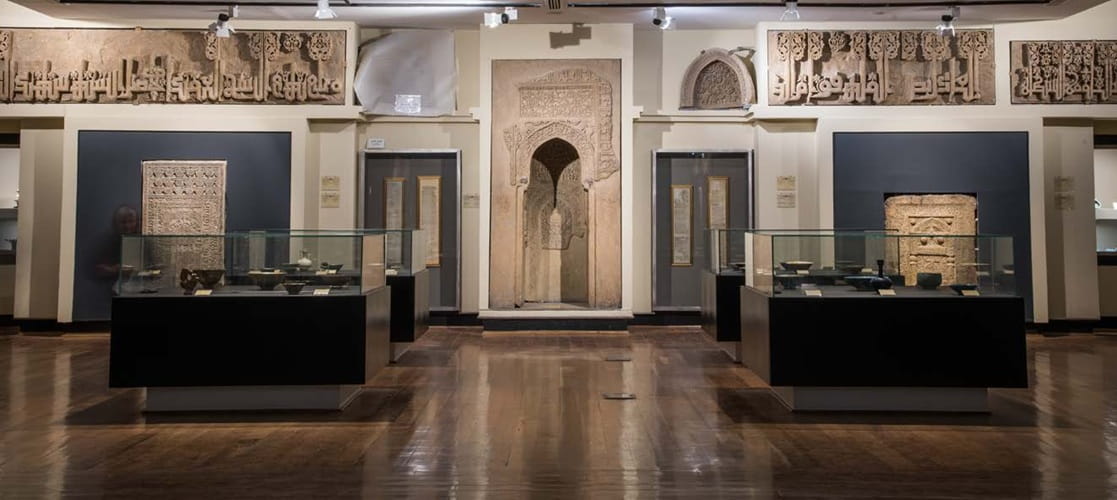
The Qur’an gallery provides a quieter experience than the stone-filled halls of the Ancient Iran building. Here, the eye moves from architecture to paper, parchment, pigment, script, binding, and proportion.
The museum’s Islamic collection includes Qur’anic manuscripts and examples of calligraphy from different periods. Even visitors unable to read the scripts can appreciate the material labor involved — the preparation of the writing surface, the control of the pen, the balance of text and illumination, and the care invested in preserving sacred words.
📷Photo by Farhangimoozeh on Wikicommons
Timurid and Safavid Art: The Court on Paper
Timurid and Safavid galleries present the refinement of courtly arts. Manuscript painting, calligraphy, textiles, ceramics, metalwork, and architectural decoration reveal the importance of the book as an object of prestige and knowledge.
Safavid Iran in particular is associated with the flourishing of painting and calligraphy under royal patronage. Works linked to the Safavid period show the development of controlled composition, delicate line, landscape conventions, and courtly representation.
The museum identifies paintings by Reza Abbasi among its important objects. His work is associated with a more intimate style of figure drawing that differs from the crowded narrative scenes of earlier illustrated manuscripts.
Qajar Art: A Changing Visual World
The Qajar galleries bring the chronology into the nineteenth century. Portraiture, lacquerwork, textiles, manuscripts, and decorative objects reflect a court culture negotiating both inherited forms and new political realities.
Qajar art is sometimes dismissed as an afterthought to Iran’s “great” ancient civilizations, but it offers a revealing account of a society encountering modernity. European influence, royal self-representation, new technologies, and older Persian conventions appear together.
This final section also helps prevent a common misunderstanding: Iranian history did not end with Persepolis or the Sasanian Empire. The museum’s broader value lies precisely in showing Iran as a sequence of connected, changing societies.
The National Museum contains Iran’s largest archaeological collections, but it does not contain every major object excavated in the country. Many monuments remain at their archaeological sites, while important objects are held by regional museums, specialist collections, or institutions outside Iran. Persepolis is best understood at Persepolis. Susa cannot be reduced to the objects transferred to Tehran. The museum is a starting point and interpretive anchor, not a replacement for the sites themselves.

Nearby Tehran Attractions: A Historic Walking District
Golestan Palace: Qajar Splendour Behind Walls
A short walk northeast brings you to Golestan Palace, a UNESCO-listed royal complex shaped by the Qajar court and later periods. Its mirrored interiors, tiled façades, gardens, and ceremonial spaces offer a striking contrast to the archaeological museum’s deep chronology.
The most logical sequence is often the National Museum in the morning, followed by lunch and Golestan Palace in the afternoon. Check palace opening arrangements separately, as the complex may have different entrance procedures and holiday closures.
Tehran Grand Bazaar: The City’s Commercial Memory
The Grand Bazaar extends through a dense network of covered passages, courtyards, workshops, and trading lanes. It is less a single attraction than a functioning urban organism.
The contrast with the museum is part of the appeal. In the museum, objects have been removed from circulation and placed under glass. In the bazaar, textiles, spices, metalwork, food, and household goods remain part of everyday exchange.
Malek National Museum and Library: Manuscripts and Fine Arts
The nearby Malek National Museum and Library offers a more intimate complement to the National Museum. Its collection includes manuscripts, calligraphy, coins, paintings, and decorative arts.
It is particularly useful for visitors who want more time with the literary and artistic traditions represented only briefly in the Islamic Era building.
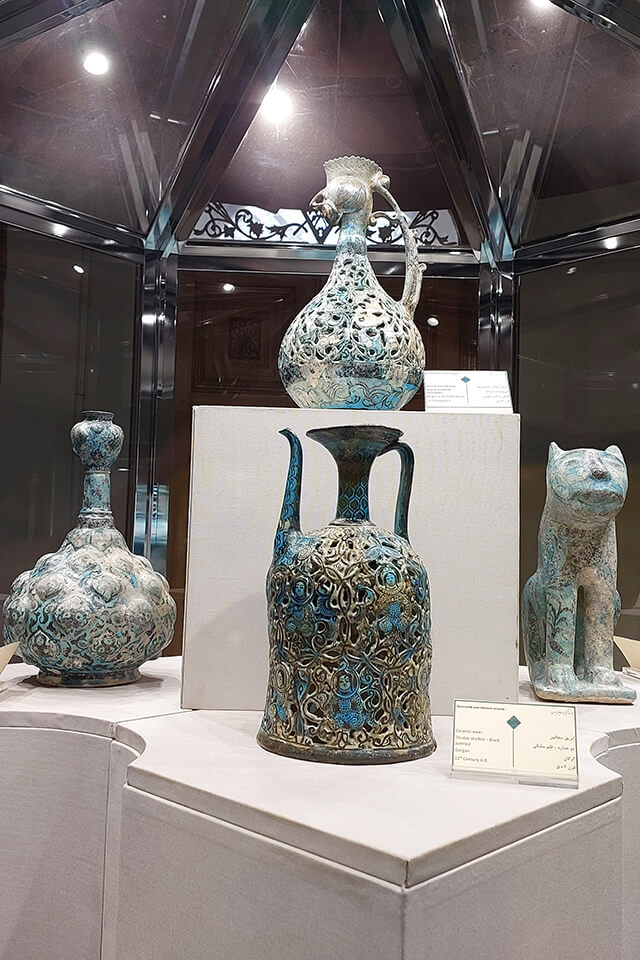
Glassware and Ceramic Museum: A Qajar House of Color
Housed in a beautifully restored Qajar-era residence, the Glassware and Ceramic Museum of Iran presents one of Tehran’s most elegant collections of glass and pottery. Its galleries trace the development of Iranian glassmaking and ceramics from antiquity through later Islamic periods, displaying vessels, bottles, bowls, tiles, and delicate decorative objects.
The building itself is part of the experience. Carved woodwork, painted ceilings, mirrored details, and carefully proportioned rooms provide a refined setting for the collection. Compared with the monumental stone reliefs of the National Museum, this museum offers a more intimate encounter with Iranian craftsmanship — one focused on transparency, surface, color, and form.
National Jewelry Museum: Iran’s Treasury of Splendour
The National Jewelry Museum of Iran, located beneath the Central Bank of Iran, safeguards one of the country’s most celebrated collections of royal jewelry and precious objects. Its displays include crowns, necklaces, brooches, ceremonial ornaments, swords, and gemstones associated with Iran’s royal history.
The best-known object is the Darya-ye Noor — or Sea of Light — diamond, one of the largest pink diamonds known to have survived from the historical royal collections. Other displays include the globe of jewels, whose oceans and continents are formed from thousands of precious stones, and the Pahlavi Crown, created for the coronation of Mohammad Reza Shah Pahlavi in 1967.
The museum’s security procedures are stricter than those at most Tehran attractions. Opening days and hours can be limited, photography is generally prohibited, and visitors should check the official schedule before making a special journey. When open, it offers a concentrated glimpse into the wealth, symbolism, and political theatre of Iran’s royal courts.
Best Time to Visit National Museum of Iran
The most comfortable seasons for exploring Tehran are generally spring and autumn, when outdoor walking between the museum, Golestan Palace, and the bazaar is easier. Summer can be hot, although the museum provides a welcome indoor interval. Winter is often manageable but may bring cold air and shorter official museum hours.
Arrive near opening time if you want the Ancient Iran galleries at their quietest. The stone reliefs and architectural fragments are easier to study before the main visitor flow builds.
Avoid planning a museum visit on major religious mourning days or national holidays without checking first. Institutional schedules can change, and the official website should take priority over older travel guides.
Practical Travel Tips: Planning Your Visit
Opening Hours
The National Museum’s official website currently lists the following seasonal schedule:
- Spring and summer: 9:00–19:00.
- Autumn and winter: 8:30–17:00.
Getting There
The museum is within walking distance of central Tehran metro stations. The official museum site gives approximate walking times of nine minutes from Hassan Abad and ten minutes from Imam Khomeini. You always have the private transfer option from anywhere in Tehran, using a private driver, Iranian ride-hailing apps (Snapp and Tap30) or taking a taxi.
Traffic around Imam Khomeini Square and central Tehran can be busy. Metro travel is often more predictable than a taxi during peak hours, although a taxi may be convenient for visitors carrying luggage or traveling in a group.
How Long to Stay
Allow at least two hours for both buildings. Three hours is more comfortable if you want to read labels, examine the early archaeological galleries, and spend time with the manuscripts and Islamic art.
A rushed visit tends to overemphasize Persepolis and the Achaemenids while leaving the Paleolithic, Elamite, Parthian, Islamic, and Qajar sections underexplored.
Dress and Museum Etiquette
Standard modest dress applies. Wear comfortable shoes, keep voices low in the galleries, and follow staff instructions regarding bags, photography, and temporary exhibitions.
Some objects are fragile or irreplaceable. Do not touch displays, even where a barrier appears informal or low.
Guides and Independent Visits
Independent travelers can have a rewarding visit with advance preparation. Read a short overview of Iranian history first and decide which periods deserve the most attention.
A specialist guide becomes especially valuable if you want to understand the relationship between the museum’s objects and archaeological sites such as Persepolis, Pasargadae, Susa, or Bisotun. For a structured visit, Compassimo’s Full-Day Tehran Tour can place the museum within the capital’s wider historical core, while the Iran Archaeology Tour connects the collection to the sites where many of these objects were found.
Final Thoughts: Where Iran’s Long Memory Lives
The National Museum of Iran is not trying to impress visitors with polished spectacle. Its power is cumulative. A Paleolithic tool, an Elamite object, a fragment from Persepolis, the preserved face of the Salt Man, a Seljuq bowl, and a Safavid painting gather beneath one institutional roof and begin to read as chapters in a much longer story.
The building’s red brick offers the first lesson: Iran’s modern national museum was designed through a conversation with its ancient past. The galleries offer the second: that past was never singular, static, or confined to one empire.
For travelers continuing to Persepolis, Susa, Isfahan, or Bisotun, a few hours here can change the way later monuments appear. The reliefs become more legible. The gaps between dynasties become more meaningful. The ancient world feels less like a collection of isolated ruins and more like a landscape of connected lives.
Want your National Museum along with a wider journey through Tehran’s history?
FAQs about the National Museum of Iran
1. What is the National Museum of Iran?
The National Museum of Iran is Tehran’s principal archaeological and historical museum. It consists of the Museum of Ancient Iran and the Museum of Islamic Archaeology and Art of Iran, with collections spanning from the Paleolithic period to the late Islamic and Qajar eras. The museum describes its holdings as representing more than a million years of human settlement and cultural achievement in Iran.
2. When was the National Museum of Iran built?
The original Museum of Ancient Iran was designed by André Godard and constructed by Iranian builders Abbas-Ali Me’mar and Morad Tabrizi between 1933 and 1936. It opened in 1937. The second building was later adapted as the Museum of Islamic Archaeology and Art of Iran.
3. What is the difference between the two museum buildings?
The Museum of Ancient Iran covers the Lower Paleolithic period through the end of the Sasanian era. The Museum of Islamic Archaeology and Art of Iran presents objects from the early Islamic period through the Seljuq, Ilkhanid, Timurid, Safavid, Afsharid, Zand, and Qajar periods.
4. What are the National Museum of Iran’s opening hours?
The official museum website lists spring and summer hours as 9:00–19:00 and autumn and winter hours as 8:30–17:00. Hours may change during holidays, religious mourning days, temporary exhibitions, or other closures, so check the official website before visiting.
5. How much time should I allow?
Plan on two to three hours for both buildings. Visitors with a strong interest in archaeology, manuscripts, or Iranian art may want longer, especially if they intend to read labels carefully.
6. Is the National Museum of Iran a UNESCO World Heritage Site?
No. The museum itself is not an inscribed UNESCO World Heritage Site. Iran’s UNESCO sites include archaeological locations and historic monuments such as Persepolis, Pasargadae, Susa, and Bisotun. See Compassimo’s guide to Iran’s UNESCO World Heritage Sites for the full list.
7. Are all of Iran’s famous ancient objects displayed here?
No. Important objects remain at archaeological sites, regional museums, specialist collections, or institutions outside Iran. The National Museum is the country’s principal archaeological collection, but it is not a complete storehouse of every Iranian artifact.
0 Comment