


Table of Contents
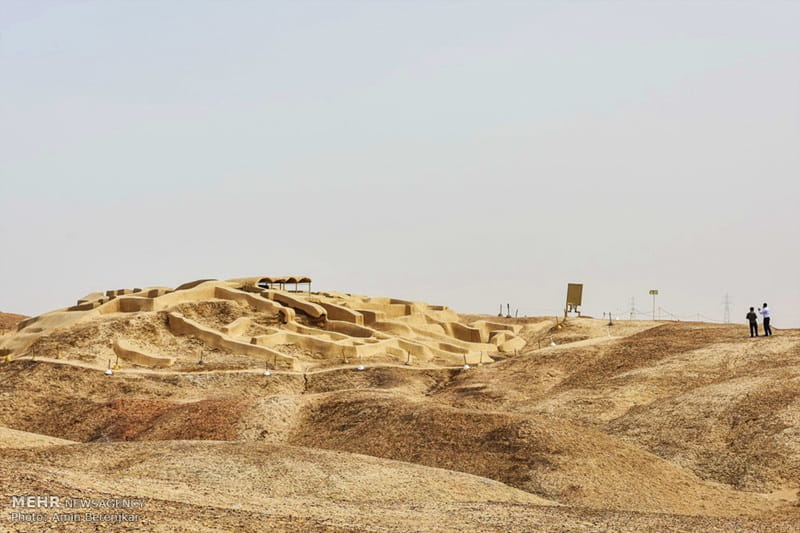
Wind crosses the Sistan Basin much as it did five millennia ago — carrying grit rather than rain, catching on low mudbrick mounds that were once streets, workshops, homes and graves. Shahr-e Sukhteh — also written Shahr-i Sokhta, meaning “Burnt City” — is a UNESCO World Heritage Site near Zabol in southeastern Iran, where an early urban settlement flourished from around 3200 BC before its eventual abandonment in the early second millennium BC.
There are no minarets here, no restored palaces, no crowds. What there is instead is something rarer for most travelers: a direct, largely unmediated encounter with the very beginning of city life in eastern Iran, still half-buried in the sand that eventually swallowed it.
The essential things to see and understand at Shahr-e Sukhteh are its vast excavated Bronze Age landscape, the cemetery that yielded an artificial eye and evidence of cranial surgery, its craft and trading networks, and the nearby cultural landscape of Zabol, Mount Khajeh and the Hamoun wetlands.
Shahr-e Sukhteh: A Desert City Before Empires
Shahr-i Sokhta stands at the junction of Bronze Age routes crossing the Iranian Plateau. UNESCO identifies the mudbrick remains as important evidence for the emergence of complex societies in eastern Iran, with separate urban areas for housing, burial, manufacturing and monumental buildings.
The experience is very different from visiting Persepolis, Yazd or Isfahan. There are no soaring domes, restored royal halls or decorative tile panels here; the site asks for imagination, patience and an interest in archaeology rather than spectacle. Its visual drama lies in the emptiness of the Sistan plain and the realization that this dry terrain once sustained a major city.
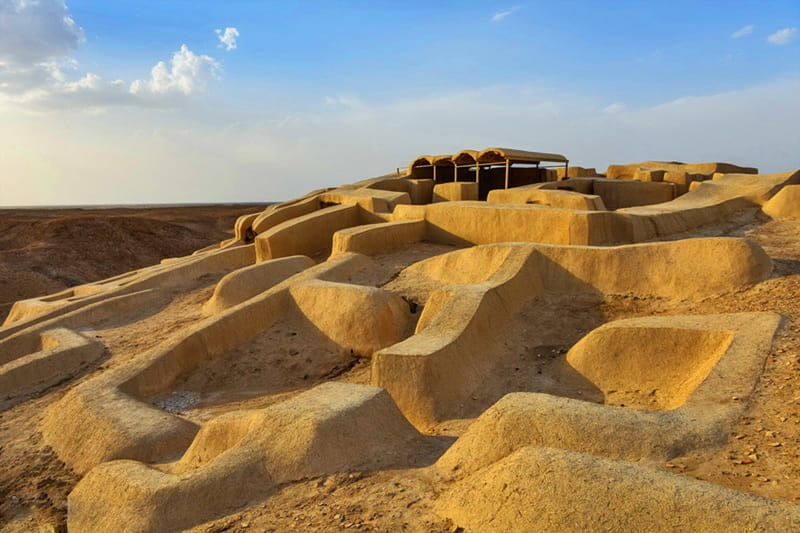
UNESCO documentation describes four principal periods of occupation. The settlement began around 3200 BC, expanded through the third millennium BC, and was abandoned after environmental changes affected the local water system.
📷Photo by Amin Berenjkar on Wikicommons
The Burnt City Name: A Cautious Reading
“Shahr-e Sukhteh” translates as “Burnt City,” a name linked to evidence of burning identified during excavation. However, the archaeological story should not be reduced to one catastrophic blaze or a simple narrative of destruction.
The settlement changed repeatedly over centuries, and its final abandonment is more securely connected to changing watercourses and climate conditions than to a confirmed military event. UNESCO attributes the city’s end to diversions in watercourses and climate change, which undermined the environmental system that had made settlement possible.
Claims that Shahr-e Sukhteh was an entirely peaceful city should also be treated carefully. The absence of obvious defensive architecture or extensive evidence of warfare is interesting, but it cannot prove that its inhabitants never experienced conflict.
Bronze Age Urban Quarters
At its height, Shahr-e Sukhteh was not a single undifferentiated mound. Archaeological investigations distinguish residential areas, a monumental zone, manufacturing quarters and a large burial ground — an urban organization that helps explain its UNESCO recognition.
UNESCO’s nomination material records that the site reached its largest documented extent during one of its middle occupational phases, with the city extending to roughly 80 hectares. The currently inscribed archaeological property is larger, covering 151 hectares, while the whole protected property covers 275 hectares.
The city’s material culture suggests long-distance contact rather than isolation. UNESCO places it at a crossroads of trade routes spanning the Iranian Plateau, where communities exchanged goods, skills and ideas during the third millennium BC.
Remarkable Archaeological Discoveries
Artificial Eye: A Human Story in Gold
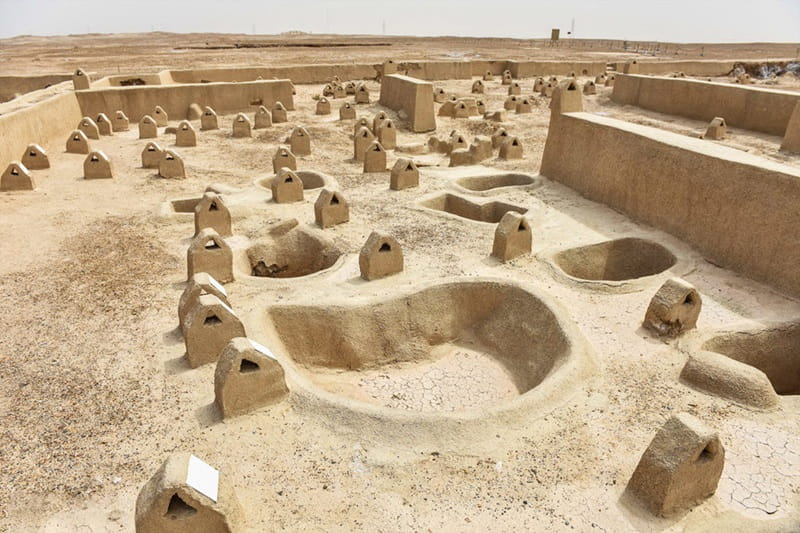
One of Shahr-e Sukhteh’s best-known discoveries is an artificial eye recovered from a woman’s grave. The prosthesis, dated to approximately 2900–2800 BC, was made from a lightweight material thought to include bitumen paste, coated with a thin layer of gold and pierced to hold a thread that secured it in place.
The wearer was estimated at about 1.82 meters tall, and microscopic evidence in the eye socket has been interpreted as indicating that she wore the object during life rather than receiving it only as a funerary ornament.
The object is compelling not merely because it is ancient. It offers a rare glimpse of bodily care, technical skill and individual experience in a society whose people left no personal written biographies.
📷Photo by Amin Berenjkar on Wikicommons
Cranial Surgery: Early Medical Intervention
A skull found at the site has been interpreted as evidence of cranial surgery on a young individual. The find suggests that practitioners at Shahr-e Sukhteh attempted sophisticated medical intervention, although visitors should avoid imagining modern surgery projected backward onto the Bronze Age.
The value of the discovery lies in its evidence for observation, treatment and care within a community that flourished far beyond the better-known ancient centers of Mesopotamia and Egypt.
Ancient Board Game: A Serpent-Shaped Puzzle
A complete game set found at Shahr-e Sukhteh includes a serpent-shaped board, 27 geometric pieces and four dice. It is widely described as one of the earliest complete game sets discovered because the board and playable components survived together.
Its precise rules remain uncertain. That uncertainty is part of its appeal: the game is not a finished museum anecdote but an object that still invites scholarly reconstruction, reminding visitors how much of ancient daily life can be physically preserved while its instructions, language and gestures disappear.
Painted Goblet: Motion on Pottery
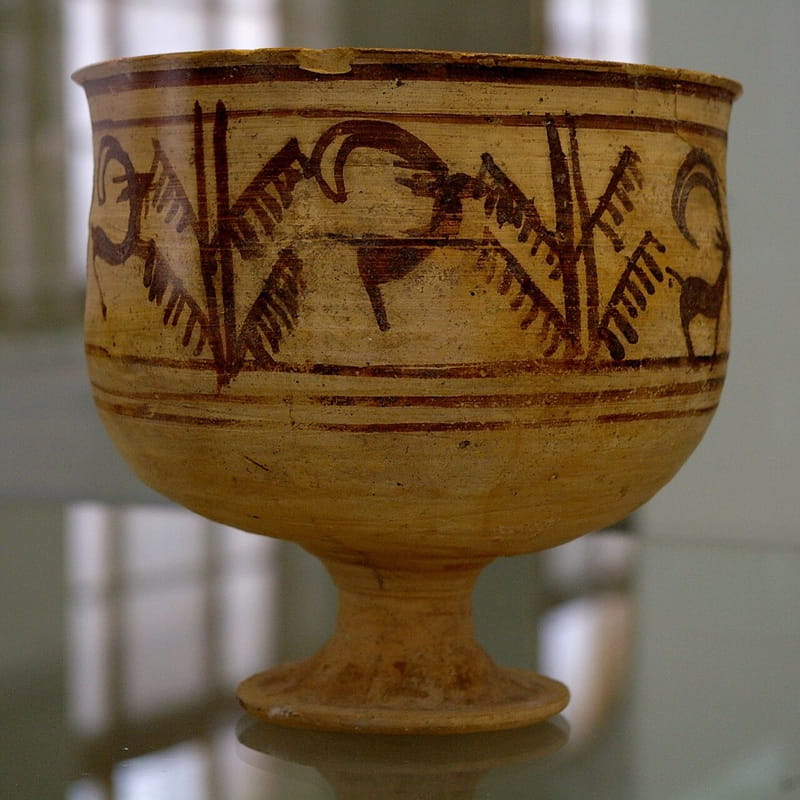
A decorated goblet from Shahr-e Sukhteh shows sequential images of a goat moving toward a tree. When the vessel is turned, the sequence can appear animated, leading to popular descriptions of the piece as a very early example of animation.
That phrase is evocative rather than definitive. The artifact is better understood as evidence of sophisticated visual storytelling and an artist’s awareness that repeated images could suggest movement.
📷Photo by Emesik on Wikicommons
UNESCO Recognition: A City of Exchange
Shahr-e Sukhteh was inscribed on the UNESCO World Heritage List in 2014 during the 38th session of the World Heritage Committee, under cultural criteria (ii), (iii) and (iv).
- Criterion (ii): The site reflects an important exchange of human values, especially through trade, technology and settlement development across Bronze Age cultural networks.
- Criterion (iii): It offers exceptional testimony to the cultural traditions of early complex societies in eastern Iran.
- Criterion (iv): Its urban remains illustrate an important stage in the development of organized settlement, with identifiable areas for residences, manufacture, burial and monumental activity.
For visitors building a heritage-focused route, Shahr-e Sukhteh belongs naturally alongside other sites in the Compassimo guide to UNESCO World Heritage Sites in Iran, though it requires much more planning than the country’s central and western monuments.
Visiting Shahr-e Sukhteh Today
Remote Sistan Setting: What to Expect
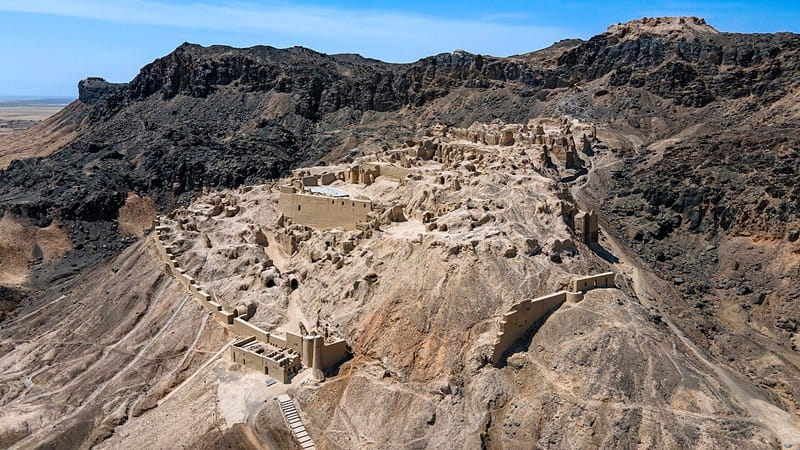
The archaeological site lies in the Sistan Basin, around 57 kilometers from Zabol. It is a remote destination, not a casual roadside stop, and should be approached as part of a carefully arranged regional itinerary.
Visitors encounter an active archaeological landscape: broad earthen mounds, excavated areas, low mudbrick traces and a vast horizon. The reward is intellectual and atmospheric rather than architectural. Come expecting a place that must be read through its landscape, artifacts and archaeological interpretation.
Many of the most important finds associated with the site are displayed in museums rather than left at the ruins themselves. A guide with regional and archaeological knowledge makes a major difference, especially for travelers who want to distinguish visible remains from the stories later told about them.
Best Seasons: Cooler Desert Light
October through March is generally the more comfortable period for a visit. Sistan’s summer heat and seasonal winds can make long walks across an exposed archaeological site difficult, while the cooler months offer clearer conditions for exploring.
For a broader route through the country, read our guide to the best time to visit Iran. The ideal month depends on whether Shahr-e Sukhteh is paired with desert cities, the Persian Gulf, Tehran or the colder northwestern provinces.
Travel Safety: Plan Conservatively
Sistan and Baluchestan is a border province adjoining Afghanistan and Pakistan. Travelers should review the current, country-specific travel guidance issued by their own government before making plans and should avoid treating outdated online advice as sufficient.
A locally organized trip with private transport, confirmed accommodation and an experienced guide is the sensible way to visit. Conditions, road logistics and local security guidance can change, so itineraries should remain flexible.
📷Photo by Shahram Salimi on Wikicommons
Best Day Trips from Zabol
Zabol Anthropology Museum: Sistani Traditions
Zabol’s local museum provides useful cultural context before or after the archaeological site. Its displays help situate Shahr-e Sukhteh within the wider history of Sistan, a region shaped by shifting water systems, borderland cultures and long-standing craft traditions.
It is especially worthwhile for travelers who want to move beyond the headline artifacts and understand the continuity between ancient settlement, regional clothing, domestic customs and present-day Sistani identity.
Mount Khajeh: A Basalt Island
Mount Khajeh rises prominently from the Hamoun basin, a dark basalt outcrop in a landscape otherwise defined by flat horizons. Its archaeological and religious associations span multiple historical periods, making it a strong companion visit for travelers interested in the region’s layered sacred geography.
Water levels and access conditions in the wider Hamoun landscape can vary. Check locally before setting out rather than relying on fixed online descriptions.
Hamoun Wetlands: A Fragile Basin
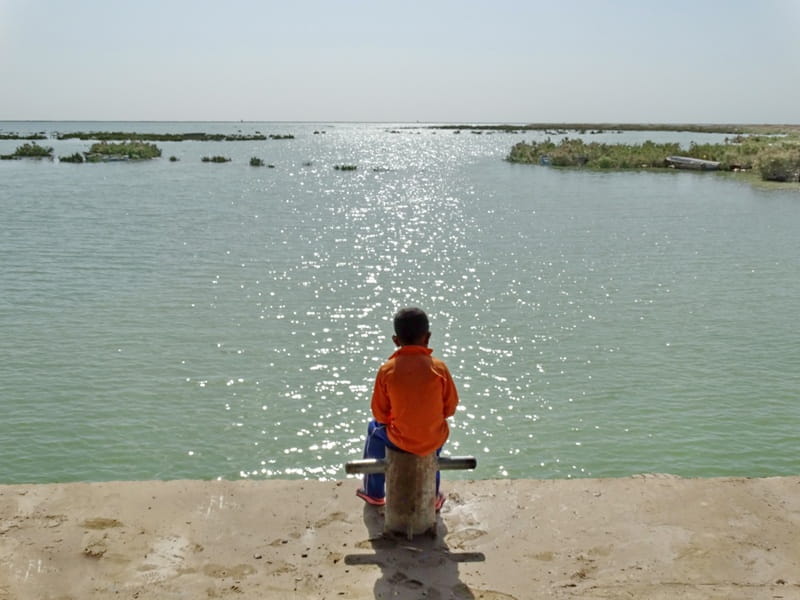
The Hamoun wetlands are part of the environmental story behind Shahr-e Sukhteh. Their water levels fluctuate dramatically, and the condition of the wetlands depends on rainfall, upstream flows and wider water management.
When conditions allow, the wetlands offer a striking contrast to the site’s dry archaeological setting. They also make visible the basic truth of Sistan’s history: settlement here has always depended on the fragile relationship between water, wind and land.
📷Photo by Rasool Abbasi17 on Wikicommons
Practical Travel Tips
Getting There: Guided Road Travel
Most international travelers should plan Shahr-e Sukhteh through Zabol or Zahedan, then continue by private vehicle. Independent public transport is not a practical or reliable way to visit the ruins themselves.
We can help arrange a tailor-made Iran itinerary with transport, regional guiding and accommodation planning.
Clothing and Sun Protection
Bring closed walking shoes, a wide-brimmed hat, sun protection, drinking water and layers for wind. The exposed terrain is not technically difficult, but there is little shade and the scale of the landscape can make even short walks feel demanding.
Respect barriers, marked excavation zones and directions from site staff. Fragile mudbrick and unexcavated layers can be easily damaged by off-path walking.
Accommodation and Facilities
Zabol is the logical base for most visitors. Accommodation choices are more limited than in Tehran, Shiraz, Yazd or Isfahan, so booking ahead is advisable, especially when arranging a guide and vehicle.
Carry enough cash for incidental expenses, while confirming current payment arrangements with your hotel or operator in advance.
Final Thoughts: Where the First Cities Still Whisper
Shahr-e Sukhteh is not a destination that gives itself away at first glance. Its grandeur is buried in scale, in fragments, in the silence between mounds, and in the evidence recovered from graves that now sits behind museum glass.
Yet this is precisely why it matters. An artificial eye, a surgically altered skull, a board game and a painted goat in motion bring the people of this vanished city closer than any imagined royal spectacle could. They reveal not an abstract “ancient civilization,” but individuals who made objects, cared for bodies, buried their dead and played games in a city that disappeared long before the first Persian empires.
Want to Explore Burnt City in Person?
FAQs about Burnt City Iran
1. What does Shahr-e Sukhteh mean?
Shahr-e Sukhteh means “Burnt City” in Persian. The site is also commonly written as Shahr-i Sokhta in English and appears under that spelling on UNESCO’s World Heritage List.
2. Where is Shahr-e Sukhteh located?
It is in Iran’s Sistan and Baluchestan province, near Zabol in the Sistan Basin. Archaeological literature places it roughly 57 kilometers from Zabol in south eastern Iran.
3. When was Shahr-e Sukhteh founded?
UNESCO dates its foundation to around 3200 BC. The city was occupied through four principal periods and was abandoned in the early second millennium BC.
4. Why did Shahr-e Sukhteh decline?
UNESCO attributes the city’s final abandonment to changes in watercourses and climate. These changes weakened the environmental conditions that had sustained settlement in the Sistan Basin.
5. Why is Shahr-e Sukhteh important?
It preserves unusually rich evidence of early complex society in eastern Iran, including distinct residential, manufacturing, burial and monumental zones. Its location also reflects Bronze Age exchange across the Iranian Plateau.
6. What was found at Shahr-e Sukhteh?
Important finds include an artificial eye, a skull interpreted as evidence of cranial surgery, painted pottery and a complete game set with a serpent-shaped board, 27 pieces and four dice.
7. Is Shahr-e Sukhteh a UNESCO World Heritage Site?
Yes. It was inscribed in 2014 under cultural criteria (ii), (iii) and (iv).
8. Can travelers visit Shahr-e Sukhteh independently?
It is possible to reach the wider region by road, but an independently arranged visit is not recommended for most international travelers because of the site’s remoteness, sparse transport options and the need to monitor current regional travel guidance.
9. Is Shahr-i Sokhta open to visitors?
Yes, the site is open to visitors during daylight hours and includes a small on-site museum, though most major artifacts are held at the National Museum of Iran in Tehran.
10. How do you get to Shahr-i Sokhta?
Most travelers reach Shahr-i Sokhta by flying into Zahedan and continuing by road as part of an organized itinerary, since there is no practical independent public transport option to the site.
11. How old is Shahr-i Sokhta?
The city was founded around 3200 BC according to UNESCO’s official account, though more recent research has proposed an earlier founding date closer to 3500 BC. It was abandoned in the early second millennium BC.
0 Comment