

Table of Contents
Tabriz announces itself through scent before scenery: walnuts and saffron drifting out of the covered bazaar, cardamom tea steaming on a brazier, the mineral chill of wind coming down off Mount Sahand. Tabriz, capital of Iran’s East Azerbaijan province, holds one of the world’s oldest covered markets, a 15th-century mosque once called the “Turquoise of Islam,” and a rock-carved village an hour into the surrounding hills. It does not look or sound quite like the rest of Iran, and that difference is precisely the point.
Most first-time visitors to Iran focus on Tehran, Isfahan, Shiraz, and Yazd, leaving Tabriz off the itinerary. That’s understandable—its appeal is quieter. Rather than grand royal squares or the ceremonial ruins of ancient empires, Tabriz offers a city where history is still part of everyday life. Its UNESCO-listed bazaar has been a center of trade for centuries, Azerbaijani Turkish is the language most often heard in the streets, and its long tradition of craftsmanship, carpets, and confectionery has made it one of Iran’s cultural and commercial capitals. Today, Tabriz remains one of the country’s leading producers of chocolate and traditional sweets, a reputation that visitors quickly discover in its markets and cafés. This guide covers what to see in the city, where to go beyond it, what to eat, and how to plan the visit honestly.
Why Tabriz Deserves a Place on Your Itinerary
A City Shaped by Trade and Resilience
Tabriz owes its importance to its position at the crossroads of the Silk Road, linking Persia with the Caucasus, Anatolia, and Central Asia. For centuries, merchants, travelers, and rulers passed through the city, making it one of Iran’s most influential commercial and cultural centers. It served as the capital of the Ilkhanids in the 13th and 14th centuries and briefly of the early Safavids, with each dynasty leaving behind monuments that still define the city today—from the Blue Mosque to the historic Arg-e Alishah and the gardens of El Goli.
Life in Tabriz has also been shaped by centuries of powerful earthquakes. The city has been destroyed and rebuilt several times, most notably after the devastating earthquake of 1780. As a result, many of its historic monuments survive as carefully restored fragments rather than untouched originals, giving Tabriz a character unlike any other city in Iran.
A Different Side of Iran
One of the first things many visitors notice is that the language most commonly spoken isn’t Persian. Tabriz is the cultural heart of Iranian Azerbaijan, and Azerbaijani Turkish is the everyday language heard in markets, cafés, and family homes. This distinct identity is reflected in the city’s food, music, traditions, and place names, offering travelers an experience that feels noticeably different from central Iran.
Rather than seeing Tabriz as simply another historic Iranian city, it’s better understood as a meeting point of Persian and Azerbaijani cultures, where centuries of trade, migration, and cultural exchange have created an identity unlike anywhere else in the country.
Explore the Tabriz Grand Bazaar
No list of things to do in Tabriz can begin anywhere else. The Tabriz Historic Bazaar Complex is one of the largest covered bazaars in the world and one of the few historic marketplaces that still functions as the commercial heart of its city. This is not a preserved museum district or a tourist attraction that happens to have shops; locals still come here to buy carpets, jewelry, spices, fabrics, nuts, and everyday goods much as they have for centuries.
The UNESCO-listed complex is vast enough to feel like a small city under brick vaults. Caravanserais, mosques, tea houses, and specialized trading halls branch into one another in a maze that rewards wandering but can genuinely be disorienting without a plan. Carpet merchants occupy some sections, goldsmiths another, while elsewhere the air fills with the scent of dried fruit, saffron, and Azerbaijani sweets.
What UNESCO recognized was not simply the architecture, impressive though it is, but the continuity of trade itself. The bazaar remains one of the clearest reminders that Tabriz became important because merchants kept coming here, generation after generation.
📷Photo by Navid Alizadeh Sadighi on Wikicommons
Admire the Blue Mosque
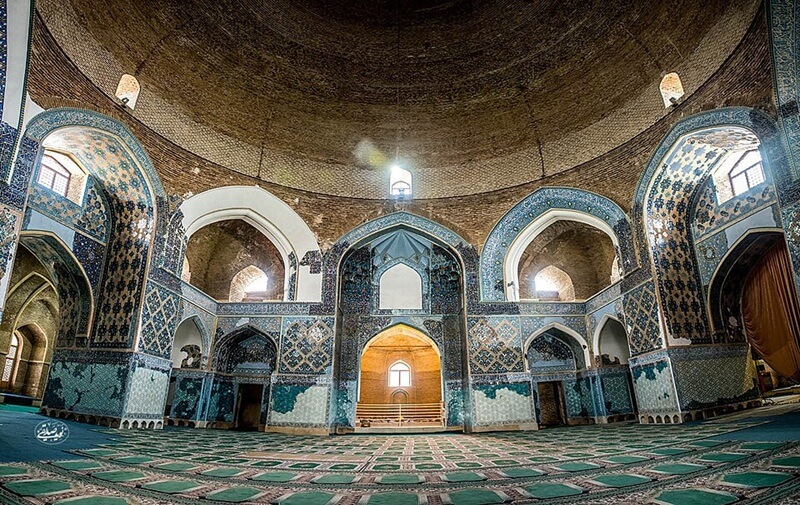
Built in 1465 under the Qara Qoyunlu ruler Jahan Shah, the Blue Mosque is one of the finest surviving examples of late medieval Persian-Islamic tilework. Even in its ruined state, it earned the nickname Turquoise of Islam, a title that becomes understandable the moment you see the surviving mosaics.
The devastating earthquake of 1780 destroyed much of the complex, and restoration has continued in stages ever since. That means the building you see today is part original monument, part careful reconstruction—an important distinction worth knowing before you visit. Travelers expecting a fully intact mosque are sometimes surprised by how much was lost.
Yet what remains is extraordinary. Intricate floral mosaics, delicate calligraphy in Kufic and Thuluth script, and fragments of turquoise and dark blue tilework still rank among the finest examples of Islamic art in Iran. Look carefully and you’ll also find traces of older Persian motifs incorporated into the decoration, a reminder that Iranian artistic traditions often absorbed earlier influences rather than replacing them entirely.
Even if restoration work is ongoing during your visit, the surviving original tilework alone makes the mosque well worth seeing.
Visit Arg-e Alishah
At first glance, Arg-e Alishah looks almost impossible: a single enormous brick wall rising from the middle of the city.
Originally commissioned during the Ilkhanid period in the early 14th century, it was intended to become one of the largest mosques in the Islamic world. According to historical accounts, its enormous arch collapsed during construction, and the project was never completed. Earthquakes, warfare, and later military use reduced it even further.
What survives today is only a fragment, but the scale of that fragment is what makes it remarkable. Standing beneath it, it’s easy to understand the ambition behind the original project. Few monuments communicate the sheer confidence—and occasional overreach—of an empire quite as clearly.
Step Inside Constitution House
For travelers interested in Iran beyond ancient Persia, Constitution House is one of the most important places in Tabriz.
Built in 1868 as the residence of merchant Haj Mehdi Kuzeh-Kanani, the house became a center of the Persian Constitutional Revolution during the early 20th century. Revolutionary leaders met here, organized resistance, and helped shape the movement that eventually limited royal authority and introduced parliamentary government to Iran.
Today the building serves as a museum displaying photographs, documents, weapons, and printing equipment from the revolution. It is quieter than the city’s major attractions, but few places in Iran connect visitors so directly to the country’s modern political history.
📷Photo by Reza Milani on Unsplash
Explore Tabriz’s Museums
Tabriz has some of Iran’s most rewarding museums outside Tehran, and they are often far less crowded than visitors expect.
The Azerbaijan Museum is the city’s archaeological highlight, displaying artifacts that span thousands of years of regional history. Bronze Age objects, sculptures, inscriptions, and Islamic-era pieces make it one of the best places in northwestern Iran to understand the civilizations that shaped the region.
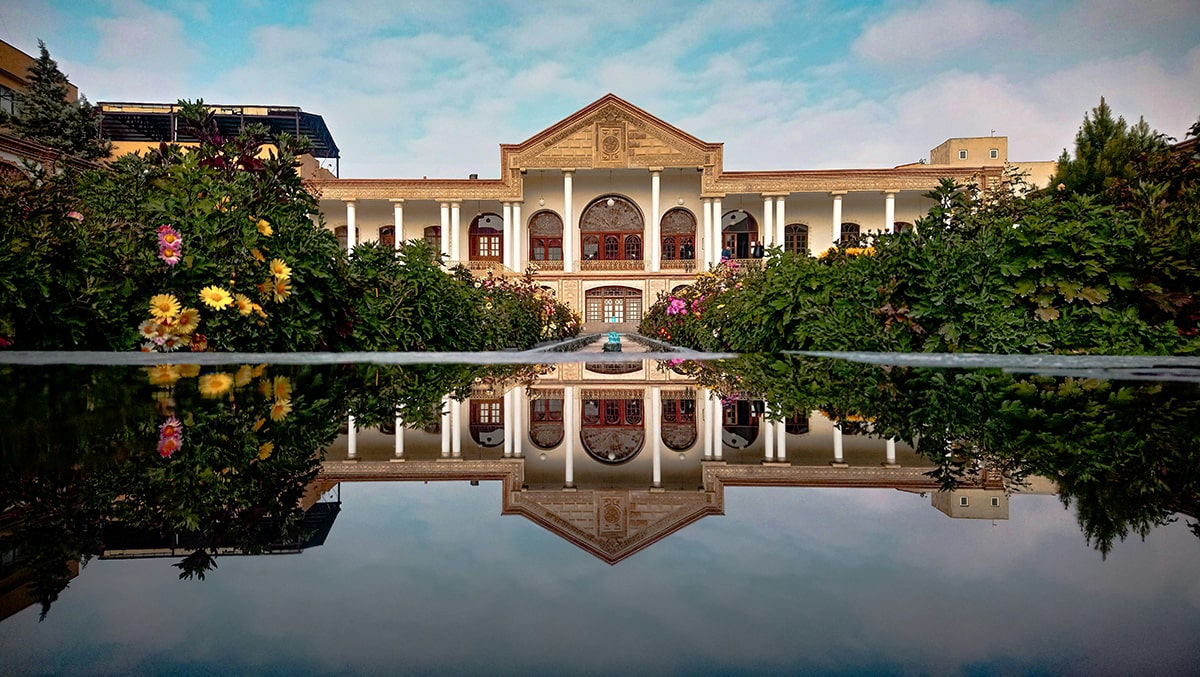
The Qajar Museum, housed in the restored Amir Nezam House, offers a different experience. With stained-glass windows, carved columns, and elegant courtyards, it provides a glimpse into aristocratic life during the Qajar period while showcasing decorative arts, coins, weapons, and historical objects.
Nearby, Behnam House presents a more intimate side of the same era. Originally a merchant residence, it preserves beautifully decorated interiors and traditional courtyard architecture, making it one of the city’s finest historic houses.
Together, these sites offer a deeper understanding of Tabriz beyond its monuments, revealing how people actually lived across different periods of the city’s history.
Spend an Evening in El Goli Park
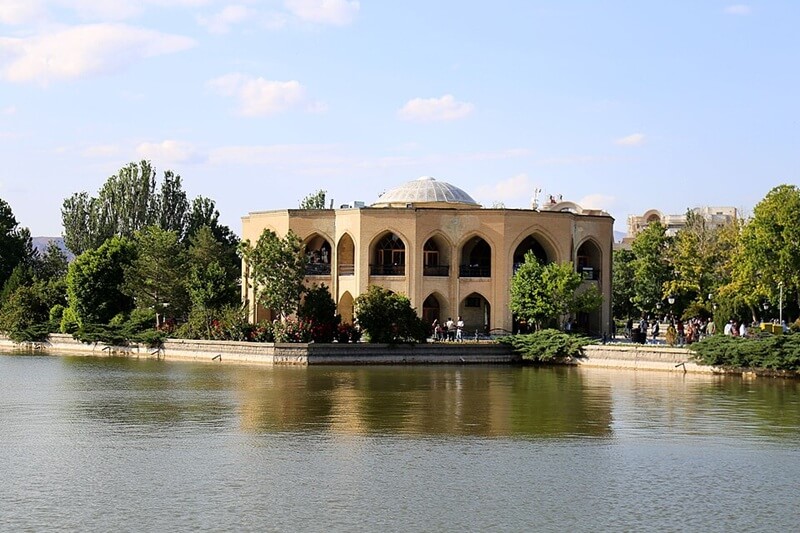
If the bazaar shows Tabriz at work, El Goli shows the city at leisure. Centered around a large lake with an octagonal pavilion in the middle, the park began as a royal reservoir before evolving into one of Tabriz’s most beloved public spaces. Today families picnic on the grass, children ride bicycles, couples stroll along the water, and paddleboats drift across the lake.
Visit around sunset if possible. This is when the park feels most alive, and watching local families enjoy the evening offers one of the simplest and most authentic experiences in the city.
El Goli is less about monuments and more about understanding everyday life in Tabriz.
📷Photo by Safa Daneshvar on Wikicommons
Visit the Tomb of the Poets
Iran takes poetry seriously, and nowhere in Tabriz makes that clearer than the Tomb of the Poets.
This historic burial ground has served as the resting place of poets, scholars, and mystics for centuries. The modern monument that stands there today commemorates more than four hundred literary figures, including the celebrated Azerbaijani-Persian poet Mohammad-Hossein Shahriar.
Even visitors unfamiliar with Persian literature often find the site unexpectedly moving. It offers a reminder that in Iran, poets are not simply historical figures; they remain part of the country’s living cultural identity.
Discover Saint Mary Church
Tabriz has long been a multicultural city, and Saint Mary Church reflects that history.
Associated with the city’s Armenian Christian community, the church is among the oldest surviving Christian sites in northwestern Iran. Although earthquakes and later renovations altered much of the original structure, it remains an active place of worship and an important reminder that Tabriz’s identity has always extended beyond a single culture or faith.
For travelers interested in the city’s diverse past, it is a worthwhile and often overlooked stop.
Ride the Eynali Cable Car
For the best views of the city, head to Eynali.
The cable car climbs into the hills east of Tabriz, revealing panoramic views over the city and the surrounding mountains. On a clear day, it becomes obvious just how closely Tabriz is tied to its landscape—a mountain city as much as an urban one.
There are walking trails, viewpoints, and restaurants at the top, making it an especially pleasant escape after a day spent exploring the busy streets below.
While not essential in the same way as the bazaar or Blue Mosque, it is one of the most rewarding places to end your time in Tabriz.
Beyond Tabriz: Worthwhile Day Trips
Kandovan: Iran’s Rock-Carved Village
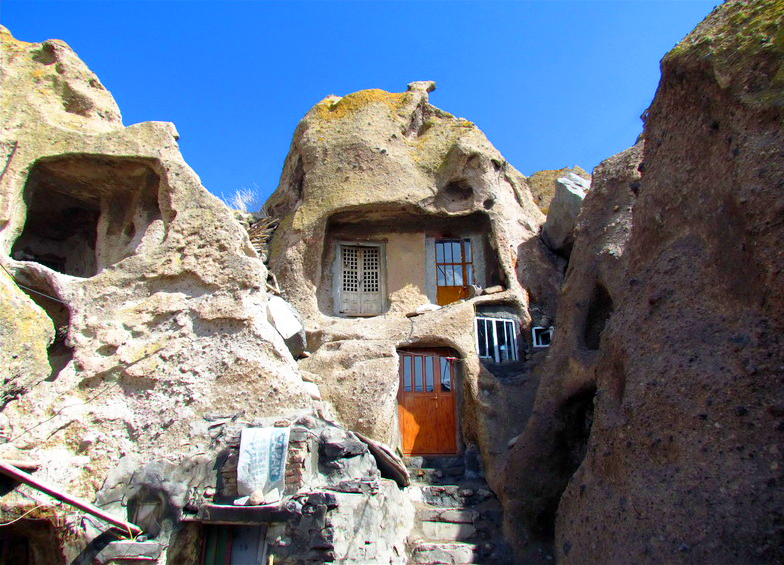
About an hour southwest of Tabriz, Kandovan is one of the world’s few continuously inhabited rock-cut villages. Instead of being preserved as an open-air museum, it remains a living community where families still live in cone-shaped homes carved into soft volcanic rock formed by ancient eruptions of Mount Sahand.
Many of these dwellings are believed to be several centuries old, and local tradition says the first residents sought refuge here during the Mongol invasions before turning the caves into permanent homes. Today, around 600–700 people still live in Kandovan, raising livestock, producing local honey and dairy products, and selling handicrafts in the village’s small market.
Visitors come not only for the unusual architecture but also for the atmosphere. Unlike Turkey’s Cappadocia, Kandovan remains far less commercialized, making it feel more like a traditional mountain village than a tourist attraction. Allow at least half a day to explore Kandovan’s winding streets, browse its small handicraft shops, and enjoy the views of the Sahand Mountains. If you’re based in Tabriz, our Kandovan Village Tour is an easy way to experience the village with comfortable transportation and a well-planned itinerary.
📷Photo by Auoob Farabi on Wikicommons
Lake Urmia: Iran’s Fading Turquoise Giant
Around 90 minutes west of Tabriz, Lake Urmia tells one of Iran’s most important environmental stories.
Once the largest salt lake in the Middle East, the lake has lost much of its surface area over recent decades due to prolonged drought, dam construction, and increased agricultural water use. Large sections that were once covered by turquoise water are now white salt flats, giving the landscape an almost surreal appearance.
Despite these changes, Lake Urmia remains a worthwhile excursion for travelers interested in nature and contemporary Iran. Depending on seasonal water levels, you may still see stretches of bright blue water contrasting with the salt-covered shoreline, while migratory birds such as flamingos occasionally return during favorable years.
A visit here is less about finding a perfect postcard and more about understanding one of the country’s most significant environmental challenges.
The Aladaglar Rainbow Mountains: Iran’s Painted Hills
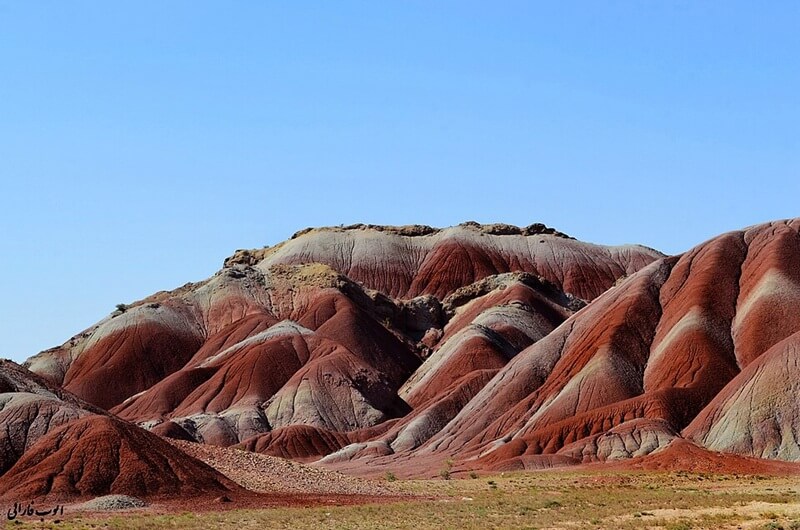
Just 30 to 40 minutes northeast of Tabriz, the Aladaglar, or Rainbow Mountains, create one of Iran’s most colorful natural landscapes.
Millions of years of geological activity exposed layers rich in different minerals, producing vivid bands of red, orange, yellow, green, and white across the hillsides. The colors become especially striking shortly after sunrise and before sunset, when the lower angle of light enhances the natural contrasts.
The area has very little visitor infrastructure, so most travelers visit with a private driver or guided tour. Several excellent viewpoints lie just off the highway, but they are easy to miss without local knowledge.
For photographers, this is one of the most rewarding short excursions from Tabriz.
St. Stephanos Monastery and Iran’s Armenian Christian Heritage
Near the town of Jolfa, close to Iran’s border with Armenia and Azerbaijan’s Nakhchivan Autonomous Republic, St. Stephanos Monastery is one of the country’s most important Christian monuments.
The monastery forms part of the UNESCO-listed Armenian Monastic Ensembles of Iran, together with the Monastery of Saint Thaddeus and the Chapel of Dzordzor. Built and rebuilt over centuries, it combines Armenian religious architecture with local Persian influences, reflecting the long history of Armenia’s Christian communities in northwestern Iran.
Surrounded by mountains and the Aras River valley, the setting is as memorable as the monument itself. The peaceful atmosphere and impressive stone carvings make it one of the most rewarding cultural day trips from Tabriz.
📷Photo by Auoob Farabi on Wikicommons
Taste Tabriz’s Azerbaijani Cuisine
Food is one of the easiest ways to experience Tabriz’s Azerbaijani identity. Compared with central Iran, the local cuisine is generally heartier, making generous use of herbs, dairy, dried fruit, and slow-cooked meat dishes that reflect the region’s mountain climate and pastoral traditions.
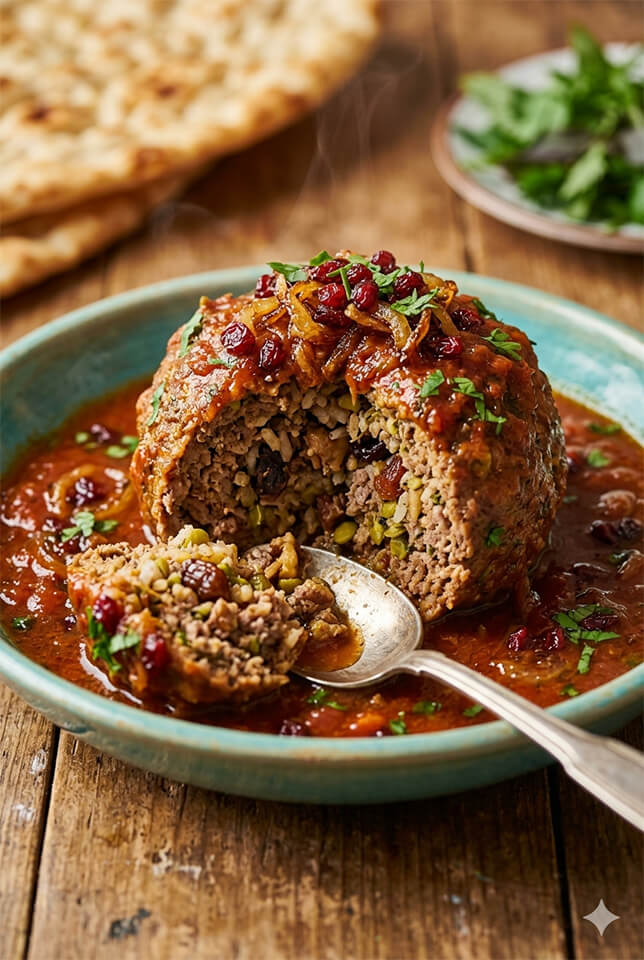
The city’s signature dish is Koofteh Tabrizi, a giant meatball unlike any other in Iran. Made from minced meat, rice, split peas, herbs, and spices, it’s often filled with ingredients such as walnuts, dried plums, boiled eggs, or barberries before being slowly simmered in a light tomato-based broth. One serving is usually large enough to share, making it a perfect introduction to local cooking.
Other regional specialties worth trying include Ash-e Omaj, a comforting soup made with hand-cut noodles and herbs, and Ash-e Gojeh, a tangy soup flavored with green plums that’s especially popular in spring. At breakfast, you’ll often find Lighvan cheese, a salty sheep’s-milk cheese produced in the nearby village of the same name and widely regarded as one of Iran’s finest traditional cheeses.
Whether you’re dining in a traditional restaurant or a family-run eatery, these dishes offer a taste of a culinary tradition that is distinctly Tabrizi.
Don’t Leave Without Trying the Sweets
If there’s one edible souvenir Tabriz is famous for, it’s its confectionery. The city has long been considered one of Iran’s leading centers for traditional sweets and chocolate, and wandering through the bazaar’s confectionery shops is an experience in itself, with the aromas of roasted nuts, saffron, cardamom, and rosewater filling the air.
The best-known local specialty is Qurabiya, a rich almond cookie topped with chopped pistachios or almonds. Made with large amounts of nuts and egg whites, it has been one of Tabriz’s signature treats for generations and remains a popular gift for visitors.
You’ll also find Loz-e Tabrizi, delicate diamond-shaped sweets made with finely ground almonds or pistachios and lightly scented with saffron or rosewater, along with Tabrizi nougat (Nogha), a chewy confection made from honey, sugar, egg whites, and nuts.
The best place to buy them is inside the Tabriz Grand Bazaar, where many confectioners continue to make their sweets using long-established family recipes. Even if you don’t plan to take any home, stopping for fresh Qurabiya or a piece of nougat with a cup of Persian tea is one of the city’s simplest pleasures.
Planning Your Tabriz Visit: Practical Details
Best time to visit: Spring (April–May) and early autumn (September–October) offer the most comfortable weather for exploring the bazaar and taking day trips into the surrounding mountains. For a fuller seasonal breakdown across the country, see our month-by-month guide to visiting Iran to compare Tabriz with other destinations. Summer is also a good time to visit, with temperatures generally cooler than much of central and southern Iran, making Tabriz a popular escape from the heat. Winters, however, are cold and often snowy, with temperatures regularly dropping below freezing. If you’re traveling later in the year, our guide to Iran in autumn explains what to expect across different regions.
Getting there: Tabriz is easily reached by domestic flights from Tehran and other major Iranian cities via Shahid Madani International Airport. If you have more time, the overnight train from Tehran offers one of Iran’s most comfortable rail journeys and arrives in the city the following morning. Tabriz is also well connected by long-distance buses, with frequent services from Tehran, Isfahan, Ardabil, Rasht, Urmia, and many other cities across the country.
Suggested itinerary: Spend your first day exploring Tabriz’s historic center, combining the Grand Bazaar, Blue Mosque, Arg-e Alishah, and Constitution House, all within easy reach of one another. On your second day, slow the pace with El Goli, the Azerbaijan Museum, the Qajar Museum, and the Tomb of the Poets. If you have extra time, dedicate a full day to Kandovan Village or choose a separate excursion to St. Stephanos Monastery and the scenic Aras River valley. Travelers staying four days or longer can comfortably enjoy both.
Honest logistics: Opening hours for smaller museums, including the Constitution House, can vary, so it’s worth checking ahead rather than assuming they’ll be open. The Aladaglar Rainbow Mountains have very limited signage and visitor facilities, making a local driver or guide the easiest way to find the best viewpoints. If you’re visiting Kandovan in winter, be aware that heavy snowfall can occasionally make the mountain road difficult, while spring, summer, and autumn generally offer more reliable driving conditions.
Final Thought: A City That Speaks in Its Own Voice
Tabriz doesn’t perform Iran the way some more heavily touristed cities do. There’s no single square built for the postcard shot, no one monument doing all the work of explaining the place. Instead there’s a bazaar that has simply never stopped operating, a mosque rebuilt around its own fragments, and a language on the street that reminds you Iran has never been one thing.
That difference is exactly why Tabriz rewards a slower visit rather than a rushed one. The city asks you to notice — the Azeri word carved into a mountain range, the almond cookie balanced on a teacup out of habit rather than instruction, the empty crypt in a 15th-century mausoleum where two names are still faintly legible. None of it announces itself as spectacular, in the way a five-hundred-year-old turquoise dome does. It asks to be understood instead.
For a country as historically rich as Iran, a visit to Tabriz is less about adding another stop to an itinerary and more about seeing a genuinely different regional identity within one nation — Azerbaijani and Persian, ancient and industrial, devout and irreverent, often within the same afternoon. That combination is increasingly rare to find intact, and it’s worth experiencing directly rather than through a summary.
Tabriz Keeps Its Best Details for the People Who Slow Down Enough to Notice Them.
FAQs about Top Things to Do in Tabriz
1. What is Tabriz best known for?
Tabriz is best known for its UNESCO-listed Grand Bazaar, one of the oldest continuously operating covered markets in the world, alongside the 15th-century Blue Mosque and its role as the historic capital of Iranian Azerbaijan. It’s also Iran’s largest producer of confectionery, particularly nougat and almond sweets.
2. How many days do you need?
Two full days are enough to explore Tabriz’s main attractions at a comfortable pace. Three days lets you add a day trip to Kandovan or the Aladaglar Rainbow Mountains, while four days gives you time to visit Lake Urmia or St. Stephanos Monastery without rushing.
3. Is the Tabriz Grand Bazaar a UNESCO site?
Yes. The Tabriz Historic Bazaar Complex was inscribed as a UNESCO World Heritage Site for its exceptional preservation and continuous commercial use spanning roughly a thousand years.
4. What is the best time of year to visit Tabriz?
Spring (April–May) and early autumn (September–October) offer the most comfortable weather for sightseeing. Summer is also an excellent time to visit, as Tabriz’s higher elevation keeps temperatures noticeably cooler than much of central and southern Iran. Winters are cold and often snowy, with temperatures frequently dropping below freezing, which can occasionally affect travel to nearby mountain destinations.
5. How do you get from Tehran to Tabriz?
The fastest option is a domestic flight, taking roughly 90 minutes. An overnight train is a comfortable and scenic alternative, and long-distance buses also connect the two cities.
6. Is Kandovan village worth visiting from Tabriz?
Yes — Kandovan is one of the few troglodyte villages in the world that remains genuinely inhabited rather than preserved as a museum. It’s roughly an hour from Tabriz and pairs well with a half-day or full-day village excursion.
7. Is Lake Urmia worth visiting from Tabriz?
It’s worth visiting for a firsthand look at one of Iran’s most significant environmental stories rather than for the lake’s historic turquoise waters, which have receded dramatically over recent decades due to drought and dam construction. The salt-flat landscape and causeway crossing are still striking, roughly 90 minutes from Tabriz.
8. What language do people speak in Tabriz — is it different from the rest of Iran?
Most Tabrizis speak Azeri Turkish as their everyday language, alongside Persian, since Tabriz is the historic capital of Iran’s Azerbaijani minority. This shapes local place names, cuisine, and cultural traditions distinct from central and southern Iran.
9. Is Tabriz safe for tourists?
Tabriz is generally considered safe for travelers, with the same everyday precautions recommended throughout Iran. For a broader look at safety perceptions versus lived experience across the country, see our honest local perspective on traveling in Iran.
10. What food is Tabriz famous for?
Tabriz is famous for koofteh Tabrizi, an oversized stuffed meatball, along with regional soups like ash-e omaj and ash-e gojeh, Lighvan sheep’s-milk cheese, and a wide range of confectionery including qurabiya almond cookies and Tabrizi nougat. Our guide to Iran’s most essential dishes covers how Tabrizi cuisine fits into the country’s broader culinary landscape.
11. Is Tabriz a good base for exploring other cities in Iran?
Tabriz works well as a standalone destination in Iran’s northwest rather than a base for the country’s central sights, which are better reached from Tehran or Isfahan. For an overview of how Iran’s major cities connect, see our guide to the country’s key urban destinations.
0 Comment