


Table of Contents
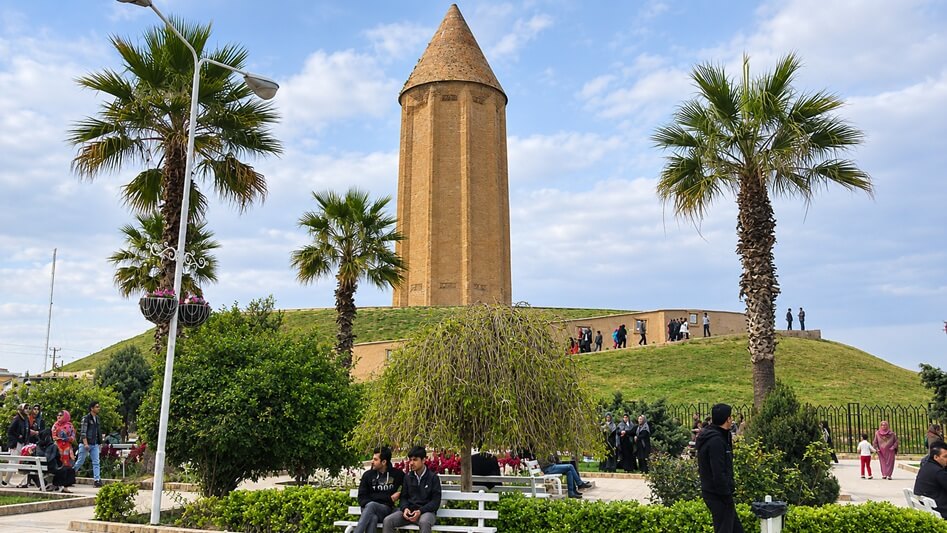
Cross the flat farmland of Iran’s Golestan province on a clear day, and you will see it long before you reach the town: a pale, ribbed cylinder rising straight out of the plain, taller than anything around it for miles. Gonbad-e Qabus is the tallest pure brick tower on Earth — a 53-metre tomb built in 1006 CE for the Ziyarid ruler Qabus ibn Voshmgir — and it has stood on this open ground near the ruins of ancient Jorjan for over a thousand years, largely alone. No dome sits inside it. No inscriptions explain its purpose beyond a date and a name. It is one of the few monuments in Iran that asks more questions than it answers, and that mystery is precisely what makes it worth the detour.
This is not a site travelers stumble into. It sits well off the Tehran–Isfahan–Shiraz route, closer to the Turkmen steppe than to Persia’s famous squares and gardens. But for anyone curious about the depth of Iran’s architectural history — and the dynasty that briefly rivaled the great courts of the Islamic world — Gonbad-e Qabus rewards the journey with something few other sites offer: a monument built to be understood almost entirely through geometry, brick, and silence.
Gonbad-e Qabus and its surroundings offer a concentrated dose of medieval architecture, pre-Islamic fortifications, enigmatic archaeology, and Caspian wetlands — all within reach of Gorgan. The tower itself is the centerpiece, but the surrounding landscape of Golestan province holds enough to fill two or three days for travelers willing to venture beyond the main monument.
King, Lost City, and Glass Coffin
The tower takes its name from Qabus ibn Voshmgir, a Ziyarid ruler who governed northern Iran around the turn of the first millennium and was known by the honorific Shams al-Ma’ali, “the Sun of Loftiness.” He was a poet, a patron of scholarship, and — by all accounts — a ruthless one. His court in the city of Jorjan drew some of the era’s brightest minds, including the polymath al-Biruni, who spent years there and dedicated his first major work to Qabus. But Qabus was overthrown by his own commanders in 1012 and killed, and the tower he had commissioned six years earlier, in 1006, became his intended tomb — built on his own orders, in the empty ground outside his capital, while he was still alive.
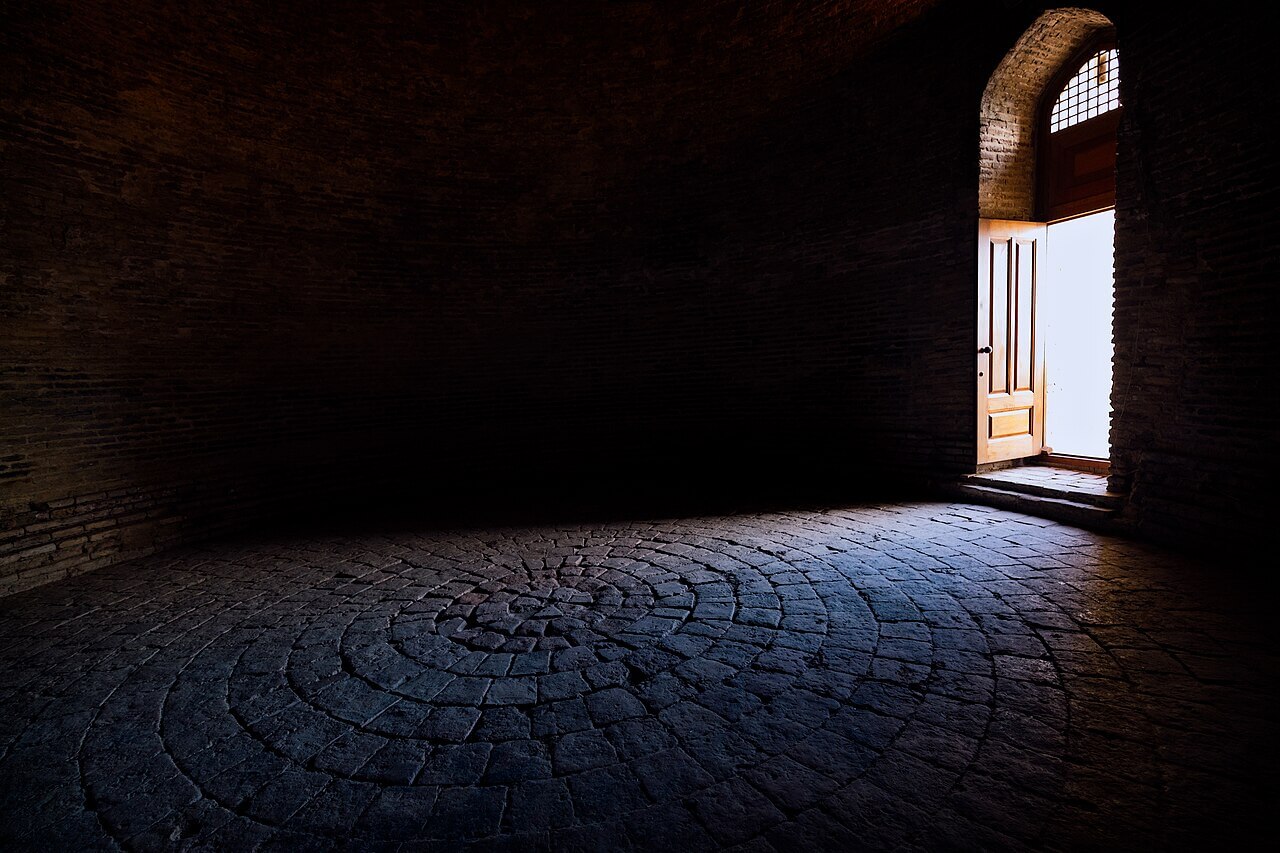
What visitors find inside, however, is nothing. No burial chamber, no remains, no decoration — just a bare, unlit shaft rising into darkness. Archaeological investigations have not resolved whether Qabus was ever actually interred there, and the emptiness has fed a legend that refuses to die: that his body was sealed in a glass coffin and suspended from the ceiling, positioned so that a beam of dawn sunlight would strike his face each morning. Historians treat this as folklore, but it captures something real about the tower — it was built with extraordinary attention to light, geometry, and orientation, designed for more than a simple grave.
The city the tower was built to overlook is gone. Jorjan was a major center of trade and learning in the medieval Islamic world, but according to UNESCO, it was destroyed during the Mongol invasions of the 14th and 15th centuries and never rebuilt. Gonbad-e Qabus is the only structure from that lost city still standing — the last physical trace of streets, markets, and libraries that otherwise survive only in the writings of geographers who visited before the destruction. Standing at its base, you are looking at the final remnant of an entire civilization.
Engineering a Monument to Last a Millennium
What makes Gonbad-e Qabus remarkable is not scale alone — plenty of medieval towers reached similar heights — but the precision behind it. The tower is built as a tapering cylinder, its diameter narrowing gradually from roughly 17 metres at the base to about 15.5 metres near the top, an engineering choice that reduces structural stress as the tower rises. Ten sharp triangular buttresses run the full height of the exterior, creating a striking star-shaped plan when viewed from above — a ten-pointed star, to be precise. These are not decorative: the ribbed profile distributes weight and wind pressure far more efficiently than a plain cylindrical wall could, which is part of why the tower has survived a millennium of earthquakes and harsh Caspian storms with its core structure intact.
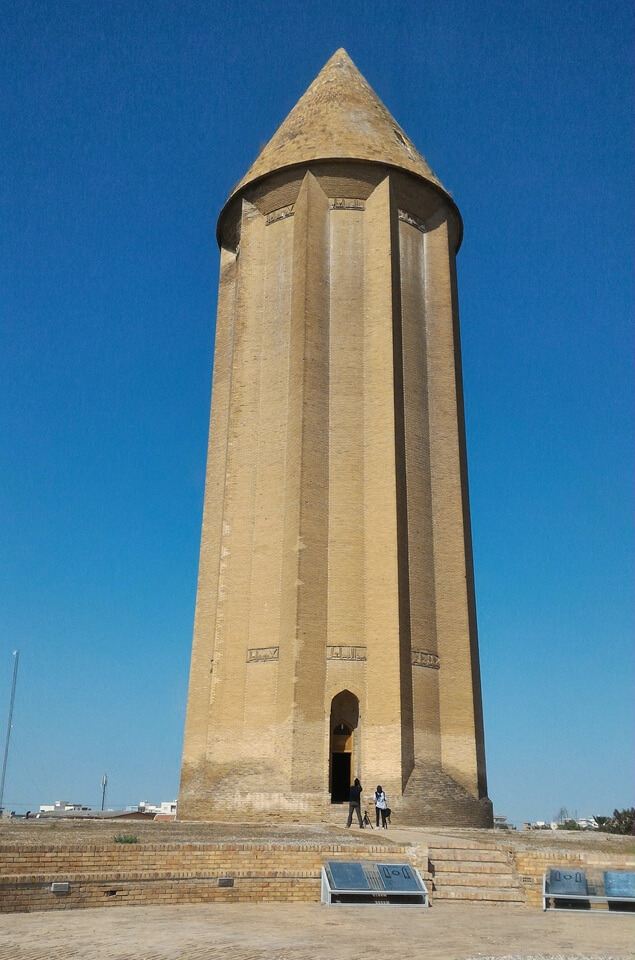
The engineering extends below ground as well. According to UNESCO’s nomination documentation, the tower rests on a brick foundation extending 9.8 meters deep into the earth — a remarkable feat of subterranean construction that anchored the monument against the very forces that toppled lesser structures in the seismically active Gorgan plain. The structural stability of the brickwork in the face of earthquakes is attributed by ICOMOS to the original use of gypsum mortar in the brickwork, which has proved more durable than the lime mortar used in later restoration attempts.
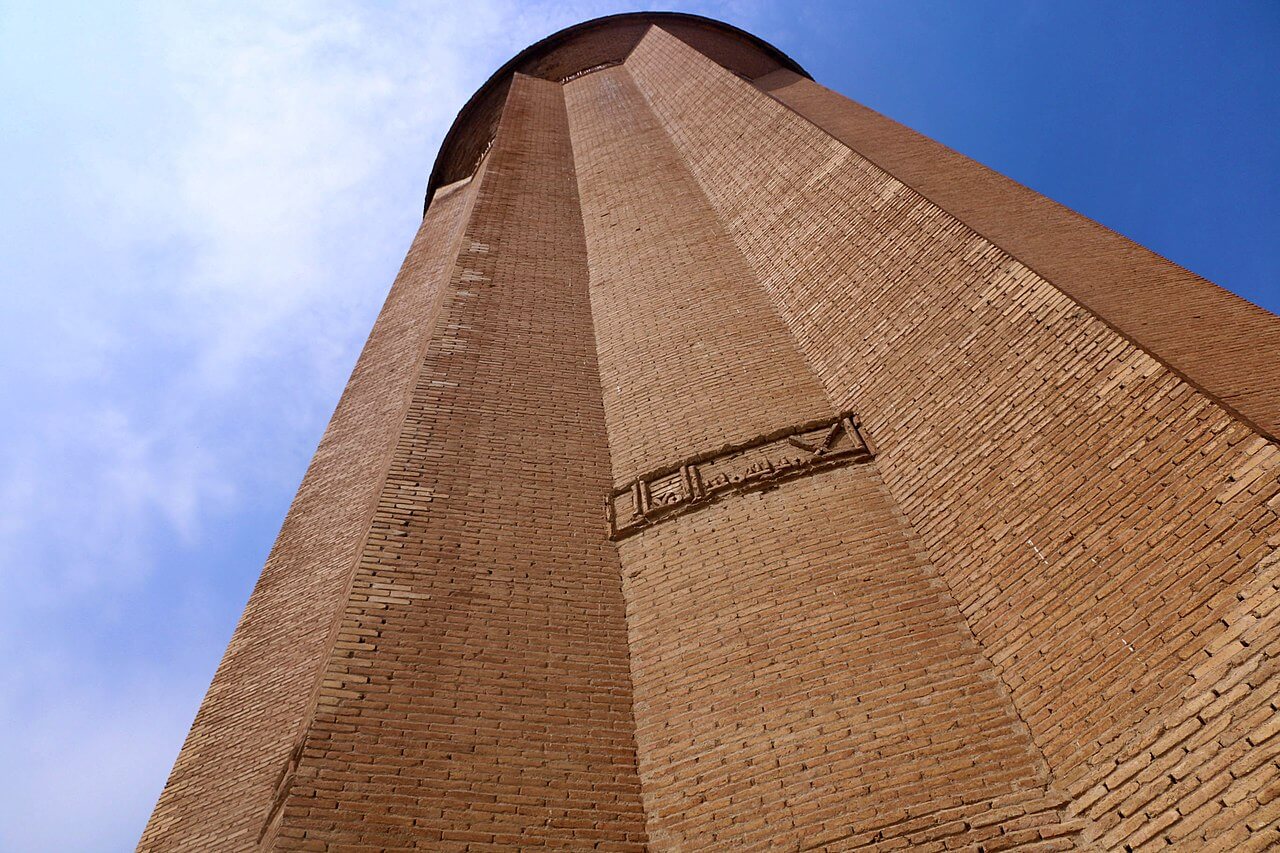
Two bands of Kufic script wrap the tower near its base and crown, recording the date of construction in both the lunar Hijri and Iranian solar calendars — a detail scholars consider remarkable for its dual-calendar precision. The inscription, composed in rhymed prose, reads in translation: “In the name of God, the Beneficent, the Merciful. This is the lofty palace of the Amir Shams al-Ma’ali, the Amir, son of the Amir, Qabus son of Wushmgir, who ordered it built during his lifetime in the lunar year 397 and the solar year 375.” The two dates correspond to the period between late September 1006 and mid-March 1007, bracketing the commissioning date with unusual specificity. The use of the Iranian solar calendar alongside the Islamic lunar one has been cited as evidence of Zoroastrian cultural influence on what is otherwise a predominantly Islamic monument — a detail that reinforces the Ziyarid court’s position at the intersection of Persian and Islamic traditions.
Above the entrance, a modest muqarnas niche — the honeycomb-like stalactite vaulting later seen across Persian and wider Islamic architecture — appears in what architectural historian Sheila Blair has described as some of the earliest evidence for the development of muqarnas in Iran. The tower is, in this sense, an important reference point for architectural historians tracing how that technique evolved from its earliest experimental forms into the sophisticated vaulting systems of later centuries.
How Tall Is Gonbad-e Qabus
Search for Gonbad-e Qabus online and you will encounter wildly inconsistent height figures — some sources cite 53 meters, others 55, 61, or even over 70. The confusion largely comes down to what is being measured: the tower itself, or the tower plus the raised earthen mound it sits on, which has grown over centuries of erosion and archaeological backfill around its base. UNESCO’s official listing states the tower at 53 meters, measured from its true foundation, and that is the figure treated as authoritative here. The Encyclopaedia Iranica gives a slightly lower figure of approximately 52 meters, a difference that likely reflects distinct measurement points — the total height including the conical roof versus the shaft alone.
The mound beneath the tower adds another dimension to the visitor experience. The artificial hillock rises roughly 10 to 15 meters above the surrounding plain, bringing the tower’s visible crown to approximately 70 meters above ground level — which explains the higher figures sometimes cited in popular sources. Standing atop the mound offers a closer look at the brickwork and inscriptions, though UNESCO has noted that the insertion of a ramp and retaining wall on the hillside has slightly damaged the form of the mound over the years.
At 53 meters, Gonbad-e Qabus remains the tallest pure brick tower on Earth — no small feat for a structure built without steel reinforcement, using nothing but fired brick and gypsum mortar. It is worth noting that the tower’s claim to this superlative depends on the qualifier “pure brick”: other tall structures from the medieval period used a mix of materials, while Gonbad-e Qabus is constructed entirely of unglazed fired brick, left in its natural terracotta tone.
Brick as the Singular Material
Unlike the tiled, glazed surfaces travelers associate with Isfahan’s mosques — such as the Shah Mosque at Naqsh-e Jahan Square — Gonbad-e Qabus is built entirely of unglazed fired brick. That restraint is part of its power: with no color or ornament to soften it, the tower’s impact comes purely from proportion, geometry, and the way its ribbed silhouette catches shifting desert light across the day. The brick is pale yellow in its natural state, though centuries of sunlight have turned it golden in places, giving the tower a warm, organic quality that changes with the hour.
This material honesty places Gonbad-e Qabus in a different tradition from the glazed-tile monuments of later centuries. It belongs to an earlier, more austere phase of Islamic architecture — one that expressed its ambition through structural ingenuity rather than surface decoration. The tower’s design philosophy has more in common, in some respects, with the engineering pragmatism of the Shushtar Historical Hydraulic System than with the decorative splendor of Safavid Isfahan, though it predates both.
📷Photo by Sara Shafiee80 on Wikicommons
Gonbad-e Qabus and UNESCO World Heritage Status
Gonbad-e Qabus was inscribed on the UNESCO World Heritage List in 2012, recognized under four separate cultural criteria — an unusually strong designation that reflects how many different fields of significance the tower touches at once.
- Criterion (i) recognizes the tower as a masterpiece of early Islamic brick architecture, citing the structural and aesthetic sophistication of its geometric design.
- Criterion (ii) credits its conical-roofed form as the prototype for tomb towers built later across Iran, Anatolia, and Central Asia, marking it as a genuine turning point in regional architectural history.
- Criterion (iii) points to the tower as exceptional evidence of Ziyarid cultural power, noting that because it was built for a ruler who was also a writer, it launched a regional tradition of monumental tombs built for literary and intellectual figures, not just kings.
- Criterion (iv) highlights the tower’s structural design as proof of the mathematical and scientific sophistication reached in the Muslim world at the turn of the first millennium.
For readers who want the full technical citation, UNESCO’s official listing and statement of Outstanding Universal Value are available at whc.unesco.org. The tower is also listed among the UNESCO World Heritage Sites in Iran.
The tower’s condition has drawn renewed attention in recent years. Vertical cracks identified in the structure — some attributable to past earthquakes, others to land subsidence in the Gorgan plain — prompted restoration projects approved in 2022, including the replacement of approximately 500 damaged bricks and the installation of a three-axis monitoring system to assess the impact of geological subsidence. The 2019 flooding that waterlogged the area around the tower exacerbated existing problems with rising damp and vegetation growth, leading to the removal of plants and the careful replacement of bricks affected by moisture. Special attention is being given to preserving intact ancient bricks while replacing damaged ones from previous restorations in the 1960s and 1970s. It is a useful reminder that even a structure built to outlast empires still needs active care — and that visiting responsibly matters.
Best Day Trips from Gonbad-e Kavus
Golestan province rewards travelers who make the trip out this far with more than just the tower itself. The surrounding landscape — where the Caspian lowlands meet the Turkmen steppe — holds sites that span pre-Islamic fortifications, enigmatic cemeteries, and Ramsar-listed wetlands.
Khalid Nabi Cemetery: Stone Sentinels on the Turkmen Steppe
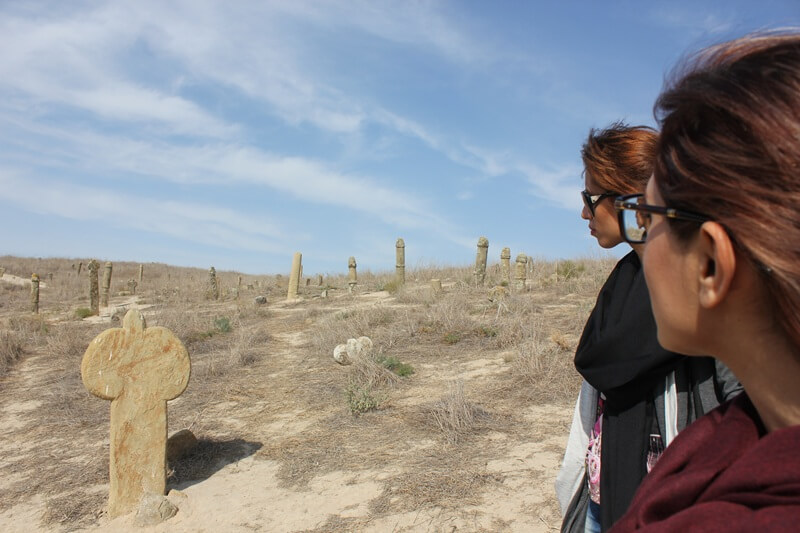
Roughly 60 to 70 kilometers northeast of Gonbad-e Kavus, in the Gokcheh Dagh hills of Turkmen Sahra, Khalid Nabi Cemetery is one of Iran’s more enigmatic sites. A hillside cemetery marked by over 600 unusually shaped stone tombstones — some cylindrical, some cross-like, others bearing rounded protrusions — its age and origin remain debated among historians. Archaeologist David Stronach recorded the stones in 1979 and 1980, noting their variety of forms and their distribution across several ridgelines. Popular interpretations have read the stones as representations of male and female forms, fueling speculation about pre-Islamic fertility cults, though scholarly opinion remains divided. The cemetery is now protected as a national heritage site, and its sweeping views of the Turkmen steppe make the journey worthwhile even for those indifferent to the archaeological debate.
The Great Wall of Gorgan: A Sasanian Frontier
The Great Wall of Gorgan (Divar-e Gorgan), a Sasanian-era defensive wall built in the 5th or 6th century CE — centuries before Gonbad-e Qabus — once stretched for approximately 195 kilometers across the region. UNESCO describes it as the longest fort-lined ancient barrier between Central Europe and China, longer than Hadrian’s Wall and the Antonine Wall combined. The wall, also known as the “Red Snake” for the color of its bricks, featured over 30 fortresses spaced at intervals of 10 to 50 kilometers and was garrisoned by an estimated 30,000 soldiers. Fragments remain visible in the countryside around Gonbad-e Kavus, offering a rare, tangible link to pre-Islamic Iran in the same landscape as the tower. The wall is currently on UNESCO’s tentative list, awaiting full inscription.
Alagol, Ulmagol, and Ajigol Wetlands
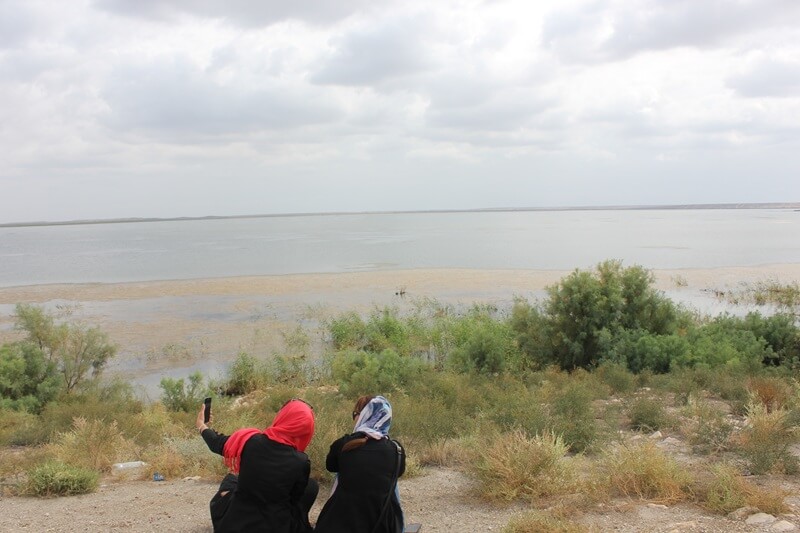
A cluster of Ramsar-listed lakes — Alagol (the largest, at approximately 2,500 hectares), Ulmagol (207 hectares), and Ajigol (320 hectares) — sit north of Gonbad-e Kavus near the Turkmenistan border. Designated as wetlands of international importance under the Ramsar Convention in 1975, these seasonal saline and freshwater lakes are among the most important wintering sites for migratory birds in northeastern Iran. Species include flamingos, pelicans, grey herons, egrets, various ducks, and the white-tailed eagle. The wetlands offer a quieter, natural counterpoint to the area’s historical sites, though visitors should be aware that the lakes have faced severe ecological stress in recent years due to drought, water extraction, and upstream dam construction. Recent rainfall has brought some restoration, but the long-term ecological outlook remains uncertain.
Gonbad Carpet Museum: Turkmen Weaving Traditions
Close to the tower itself, the Gonbad Kavus Carpet Museum — also known as the Turkman Specialty Museum — is Iran’s third major carpet museum, established after those in Tehran and Mashhad. Opened in 2014, the small but well-presented museum exhibits seventeen 20th-century Turkmen carpets labeled with dates of production and styles. Turkmen carpets, woven mostly by Turkmen women in Golestan province, are distinct from the Persian carpet styles seen further south — their geometric patterns and abstract designs set them apart from the floral motifs of Isfahan or Kashan. For travelers interested in the textile traditions of the region, the museum is a worthwhile stop that adds cultural depth to a visit focused primarily on the tower.
Travel Tips for Visiting Gonbad-e Qabus
Best Seasons for Golestan
Spring (April to June) and early autumn (September to November) offer the most comfortable conditions. Summer brings humid heat from the Caspian lowlands, with temperatures regularly exceeding 35°C, while winter can see heavy rain and cold winds sweeping off the Turkmen steppe. The wetlands are most rewarding during migration seasons — spring and autumn — when thousands of birds pass through.
Road Routes to Gonbad-e Kavus
There is no airport in Gonbad-e Kavus itself. Most travelers arrive by road from Gorgan, which has a domestic airport with flights from Tehran and other major cities. The drive from Gorgan is straightforward by road. For those coming from Tehran, the overland route covers roughly 500–555 kilometers depending on the road taken. Long-distance buses run from Tehran’s eastern terminals, though the journey takes seven to eight hours — worth planning as part of a broader northern Iran itinerary rather than a standalone day trip from the capital.
Getting Around Golestan
A private vehicle or hired taxi is essential for visiting the sites beyond the tower itself. The Khalid Nabi Cemetery, Great Wall of Gorgan remnants, and wetlands are all in rural areas with limited or no public transport. Local taxi drivers in Gonbad-e Kavus can be hired for half-day or full-day excursions, though English-speaking guides are more readily arranged through a tour operator in advance.
📷Photo by Arman Gohari on Wikicommons
Where to Stay in Gorgan and Gonbad-e Kavus
Gonbad-e Kavus has a limited selection of hotels and guesthouses, mostly oriented toward domestic tourists and business travelers. For a wider range of accommodation — including higher-standard hotels and traditional houses — Gorgan, a short drive away, is the better base. Some travelers combine a stay in Gorgan with day trips to Gonbad-e Kavus and surrounding sites.
Cultural Etiquette and Practicalities
he tower is an active site of local pilgrimage — it continues as a holy place visited by local people and remains a focus for traditional events — so visitors should be respectful, particularly if locals are present for prayers or gatherings. Photography is generally permitted, though it is courteous to ask permission before photographing people. Bring water and sun protection, as the area around the tower is exposed with little shade. Contact us if you need specific, up-to-date advice on visiting this region.
Final Thoughts: A Tower Built to Outlast an Empire
Gonbad-e Qabus is easy to underestimate on paper — a single brick tower, no interior to explore, no city of ruins spreading out around it. But what it represents is larger than its footprint. It is the last surviving voice of Jorjan, a city that once held its own among the great centers of the medieval Islamic world, and the clearest physical record of a dynasty that briefly closed the distance between the nomadic north and literate Persia.
Few monuments anywhere state their purpose so plainly and remain so difficult to fully explain. A king who was a poet commissioned a tomb built on mathematics rather than ornament, then vanished from it entirely — no confirmed remains, no certainty, only a legend about sunlight and a glass coffin that historians can neither confirm nor dismiss. That tension between precision and mystery is rare, and it is part of why the tower still draws attention from architectural historians a thousand years on.
For travelers building a deeper picture of Iran beyond its famous squares and gardens — beyond Isfahan and Shiraz, beyond the well-trodden classic Iran circuit — Gonbad-e Qabus is a reminder that some of the country’s most significant heritage sits quietly in its provinces, waiting for those willing to go a little further off the route. Considered alongside the wider stretch of UNESCO-listed heritage across Iran or as part of a longer look at what a well-planned Iran itinerary can include, it is a site that adds real depth to a trip built around more than the standard highlights.
Seeing Gonbad-e Qabus in person means planning off the usual route
FAQs about Gonbad-e Qabus Tower
1. What is Gonbad-e Qabus?
Gonbad-e Qabus is a 53-meter brick tomb tower in Iran’s Golestan province, built in 1006 CE for the Ziyarid ruler Qabus ibn Voshmgir. It is the tallest pure brick tower in the world and has been a UNESCO World Heritage Site since 2012.
2. How tall is the Gonbad-e Qabus tower?
UNESCO’s official measurement places the tower at 53 meters, though some sources cite higher figures due to confusion between the tower itself and the earthen mound it sits on. The Encyclopaedia Iranica gives approximately 52 meters, likely reflecting a different measurement point. At 53 meters, it remains the tallest pure brick tower on Earth.
3. Why was Gonbad-e Qabus built?
It was commissioned by Qabus ibn Voshmgir as his own tomb, completed in 1006 CE, six years before his death. The tower also served as a powerful symbol of Ziyarid cultural and architectural achievement near the dynasty’s capital, Jorjan.
4. Is Gonbad-e Qabus a tomb?
It was built as a tomb, but no burial chamber or human remains are visible to visitors, and investigations have not definitively resolved whether Qabus was ever interred there. This absence has fueled a local legend that Qabus’s body was suspended in a glass coffin rather than buried, though historians treat this as folklore rather than fact.
5. When was Gonbad-e Qabus added to UNESCO’s list?
The tower was inscribed on the UNESCO World Heritage List in 2012, recognized under four cultural criteria for its architectural innovation, historical significance, and scientific achievement.
6. How do you get to Gonbad-e Qabus?
Most travelers reach it by road from Gorgan, which has a domestic airport, or via a longer overland route from Tehran of roughly 500–555 km. Long-distance buses also run from Tehran, though the journey takes seven to eight hours.
7. Where is Gonbad-e Qabus located?
It stands in the town of Gonbad-e Kavus, in Golestan province in northeastern Iran, near the ancient ruins of Jorjan and close to the Turkmen steppe.
8. What is inside the Gonbad-e Qabus tower?
The interior is a single bare, unlit shaft with no remains, decoration, or exhibits. Most of the visitor experience takes place outside, studying the tower’s brickwork, inscriptions, and geometric form.
9. How do you get to Gonbad-e Qabus?
Most travelers reach it by road from Gorgan, which has a domestic airport, or via a longer overland route from Tehran of roughly 500–555 km. Long-distance buses also run from Tehran, though the journey takes seven to eight hours.
10. What is the best time to visit Gonbad-e Qabus?
Spring and early autumn offer the most comfortable weather, avoiding the humid summer heat of the Caspian lowlands and heavier winter rainfall in the region.
11. What does the name “Gonbad-e Qabus” mean?
“Gonbad” is a Persian word meaning dome or domed structure, commonly used for mausoleums and monumental buildings. “Gonbad-e Qabus” translates roughly to “the dome/tower of Qabus,” named directly after the ruler who commissioned it.
12. Is Gonbad-e Qabus worth visiting?
For travelers interested in Iran’s architectural and scientific history, yes — it’s one of the most mathematically precise monuments in the country and the last physical trace of the lost city of Jorjan. It does require a deliberate detour, since it sits off Iran’s main heritage circuit.
0 Comment