

Table of Contents
Cultural etiquette in Iran centers on taarof, a ritual of hospitality and polite refusal, alongside modest dress, home-visiting customs, and religious observance that shape nearly every daily interaction. None of it is decoration. It’s the visible layer of a much older idea: that a guest is a gift, and how you treat one says everything about who you are.
You’ll feel this within your first hour in the country — a shopkeeper waving away payment, a stranger walking you three streets out of their way to find an address, a host filling your tea glass before it’s half empty. To an outsider, some of these gestures look like contradiction: refusal that means acceptance, hospitality that borders on insistence. They aren’t contradictions. They’re a language, and like any language, it becomes intuitive the moment someone explains the grammar.
This guide is that explanation. It covers the customs every traveler encounters — taarof, greetings, dress, home visits, dining, and religious etiquette — where these customs come from, how they’ve shifted in recent years, and what’s genuinely true versus commonly assumed. If you’re still mapping out the rest of the trip, our complete guide to planning a visit is a good place to start alongside this one.
Taarof Explained: The Persian Art of Polite Refusal
If you learn one word before visiting Iran, make it taarof. It’s the ritualized exchange of offering, refusing, and insisting that governs everything from who pays a taxi fare to who walks through a doorway first.
The origins of taarof are debated. Some people trace it to ancient Persian traditions or the Zoroastrian ideal of speaking with kindness and respect, although there is no scholarly consensus linking the two directly. What is well established is the role taarof plays in Iranian society. Rather than being insincere, it is a social custom designed to show humility, generosity, and respect. By putting the other person’s comfort and dignity first, taarof helps create polite, harmonious interactions—whether between friends, strangers, or people of different social status.
Where you’ll meet it:
- A taxi driver tells you the ride is free (“ghabel nadareh”) — he still expects payment, but wants you to know the exchange mattered more than the money.
- A shopkeeper insists you take an item as a gift — the polite response is to insist just as warmly that you’d like to pay.
- A host offers you tea, fruit, and a third helping of dinner long after you’ve said you’re full — because your first “no” was expected to be polite, not literal.
- Two people hover at a doorway, each urging the other to go first — the one who “loses” and enters first is, in the logic of taarof, the one being honored.
How to navigate it without overthinking it. Refuse once or twice out of courtesy. If the offer is repeated a third time with real insistence, it’s usually genuine — accept graciously. If you’re ever unsure, a direct but warm question works fine: Iranians are well aware that taarof confuses visitors, and most will happily clarify if you simply ask whether they mean it. And if you’d rather skip the dance entirely, saying “taarof nakonid” (“please, no taarof”) is a perfectly acceptable and commonly used phrase.
Iranian Greetings and Everyday Signs of Respect
Iranian greetings are warm, unhurried, and layered with small formalities that matter more than they first appear.
- “Salaam” (peace) is the universal greeting, often paired with a hand over the heart — a respectful alternative to a handshake, especially between men and women who aren’t related.
- Handshakes are common between people of the same gender. Between men and women, it’s safest to wait and see whether a hand is offered.
- Titles carry real weight. Addressing someone as Agha (Mr.) or Khanum (Ms./Mrs.) before their name, rather than using a first name alone, signals respect — particularly with anyone older than you.
- When exchanging something with an elder, use both hands. Among peers and friends, one hand is perfectly casual.
- A little Farsi goes further than you’d expect. “Salaam,” “merci” (thank you — yes, borrowed from French and used everywhere), and “khahesh mikonam” (you’re welcome) tend to earn genuine smiles, not just politeness points.
None of this is about performing perfectly. Iranians are famously forgiving of foreigners fumbling the details — the effort itself is what registers.
What to Wear in Iran: Dress Code, Honestly Explained
This is the question travelers ask most, and the one most guides answer partly— either with an outdated rulebook or a vague reassurance. Here’s the honest, current picture.
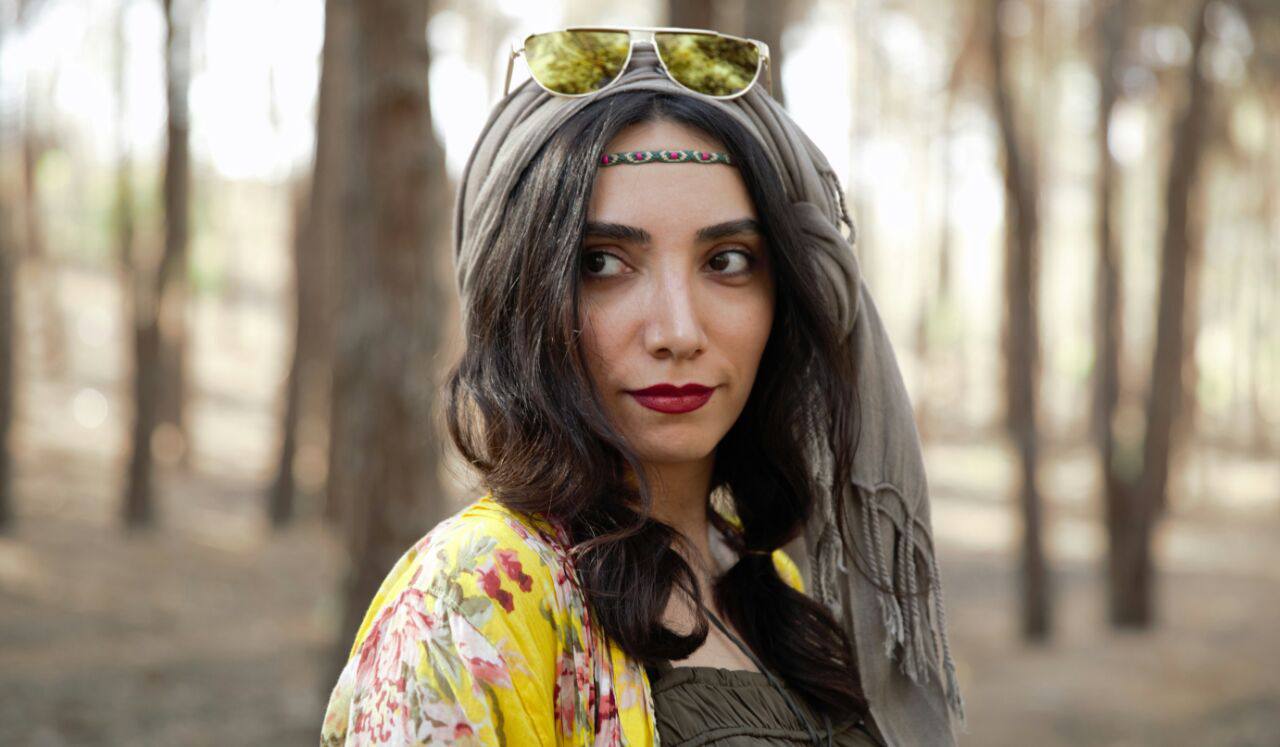
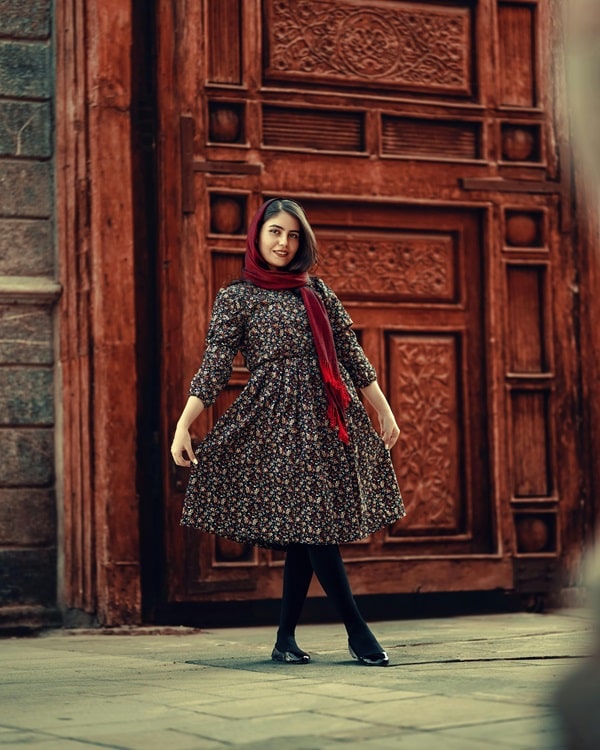
The legal baseline hasn’t changed. Covering hair, arms, and legs remains a legal requirement for women in all public spaces, from the moment you land. A loose headscarf, a longer top or manteau (tunic-style coat), and non-tight trousers or a long skirt meet the standard comfortably. Men should avoid shorts and sleeveless shirts in public, particularly outside major cities.
What’s also true, and worth knowing. Since the protests of 2022 and again through 2026, on-the-ground enforcement has visibly loosened in parts of Tehran, Isfahan, Shiraz and many other major cities — you’ll see Iranian women wearing scarves pushed back or skipped altogether in certain neighborhoods and cafés, alongside women who dress far more conservatively a few streets over. The law itself hasn’t changed, and enforcement has tightened again at various points with little warning, so this variability is a description of the current moment, not a shift in what’s legally required. As a traveler, the safest approach is to arrive prepared to follow the standard dress code, then use your own judgment based on what you observe locally — not because the rule has relaxed, but because how strictly it’s applied can shift.
What this looks like in practice:
- Pack a lightweight scarf you can wear, plus a couple of long-sleeved tunics or coats.
- Religious sites — mosques, shrines, the holy city of Qom — expect fuller coverage regardless of what’s typical elsewhere; a chador is often provided free at the entrance if needed.
- Indoors in private homes and hotel rooms, dress codes don’t apply.
- Bright, form-fitting, or heavily patterned clothing draws more attention than modesty alone requires — plain, comfortable layers serve you better than a new wardrobe.
Rules can tighten again with little notice, particularly around political anniversaries or periods of unrest. Checking current conditions close to your travel date — through your guide or a current government travel advisory — is worth the five minutes it takes. It’s worth sorting this out around the same time you’re handling your entry paperwork, so nothing is left to the last week before departure.
Iranian Home Visit Etiquette: What Guests Should Know
Persian hospitality reaches its fullest expression inside the home, and an invitation — which happens more often than most travelers expect — is worth accepting.
- Bring something small. Flowers, pastries, or good-quality sweets are the standard gift. Don’t be surprised if it’s set aside unopened; that’s normal, not rude.
- Arrive close to on time. Punctuality reads as respect, even in a culture that otherwise runs on a relaxed sense of time.
- Remove your shoes at the door, unless your host tells you it’s ok to enter with your shoes on or they are visibly wearing theirs indoors.
- Let your host seat you. The most comfortable spot in the room is typically reserved for the guest of honor — that’s you.
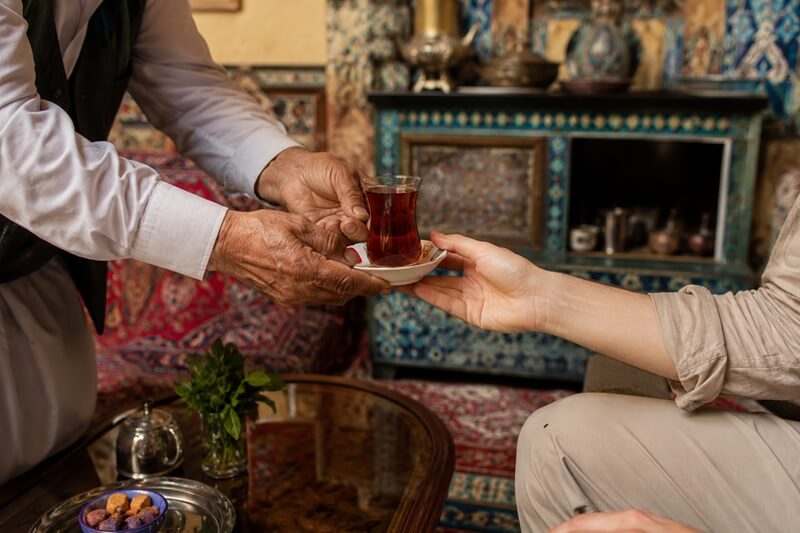
- Expect tea before almost anything else, followed by fruit, nuts, and sweets, often well before the main meal even begins.
At Compassimo, our guides often describe home visits as the single moment that changes how travelers feel about the entire trip — the point where “visiting Iran” becomes “being welcomed by Iranians.” If your itinerary includes one, treat it as the highlight it’s designed to be, not a formality to get through. Whatever’s set on the table, from a simple weekday spread to a full spread of Iran’s most-loved home cooking, the etiquette below applies just the same.
Dining Etiquette in Iran: Sharing the Table
Meals in Iran are often enjoyed communally, with several dishes placed in the center of the table for everyone to share.
- Wait for your host or the eldest person at the table to begin eating before you start.
- If you’re passing food or eating with bread, use your right hand, as it is traditionally considered the more appropriate hand for dining.
- Don’t be surprised if your host serves you the best portions or encourages you to eat more—it’s a genuine expression of Iranian hospitality.
- Your host may offer second or even third helpings out of courtesy. If you’re full, simply decline politely with a smile.
- Before leaving the table, complimenting the meal and thanking your host is always appreciated. For many Iranians, preparing and sharing home-cooked food is one of the most meaningful ways of welcoming guests.
Religious Etiquette in Iran
Islam shapes the rhythm of public life in Iran, and a handful of customs matter well beyond the inside of a mosque.
- When visiting mosques and shrines, dress modestly, remove your shoes where required, and keep your voice low. Remember that these are active places of worship as well as historic landmarks. Photography may be restricted in some areas, so always follow posted signs or ask for permission before taking photos.
- On Fridays, especially around midday prayers, some government offices, businesses, and attractions may operate on reduced hours, although most tourist services continue as normal.
- During Ramadan, avoid eating, drinking, or smoking in public during daylight hours out of respect for those who are fasting. Some restaurants remain closed or screen their dining areas until sunset, while others continue serving customers indoors.
- During Muharram, particularly on Ashura and Tasua, Iran takes on a more reflective atmosphere. Loud music, public celebrations, and overly casual behavior are best avoided near mourning ceremonies. If you encounter a religious procession or gathering, observe quietly, give participants plenty of space, and follow the example of those around you.
Both dates shift on the lunar calendar each year, so it’s worth checking how they line up with your trip when you’re working out when to go — and for anyone planning around a heritage-heavy route, it’s the same rhythm that shapes visiting hours at most of Iran’s UNESCO-listed sites.
Gender Etiquette and Public Behavior in Iran
Public displays of affection between couples—such as kissing or embracing—are not socially acceptable in Iran and may attract unwanted attention or, in some cases, legal consequences. Couples holding hands is more common, particularly in larger cities, but visitors should generally keep physical affection to a minimum in public.
When interacting with people of the opposite sex, especially those you don’t know, it’s polite to avoid unnecessary physical contact. For example, don’t assume a handshake is appropriate—wait for the other person to offer one first.
This doesn’t mean Iranians are reserved or unfriendly. On the contrary, warmth is often expressed through conversation, generosity, and hospitality rather than physical gestures. Respecting these social norms will help you feel more comfortable and make a positive impression wherever you travel in Iran.
Iran Photography Etiquette: What’s Allowed and What’s Not
Iran rewards photographers — the light, the architecture, the color — but a few rules protect both you and the people you’re photographing:
- Ask before photographing individuals, particularly women; a smile and a gesture toward your camera is usually enough.
- Never photograph military installations, police stations, government buildings, or anything that looks remotely official — this is enforced seriously and can escalate quickly.
- Some shrines and religious sites prohibit photography entirely, especially in inner sanctums. Look for posted rules before assuming.
Bazaar Etiquette in Iran: How to Bargain Respectfully
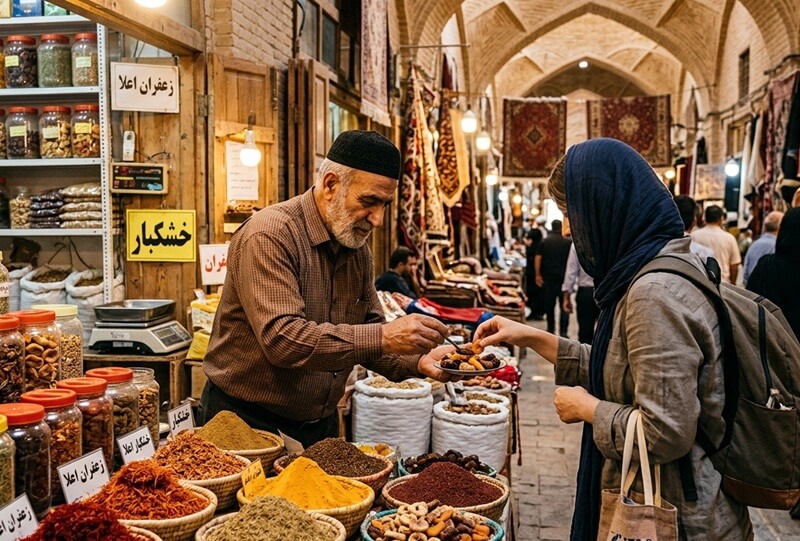
Bargaining in Iran’s traditional bazaars is expected, unhurried, and generally good-natured rather than adversarial.
- Start below the asking price, but keep the tone light — bargaining in Iran is closer to a friendly conversation than a confrontation.
- Don’t feel obligated to buy after negotiating. Thanking the seller for their time, even if you walk away empty-handed, is perfectly normal and courteous.
- If you’re offered tea during the negotiation, take it as a gesture of hospitality rather than a sales tactic. Enjoy it whether or not you decide to make a purchase.
- The same etiquette applies whether you’re browsing a spice stall, admiring a hand-knotted Persian carpet, or considering a piece of intricate inlaid woodwork. For higher-value items, expect the conversation — and the bargaining — to take a little longer.
Myths vs. Facts: What Most Guides Get Wrong
A trustworthy guide should tell you what’s not true as clearly as what is.
- Myth: Foreigners are exempt from the dress code because they aren’t Muslim. Fact: the law applies territorially, to everyone inside Iran’s borders, regardless of nationality or belief.
- Myth: Iran is rigidly unsafe for casual social mistakes. Fact: Iranians are famously forgiving of foreigners who get etiquette wrong — genuine effort is read generously, and most missteps end in a laugh, not offense. We’ve covered the broader safety question in more depth in our honest, on-the-ground take for anyone still weighing the trip.
- Myth: Foreigners don’t have to follow the dress code because they aren’t Muslim. Fact: Iran’s dress code applies to everyone inside the country, regardless of nationality or religion. While officials and locals often understand that visitors are unfamiliar with the rules, travelers are still expected to follow the legal requirements.
- Myth: A small etiquette mistake will offend people or get you into trouble. Fact: Most Iranians are remarkably welcoming toward foreign visitors and rarely expect them to know every cultural custom. A genuine effort to be respectful is usually appreciated, and minor mistakes are often met with patience—or even a smile—rather than criticism.
- Myth: Alcohol is unofficially tolerated for tourists. Fact: Alcohol is illegal under Islamic Republic of Iran law, and the restrictions apply to foreign visitors as well as residents. Travelers should not rely on online anecdotes suggesting otherwise, as violations can carry serious legal consequences.
Iran Etiquette Checklist: Quick Dos and Don’ts
Do:
- Accept a second or third offer of tea or food graciously (not every interaction follows taarof, and visitors shouldn’t feel obliged to refuse first.)
- Dress modestly and adapt to local customs and your surroundings.
- Remove your shoes when entering someone’s home, unless your host tells you otherwise.
- Address older people or those in formal settings respectfully, especially when first meeting them.
- Ask for permission before photographing people.
Don’t:
- Take every polite refusal or offer at face value—taarof is part of everyday life.
- Assume tourists are exempt from Iran’s laws or cultural expectations.
- Kiss or embrace your partner in public.
- Photograph military, government, or other restricted sites.
- Interrupt religious ceremonies or mourning processions.
Final Thought: Etiquette as an Invitation, Not a Test
No traveler arrives in Iran fluent in its customs, and no one is expected to. What actually matters is smaller and more human than a rulebook: a willingness to notice, to adjust, and to let yourself be looked after by people who take hosting seriously as a form of care.
That willingness tends to pay off far beyond good manners. It’s often the difference between a trip that stays at the level of monuments and one that includes a stranger’s kitchen table, an unplanned invitation, a conversation that runs long because neither of you wants it to end. Iran has a way of rewarding travelers who show up soft-footed rather than well-rehearsed.
None of this is unique to any one region or season, either. It travels with you from a Tehran rooftop café to a desert village guesthouse, holding steady beneath a country that keeps changing on the surface while its hospitality stays remarkably constant underneath.
The best way to understand taarof is to be on the receiving end of it!
FAQs about Iranian Customs & Cultural Etiquette
1. What is taarof in Iranian culture?
Taarof is a system of ritualized politeness in Iran involving offering, refusing, and insisting, used to show respect and generosity in daily interactions. It shapes everything from paying a taxi fare to accepting food at someone’s home.
2. Do tourists have to follow the hijab law in Iran?
Yes. The dress code requiring covered hair, arms, and legs for women applies to every visitor regardless of nationality or religion, from the moment of arrival. Enforcement has varied in recent years, but the underlying legal requirement has not changed.
3. Is it rude to refuse food in an Iranian home?
A polite initial refusal is expected and normal, but a host will usually insist several times before taking “no” for an answer. Genuinely refusing extra food is fine — a warm, clear “I’m completely full, thank you” said directly, rather than repeated soft refusals, communicates it best.
4. Can men and women shake hands in Iran?
It’s best to let the other person initiate. Many Iranian women greet foreign men with a nod rather than a handshake, while handshakes between the same gender are common and expected.
5. What should I bring as a gift when visiting an Iranian home?
Flowers, pastries, or a small box of good-quality sweets are the standard, well-received choices. Don’t be surprised if the gift is set aside unopened — this is normal hospitality etiquette, not a slight.
6. Is alcohol legal in Iran?
No. Alcohol is illegal nationwide for residents and visitors alike, with legal penalties for possession or consumption.
7. Can I take photos of people in Iran?
Only with permission. A friendly gesture toward your camera and a smile is usually enough to ask, and it’s especially important to ask before photographing women or anyone at a religious site.
8. How should I dress when visiting a mosque in Iran?
Full modest coverage is expected regardless of what’s typical elsewhere in the city you’re visiting — long sleeves, covered legs, and a headscarf for women. Many major shrines provide a chador free of charge at the entrance if you need one.
9. Is it normal to bargain in Iranian bazaars?
Yes, bargaining is a normal and expected part of shopping in traditional bazaars, generally conducted in a relaxed, good-natured way rather than as confrontation. It’s also completely acceptable to negotiate and then walk away without buying.
10. Do Iranians expect foreigners to know all these customs perfectly?
No. Iranians are widely known for being patient and forgiving toward visitors learning local etiquette, and genuine effort is usually met with warmth rather than judgment. Getting the spirit of hospitality and respect right matters far more than getting every detail exactly correct.
0 Comment